
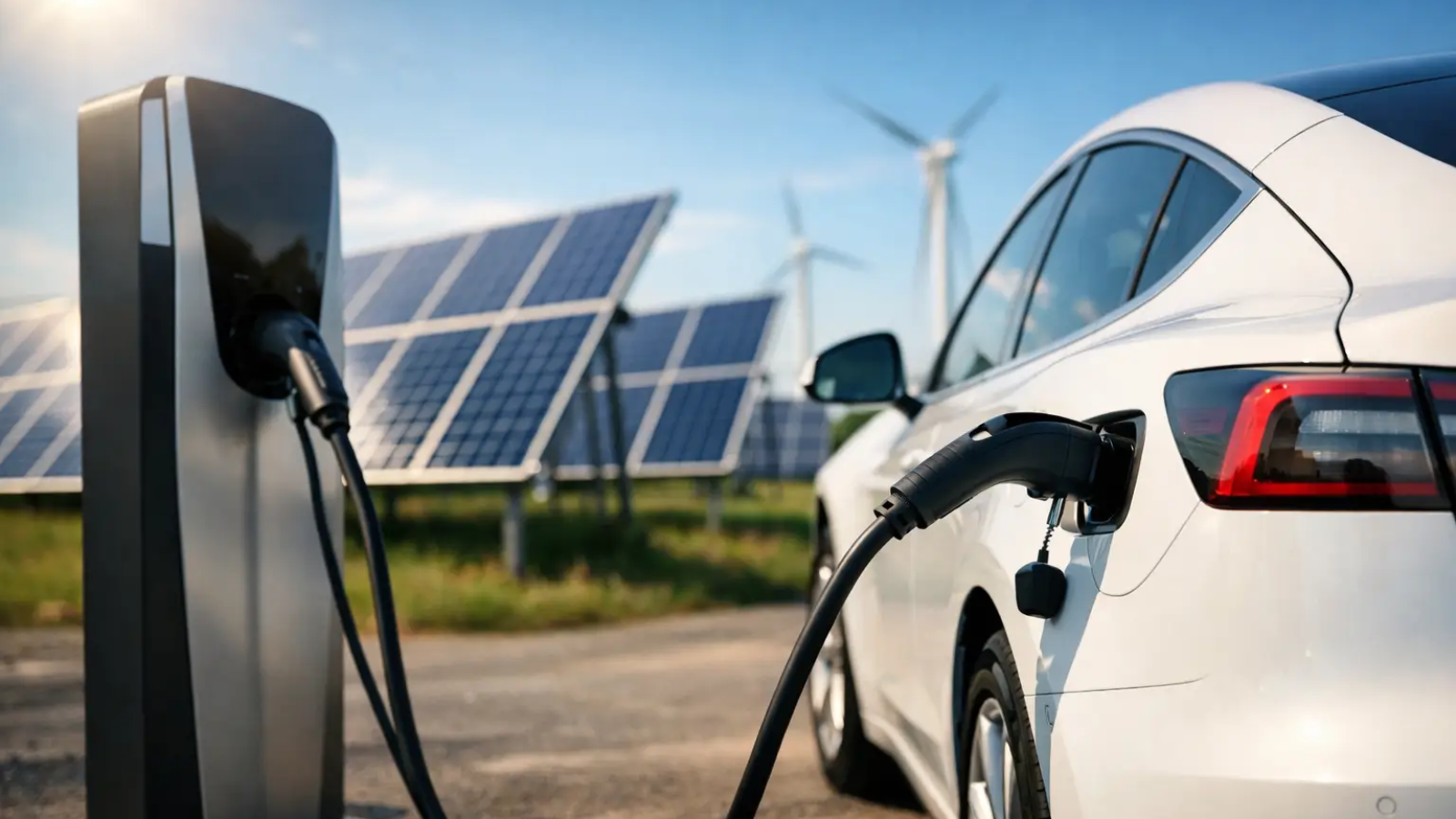
Picture your car charging in the driveway while your roof does the work. That idea is exactly why so many homeowners and businesses ask, can solar charge electric cars? The short answer is yes – but the real answer depends on when you charge, how much solar you produce, and how your EV charging setup is designed.
For many properties, solar can cover some or even most of an EV’s energy use over time. For others, it offsets only part of the load unless battery storage or smart charging is added. The opportunity is real, but the details matter.
Can solar charge electric cars at home?
Yes, solar can charge an electric car at home, either directly during sunny hours or indirectly through the grid using net metering or similar utility arrangements. In practical terms, your solar panels generate electricity for the home first, and any available solar energy can support EV charging when the charger is running.
The simplest case is daytime charging. If your panels are producing enough electricity while the car is plugged in, some or all of that charging session can be powered by solar. If solar production drops because of clouds, shade, or late afternoon conditions, the charger will pull the remaining electricity from the grid unless you have battery storage.
That means solar-to-EV charging is not always a straight line from roof to car. It is often a broader energy balance. Over the course of a month, your solar system may produce enough electricity to offset what your EV consumes, even if the car often charges overnight.
How the setup actually works
An EV charger does not need a special type of solar panel. What matters is how the whole system is connected. A standard grid-tied solar system generates electricity, your home uses that power in real time, and a Level 2 charger draws from the home’s electrical supply when the vehicle is plugged in.
If solar generation is higher than the home’s current demand, the extra energy may go to the EV, to a battery, or back to the grid depending on your equipment. If household demand is already high – for example, air conditioning, appliances, and lighting are all running – less solar is available for the car at that moment.
This is where smart energy management becomes valuable. Some systems can prioritize EV charging when solar output is strongest or reduce charging speed to match available production. That helps maximize self-consumption instead of importing more grid electricity than necessary.
How much solar do you need to charge an EV?
This is the question that turns a good idea into a real project. The answer depends on how much you drive and how efficient your vehicle is.
A typical EV uses around 25 to 35 kWh per 100 miles. If you drive 1,000 miles a month, your vehicle may need roughly 250 to 350 kWh monthly. A residential solar system’s output depends on local sunlight, roof orientation, panel efficiency, and weather, but in many parts of the US, each kilowatt of solar capacity produces around 100 to 150 kWh per month.
So if your EV uses 300 kWh a month, you might need roughly 2 to 3 kW of solar production just to offset the driving energy, assuming favorable conditions. In reality, most homeowners are sizing solar for the whole property, not just the vehicle. If your house already uses significant electricity, your EV becomes one more major load to account for.
For businesses, the math gets bigger quickly. Fleet charging, employee charging, or tenant charging can create substantial demand, which means solar needs to be sized around broader operational patterns rather than a single vehicle.
The biggest factor: when you charge
Timing can make the difference between partial solar charging and strong solar utilization. If your vehicle is at home during the day, daytime charging is the most direct way to use solar energy. This is easier for remote workers, retirees, and businesses with vehicles parked on-site during daylight hours.
If you mostly charge overnight, solar still helps in a grid-connected arrangement, but usually not in real time. During the day, your panels may export excess energy to the grid. At night, your EV pulls energy back from the grid. Depending on your utility’s compensation structure, that can still create strong economic value, but it is not the same as using solar power directly at the moment of charging.
Battery storage changes that equation. With a home or commercial battery, excess daytime solar can be stored and later used for EV charging after sunset. That gives you more control and can improve resilience, but it also raises project cost.
What about charging speed?
Charging speed matters because EV chargers can draw far more power than a modest solar array is producing at a given moment. A Level 1 charger uses relatively little power, so matching it with solar generation is easier. A Level 2 charger is much faster but often draws 7 kW or more, and many home solar systems will not consistently deliver that level of surplus power throughout the day.
That does not mean the pairing fails. It simply means the charger may use a blend of solar and grid electricity unless charging speed is managed. Some smart chargers can adjust output to align with solar production, which can be especially useful for households trying to maximize renewable charging instead of just charging as fast as possible.
For commercial properties, controlled charging is even more important. Without load management, multiple EVs can create peaks that exceed what the solar system can support in real time.
Is it worth it financially?
Often, yes – but not automatically.
If you already own an EV or plan to buy one, adding solar can reduce the cost of fueling that vehicle compared with relying entirely on utility power, especially in markets with high electricity rates. Over time, replacing gasoline with solar-supported charging can create meaningful savings while lowering emissions.
Still, the economics depend on several moving parts: the cost of the solar installation, local utility rates, available incentives, your driving habits, and whether you need electrical upgrades, battery storage, or a new charger. If your roof has limited space or poor sun exposure, the return may be less attractive. If you drive a lot and have good solar production, the case improves quickly.
For businesses, the value proposition can go beyond direct energy savings. Solar-backed EV charging may support sustainability targets, improve property appeal, and help future-proof operations as transportation electrifies.
Common limits people overlook
The most common misconception is that any solar system can fully charge any EV. In reality, solar output fluctuates, and your property has competing electrical loads. Your roof size, shading, panel orientation, and local weather all affect what is possible.
Another overlooked issue is electrical capacity. Installing solar and EV charging together can be a smart move because system design can be coordinated from the start. Retrofitting one after the other may still work well, but it can reveal panel capacity constraints or distribution issues that require additional upgrades.
There is also the policy side. Utility compensation rules, interconnection requirements, and local permitting can shape the economics and timeline of a project. A technically strong setup may still need careful planning to perform as expected financially.
Can solar charge electric cars for businesses and multifamily sites?
Absolutely, and in some cases the business case is stronger than it is for single-family homes. Offices, retail sites, hotels, and apartment communities often have vehicles parked for longer periods during daylight hours, which aligns well with solar production. That creates an opportunity to pair on-site generation with managed charging.
The challenge is complexity. Commercial charging has more variables: multiple users, demand charges, site load balancing, parking policies, and future expansion. A solar-plus-EV strategy works best when it is treated as infrastructure planning rather than a standalone equipment purchase.
This is where an integrated approach matters. Providers like Charge & Go operate at that intersection, helping customers think beyond the charger itself and design around energy use, property goals, and long-term adoption.
So, can solar charge electric cars in a practical sense?
Yes – and for many people, it already does. The practical question is not whether solar can charge an EV. It is how much of your charging it can cover, how efficiently your system is configured, and whether your usage patterns line up with solar production.
If you want the cleanest and most cost-effective result, think in systems rather than products. Your panels, charger, home load, battery storage, driving routine, and utility structure all shape the outcome. Get those pieces aligned, and your car can become part of a smarter energy ecosystem, not just another appliance on the meter.
The best next step is to look at your own driving miles and your property’s energy profile. That is where solar charging shifts from a good concept to a workable plan.
Add a Comment