
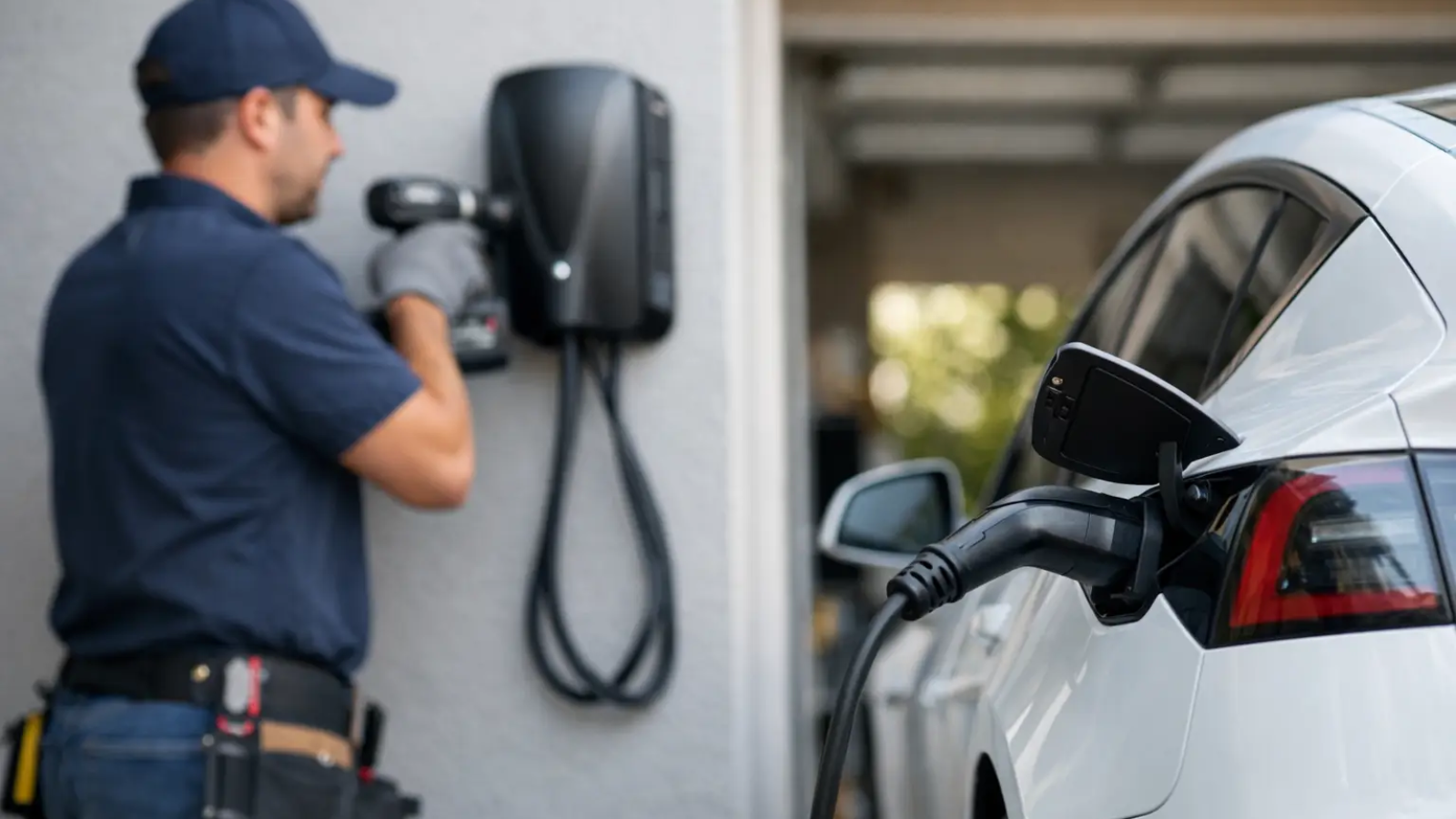
A parked EV is only as convenient as the charger behind it. That is why ev charger installation matters far beyond the hardware itself. The right setup affects charging speed, daily convenience, electrical safety, energy costs, and how well your home or property is prepared for the next phase of clean transportation.
For some people, installation is straightforward. For others, it involves panel upgrades, trenching, load management, or decisions about future growth. The difference usually comes down to the building, the electrical capacity available, and how the charger will actually be used.
What ev charger installation really includes
Many first-time buyers think installation starts when the charger is mounted on a wall. In practice, that is one small part of the job. A proper installation usually begins with a site assessment that looks at your electrical panel, available capacity, charger location, cable routing, network needs, weather exposure, and local code requirements.
For a home, the goal is usually simple and dependable overnight charging. For a commercial site, the picture is broader. You may need to think about user access, payment systems, parking layout, usage peaks, branding, maintenance, and whether the site might add more chargers later.
That is why a good installer does not just ask which charger you want. They ask how many vehicles need charging, when charging typically happens, whether solar is part of the plan, and how much room there is for expansion.
Home EV charger installation: the key decisions
At home, most drivers are choosing between staying with a standard wall outlet or installing a Level 2 charger. A standard outlet can work for very low daily mileage, but it is slow. For most households, Level 2 is what makes EV ownership feel easy. It can recharge far more range overnight and removes the need to constantly plan around battery levels.
The charger location matters more than many people expect. A unit placed near the parking position with a clean cable path is easier to use every day and less likely to create clutter or strain on the connector. If the electrical panel is close to the parking area, installation is often simpler and less expensive. If it is far away, costs can rise because more wiring, conduit, and labor are required.
Panel capacity is another major factor. Some homes have enough spare electrical capacity to add a charger without issue. Others do not. In those cases, the solution may be a panel upgrade or a load management system that helps balance power demand across the property. One option is not automatically better than the other. It depends on the age of the home, your budget, and whether you expect to electrify more of the house over time with solar, battery storage, heat pumps, or additional vehicles.
Commercial EV charger installation: planning for scale
For businesses and property managers, EV charger installation is rarely just about adding a convenience feature. It is infrastructure. That means the decisions made at the start can shape operating costs, tenant satisfaction, site efficiency, and future upgrade options.
A workplace may need chargers that support all-day employee parking. A retail location may want faster charging to match shorter visits. A multifamily property may need a fair way to allocate access and electricity costs among residents. Fleet operations bring another layer, where uptime and charging schedules directly affect business performance.
In these environments, power availability becomes a strategic issue. Installing one or two chargers may be manageable within existing capacity. Scaling to several chargers often requires a more careful design, especially if vehicles charge at the same time. Smart charging can help by distributing available power dynamically instead of forcing a costly electrical upgrade too early.
This is also where futureproofing matters. Even if you only need a few charging points today, it can make sense to install conduit or reserve electrical capacity for additional units later. That kind of foresight can reduce disruption and save money when demand grows.
What affects installation cost
There is no single price for ev charger installation because every property is different. The biggest cost variables are usually the distance from panel to charger, the condition and size of the electrical panel, wall or ground construction, permitting requirements, and whether trenching or surface restoration is needed.
A basic residential installation with available panel capacity and a short cable run is usually much simpler than a project involving a detached garage, an older electrical system, or a charger mounted far from the main service. On the commercial side, costs can increase quickly if utility coordination, networked systems, bollards, signage, access control, or multiple charging bays are part of the scope.
It is also worth separating charger price from installation price. Buyers sometimes compare hardware models closely but underestimate the site work. In many projects, the building conditions matter more than the charger itself.
Permits, codes, and safety
Electrical work should never be treated as an afterthought. A compliant installation protects people, vehicles, and property. It also reduces the risk of inspection issues, insurance complications, or expensive rework later.
Permit requirements vary by location, but many installations require electrical permits and inspections. Commercial sites may face additional accessibility, signage, parking, and fire safety considerations. Outdoor installations also need equipment and mounting methods suited to weather conditions and long-term exposure.
This is one area where cutting corners tends to backfire. A charger may appear to work even if the installation was not designed correctly, but that does not mean the system is safe, durable, or ready for sustained use.
How long installation usually takes
The physical installation can be quick in simple cases, but the full timeline is often longer than people expect. Site review, product selection, proposal approval, permits, scheduling, and inspections all take time.
A straightforward home installation may move relatively fast once the plan is confirmed. A commercial project usually takes longer because more stakeholders are involved. There may be landlord approvals, utility discussions, parking design questions, or internal budgeting steps before work even begins.
The practical takeaway is simple: if you want charging ready by a specific date, start planning earlier than you think you need to.
Should you pair charging with solar?
For many customers, the smartest long-term view of EV charging includes solar. Charging from on-site solar can reduce grid dependence, improve energy resilience, and strengthen the sustainability value of the investment. It also connects transportation with broader property energy strategy rather than treating charging as a standalone upgrade.
That said, solar is not an automatic fit for every project. Roof space, shading, daytime energy use, building ownership, and payback expectations all influence whether the combination makes sense. Some properties benefit immediately from pairing the two. Others may install charging first and add solar later when timing and budget align.
The important point is to plan with the bigger picture in mind. If a property is likely to adopt solar, battery storage, or more chargers in the coming years, the installation should not block those future options.
Choosing the right installer
A strong installation partner brings more than technical labor. They help translate your charging goals into an electrical plan that works now and remains useful later. That means asking good questions, explaining trade-offs clearly, and designing around real usage rather than assumptions.
Experience with both residential and commercial work can be especially valuable because charging is no longer isolated from the broader energy system. It increasingly intersects with solar generation, energy management, and sustainability planning. Companies like Charge & Go are part of that shift, helping customers think beyond a single charger and toward cleaner, more connected energy infrastructure.
When evaluating providers, look for clarity. A solid proposal should explain scope, electrical assumptions, permitting, commissioning, and any site conditions that could affect price or schedule. If those details are vague at the start, surprises often show up later.
The best installation is the one that fits how you live or operate
A fast charger is not always the best charger. The least expensive installation is not always the most cost-effective. The right answer depends on your vehicle habits, property constraints, electrical capacity, and plans for future energy upgrades.
That is what makes ev charger installation worth getting right from the beginning. When the system matches the way you actually live, work, or manage a site, charging becomes simple. And when charging becomes simple, the shift to cleaner transportation feels less like a compromise and more like progress you can use every day.
Add a Comment