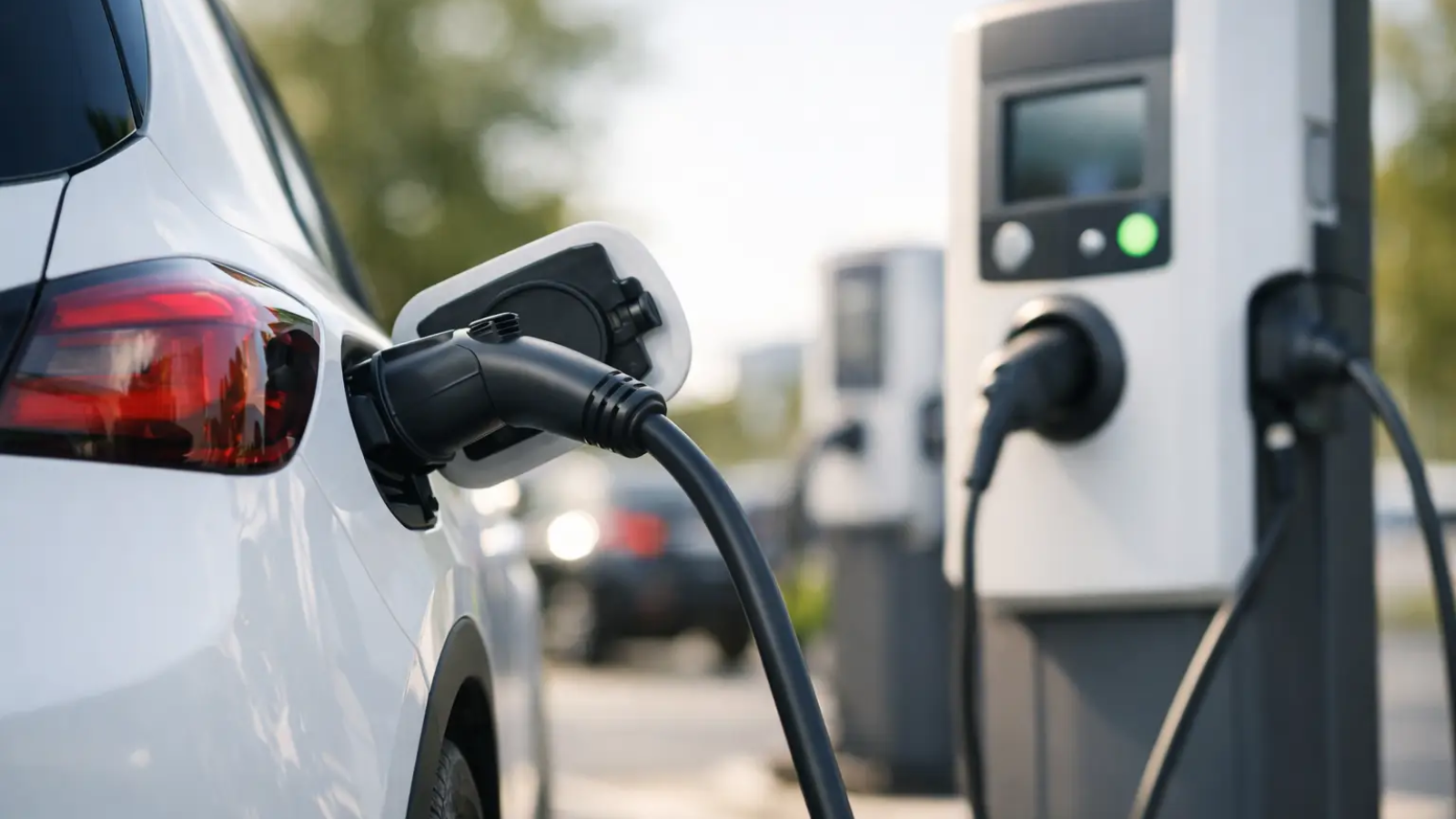
You plug in your EV at night, wake up, and the battery is ready for the day. That simple routine hides a smart chain of energy conversion, battery management, and charging control. If you have ever wondered how does electric car charging work, the answer is more practical than technical jargon makes it sound.
At its core, EV charging is about moving electricity from the grid – or a solar-backed energy system – into your vehicle’s battery safely and efficiently. The charger, the cable, the car, and the battery management system all play a role in controlling how much power flows and how fast the battery can accept it. Once you understand that relationship, charging an electric car starts to feel less like a new technology and more like a new fueling habit.
How does electric car charging work at a basic level?
An electric vehicle stores energy in a high-voltage battery pack. That battery powers the motor, which moves the car. Charging reverses the process by replenishing the energy in the battery from an outside electricity source.
The key detail is that batteries store direct current, or DC. Most homes and many buildings supply alternating current, or AC. So when you plug into a typical home charger or workplace charger, the car uses an onboard charger to convert AC electricity into DC before storing it in the battery. With DC fast charging, that conversion happens mainly outside the car, which allows much higher charging speeds.
This is why charging speed is not just about the charger on the wall. It also depends on the vehicle’s onboard charging capability, the battery’s current state of charge, ambient temperature, and software controls designed to protect battery health.
The three common EV charging levels
The easiest way to understand how electric car charging works is to look at charging by speed and power delivery.
Level 1 charging
Level 1 uses a standard household outlet. In the US, that is usually a 120-volt outlet. It is the slowest option and often adds only a few miles of range per hour. For drivers with short daily commutes, it can be enough. For larger batteries or heavier daily driving, it often feels too slow.
Level 1 works best as a basic home backup, not necessarily as the ideal long-term setup for every EV owner.
Level 2 charging
Level 2 charging uses a 240-volt power supply, similar to what large household appliances use. This is the most common solution for home EV charging, multifamily properties, workplaces, and many public chargers. It can typically add meaningful range over a few hours, making overnight charging realistic for most drivers.
For many homeowners, Level 2 is the point where EV ownership becomes especially convenient. You come home, plug in, and let the car charge during off-peak hours or while solar production offsets part of your energy use.
DC fast charging
DC fast charging is designed for speed. These chargers deliver direct current straight to the battery at much higher power levels than AC systems. They are common along highways, in commercial charging hubs, and in places where drivers need a quick top-up instead of a full overnight charge.
Fast charging is useful, but it is not always the cheapest or most battery-friendly option for daily use. Many EV owners rely on home or workplace charging most of the time and use DC fast charging for road trips or schedule-driven travel.
What happens after you plug in?
When you connect the charging cable, the car and charger begin communicating before any significant power starts flowing. They verify safety conditions, confirm the power available, and determine how much electricity the vehicle can accept.
The vehicle’s battery management system is central to this process. It monitors battery temperature, voltage, and charge level across the battery pack. Based on that data, it adjusts charging speed to protect battery life and maintain safe operation.
This is why charging is usually fastest when the battery is low to moderately charged, then slows down as it gets closer to full. The system intentionally tapers power to reduce stress on the battery. In practical terms, charging from 10% to 80% is often much faster than going from 80% to 100%, especially at DC fast chargers.
Why charging speed varies more than people expect
Two EVs plugged into similar chargers can charge at different speeds. That is not a fault. It is a normal result of several variables working together.
The charger itself has a maximum power output, but the vehicle also has a maximum acceptance rate. If the charger can deliver more power than the car can receive, the car sets the limit. Temperature matters too. Cold batteries usually charge more slowly until they warm up. Very hot conditions can also reduce charging speed to protect the battery.
Battery size changes the equation as well. A larger battery may take longer to fill, but it can sometimes accept higher charging power. State of charge matters just as much. A battery at 15% will usually charge faster than one already at 75%.
That is why charging time estimates are always just that – estimates. Real-world performance depends on your vehicle, your equipment, and the conditions on that specific day.
Home charging versus public charging
For most drivers, the real answer to how does electric car charging work includes one important habit change: you stop thinking only in terms of gas-station visits. Charging often happens where the car is already parked.
Home charging is usually the most convenient and often the most affordable option. It turns unused parking time into charging time and gives drivers a full or nearly full battery at the start of the day. For homeowners, installing a dedicated Level 2 charger can make EV ownership simpler, safer, and easier to manage over time.
Public charging fills the gaps. It supports apartment residents, drivers without dedicated parking, business fleets, and long-distance travelers. It also plays a growing role in commercial properties, where charging access can improve tenant satisfaction, employee convenience, and customer dwell time.
There is no single best setup for everyone. A homeowner with a garage has different needs than a property manager planning shared charging or a business operator adding chargers for staff and visitors.
Can solar power charge an electric car?
Yes, and it is one of the most compelling parts of the clean mobility transition. If your property has solar panels, that solar generation can offset the electricity used for EV charging. In some setups, depending on timing, battery storage, and energy management, your vehicle can be charged partly or mostly with solar-produced electricity.
The benefit is not just environmental. Pairing EV charging with solar can improve long-term energy economics by reducing reliance on grid power during expensive periods. It also gives homeowners and businesses a more integrated clean energy strategy, where transportation and building energy use work together instead of separately.
This is where EV charging starts to become part of a bigger infrastructure decision rather than a standalone product purchase. For customers thinking beyond the vehicle itself, charging, solar, and smart energy management make the strongest case together.
Is frequent charging bad for the battery?
Not in the way many people assume. Modern EVs are built to handle regular charging, and battery management systems are designed to protect long-term performance. What matters more is charging behavior over time.
Frequent AC charging at home is generally considered gentle on the battery. Frequent DC fast charging is not automatically harmful, but relying on it exclusively may create more heat and stress than slower charging methods. Battery health also benefits from avoiding extreme habits, such as leaving the vehicle at 100% for long periods when full charge is not needed.
Many drivers set a daily charging limit below full capacity and only charge to 100% before longer trips. That kind of routine supports both convenience and battery care.
What this means for choosing a charging setup
The best charging solution depends on where the vehicle spends most of its time, how far it drives each day, and whether the property can support future energy upgrades. A single-family home with predictable commuting patterns may need nothing more than a well-installed Level 2 charger. A commercial site may need load management, multiple ports, and planning for expansion. Multifamily properties often need a balance between fairness, access, and electrical capacity.
This is why the charging conversation is no longer just about plugging in. It is about energy planning. Power availability, installation design, user behavior, and sustainability goals all shape what works best.
Charge & Go operates in that space for a reason. EV charging makes the most sense when it fits into a broader clean energy approach rather than being treated as a one-off device on the wall.
Electric car charging is ultimately straightforward: electricity moves from a power source into a battery under carefully managed conditions. The smarter question is not just how it works, but how to make it work well for your home, property, or business. The right setup should feel simple every day while quietly supporting a much bigger shift toward cleaner transportation.
Add a Comment