
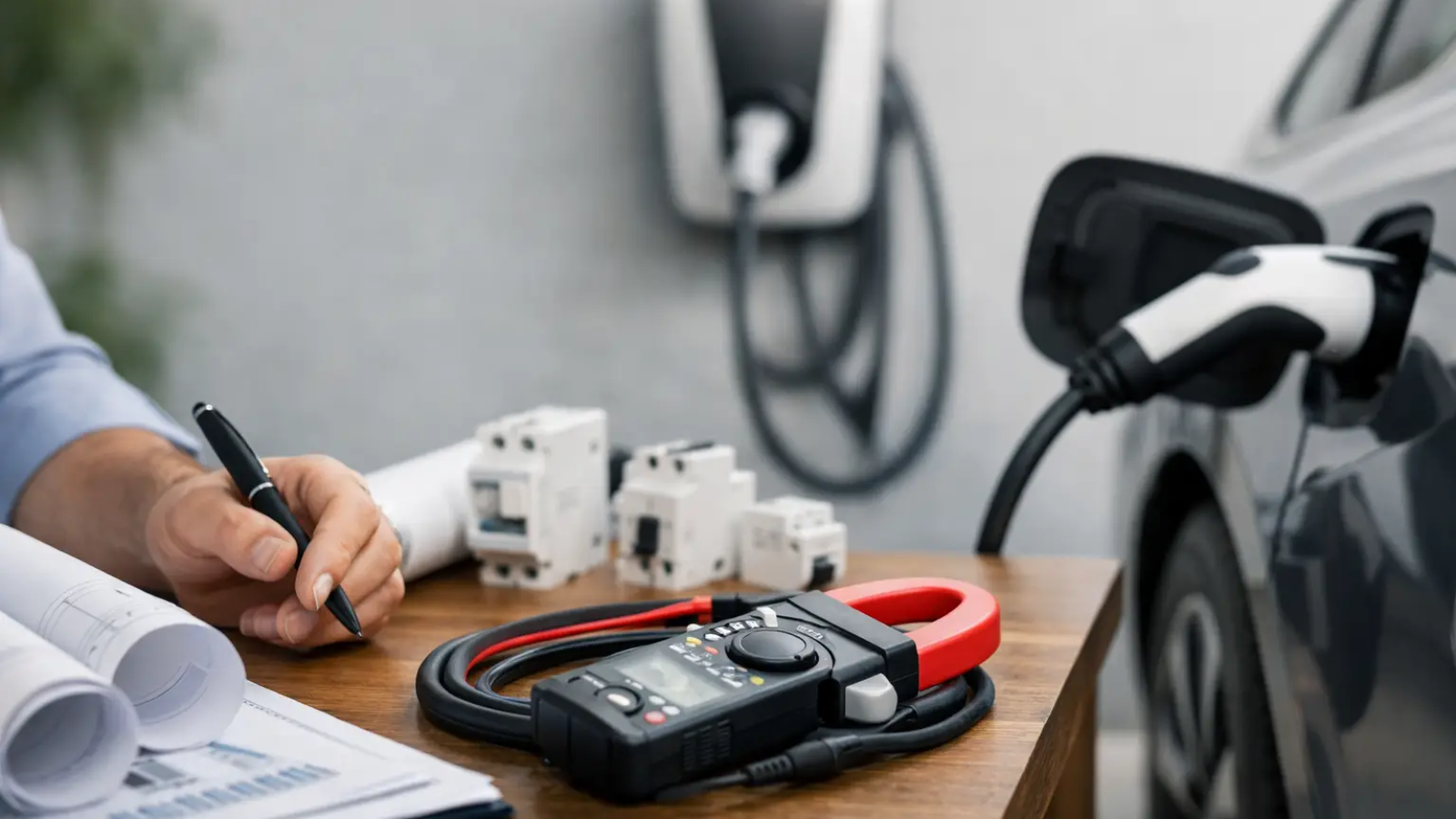
If you are shopping for an EV charger, amperage is where the decision gets real. Too low, and charging may feel slower than your routine demands. Too high, and you may pay for electrical capacity you do not actually need. Knowing how to choose home charger amperage comes down to one question: how much charging speed makes sense for your car, your home, and the way you live?
That answer is rarely one-size-fits-all. A commuter with a short daily drive has very different needs from a household with two EVs, time-of-use electricity rates, or plans to add solar. The right amperage sits at the intersection of convenience, electrical limits, and long-term energy strategy.
How to choose home charger amperage for your routine
Amperage determines how much current your Level 2 charger can deliver. In simple terms, more amps usually means faster charging, assuming your vehicle can accept that power and your electrical system can support it.
Most home Level 2 chargers fall into a practical range of 16A to 48A. A 16A charger may be enough for drivers who only need to replace a modest amount of daily mileage overnight. A 32A or 40A charger is often a strong middle ground for many households. A 48A charger can be a great fit if you drive more, want shorter charging windows, or are planning around future EV needs.
What matters most is not the highest number on the spec sheet. It is whether that amperage gives you enough usable charging during the hours your car is actually parked.
Start with your daily mileage
A simple way to size a charger is to look at how much energy you use in a normal day. If you drive 25 to 35 miles daily, your overnight charging needs are modest. In many cases, even a lower-amperage Level 2 charger will comfortably refill that usage while you sleep.
If your daily driving is closer to 60, 80, or 100 miles, the equation changes. Higher amperage gives you more flexibility, especially if you get home late, need a quicker turnaround, or occasionally forget to plug in. For households that want charging to feel effortless rather than tightly managed, extra capacity can be worthwhile.
Think in charging window, not just charging speed
Many homeowners focus on how fast a charger can fill a battery from empty. That sounds logical, but it is not how most people charge at home. In real life, you are usually topping up from the day’s use, not charging from zero.
A better question is this: how many hours is your vehicle typically parked and available to charge? If your car sits from 8 p.m. to 7 a.m., you have an 11-hour window. That gives even moderate-amperage chargers plenty of time to recover typical daily driving. If your charging window is shorter because of shared parking, off-peak rate schedules, or multiple vehicles, higher amperage starts to matter more.
Your EV matters as much as the charger
Not every EV can take advantage of every charger output. The charger and the vehicle work together, and the slower of the two usually sets the real charging speed.
Some EVs have onboard chargers that cap AC charging at a lower rate. That means installing a very high-amperage charger will not necessarily make your current vehicle charge faster. On the other hand, if you expect to upgrade to a larger EV or add a second one later, choosing a charger with more available amperage can make sense as a future-ready move.
This is where a little restraint helps. Oversizing purely for the sake of speed can increase installation complexity and cost. But undersizing can become frustrating if your transportation needs grow. The best fit often balances today’s vehicle with tomorrow’s likely use.
Single EV vs. multi-EV household
A single-EV home often has more flexibility. Even a moderate charger can handle normal overnight replenishment if the car is parked consistently.
A multi-EV household has less margin for delay. If two drivers are sharing charging time, or if one vehicle has a large battery and heavy daily use, a higher-amperage setup may help reduce scheduling headaches. In some homes, this is also where smart charging features matter as much as amperage, because load sharing can let two chargers operate more efficiently without overloading the electrical system.
How to choose home charger amperage based on your electrical panel
This is the part many buyers overlook. Your ideal charger on paper may not align with what your electrical panel can safely support.
Higher-amperage charging usually requires a larger dedicated circuit. For example, a charger delivering continuous current must be installed with headroom in mind, so the circuit rating will be higher than the charger’s output. That means a 40A charging output typically needs a 50A circuit, while a 48A charger generally needs a 60A circuit.
If your panel has ample capacity, this may be straightforward. If it is already heavily loaded by air conditioning, electric cooking, water heating, or other major appliances, adding a high-amperage EV charger may require a load calculation, panel upgrade, or energy management solution. That can change the economics quickly.
For many homeowners, the smartest choice is not the maximum amperage possible. It is the highest amperage that fits comfortably within the home’s electrical reality without triggering unnecessary upgrade costs.
When lower amperage is the smarter investment
There is a strong sustainability case for right-sizing your charger. If a 24A or 32A charger fully meets your needs, stepping up to 48A may not create meaningful day-to-day value. It may simply add installation cost and place more demand on a panel that is already doing a lot.
Choosing the right size instead of the biggest size supports a more efficient home energy system. That matters even more if you are also thinking about solar, battery storage, or broader electrification over time.
Cost, convenience, and future planning
Home charging decisions are rarely just technical. They are financial and practical too.
A higher-amperage charger may cost more to install because of breaker size, wiring requirements, and labor. The unit itself may not be dramatically more expensive, but the electrical work can be. If a modest charger already covers your weekly driving with room to spare, spending more for extra speed may not improve your life much.
That said, there are cases where paying for more amperage upfront is sensible. If you are building a new home, renovating a garage, or already upgrading your panel, future-proofing can be cost-effective. The same applies if you expect your next vehicle to have a larger battery or if your household is likely to become all-electric.
This is where a solutions-oriented approach matters. The charger should fit into your broader home energy plan, not sit apart from it. For homeowners thinking about solar integration, managed charging, or shifting energy use into off-peak periods, amperage is just one part of the system design.
A practical way to make the decision
If you want a clean decision path, start with three filters. First, calculate your normal daily driving and how many overnight hours you realistically have to charge. Second, check what your current EV can actually accept and whether a second EV is likely in the next few years. Third, have your electrical capacity assessed before assuming a higher-amperage charger is the better option.
In many homes, 32A to 40A lands in the sweet spot. It delivers solid overnight charging without pushing the electrical system as hard as a 48A setup. But that is not a rule. A lower-amperage charger can be the right answer for a light-use driver, and a higher-amperage charger can be the right answer for demanding schedules or future growth.
Charge & Go often sees the best outcomes when homeowners choose based on actual use rather than spec-sheet ambition. The goal is not just faster charging. It is dependable charging that fits your routine, supports your home, and keeps your move toward clean transportation practical.
A well-matched charger should feel easy every day. If your setup quietly restores the miles you use, works with your electrical system, and leaves room for the future you are building, you have chosen the right amperage.
Add a Comment