
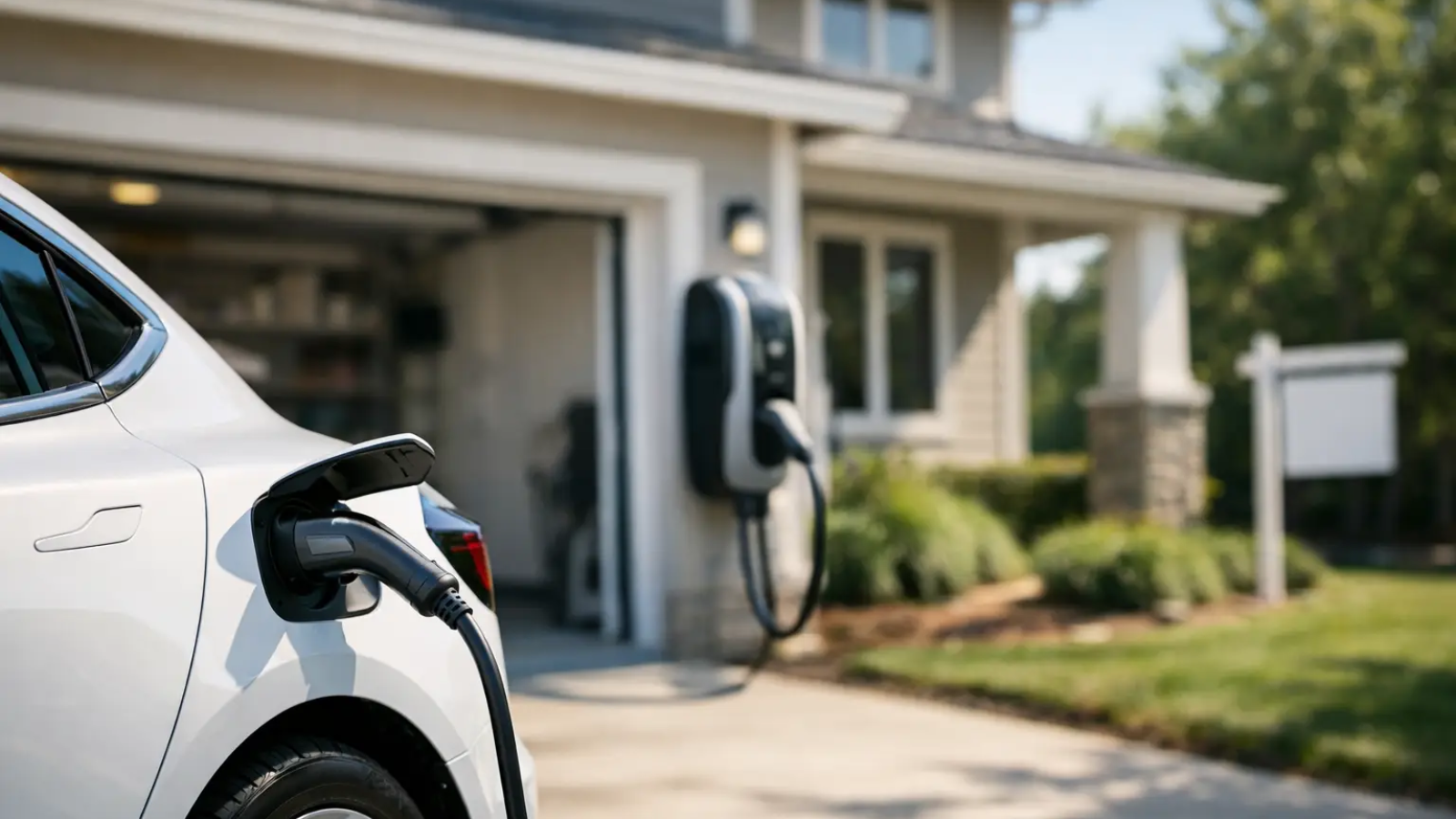
A buyer pulls into a driveway, sees a properly installed Level 2 charger, and can immediately picture charging an EV overnight. That convenience can shape how they view the entire property. So, do EV chargers increase home value? Often, they can improve a home’s appeal and marketability, especially where EV adoption is growing. But the financial impact is not automatic, and it depends on the charger, the electrical setup, the local market, and the buyer.
For homeowners considering an EV charger, the strongest case is usually broader than resale value alone. You gain a more convenient way to charge, prepare the property for changing transportation habits, and add an energy feature that may help your home stand out when it is time to sell.
Do EV Chargers Increase Home Value in Every Market?
An EV charger is not a guaranteed dollar-for-dollar home improvement. Unlike a kitchen renovation with years of comparable sales data behind it, residential charging is still becoming a standard feature in many markets. Appraisers may not always assign a separate, clearly visible value to the equipment.
That does not mean the charger has no value. A feature can influence a buyer’s willingness to make an offer, their confidence in the home, or how quickly they act. In a competitive market, those outcomes matter. A move-in-ready charging setup removes one project from a buyer’s list and one source of uncertainty from an EV purchase.
The effect tends to be stronger in areas with higher EV ownership, higher gasoline costs, supportive clean-energy policies, and limited access to convenient public charging. It can also matter more for detached homes with garages or dedicated parking, where home charging is practical and expected.
In locations where EV adoption remains low, a charger may be viewed as a useful bonus rather than a price-driving feature. The property will still need to perform well on the fundamentals: location, condition, layout, school district, and comparable sales.
Why Buyers See Home Charging as a Real Benefit
For most EV drivers, home charging is the easiest and most affordable way to power daily travel. A Level 2 charger can add substantially more range per hour than a standard wall outlet, allowing many drivers to recharge overnight and begin the morning ready to go.
That convenience has a direct lifestyle value. Buyers do not need to schedule regular trips to public chargers for routine charging, wait at a station after work, or wonder whether the nearest charger will be available. For households with one or more EVs, a dedicated charger can feel less like an optional accessory and more like essential home infrastructure.
There is also a preparedness factor. A buyer who does not own an EV yet may still recognize that the home is ready for one. As automakers add more electric models and used EV options expand, a prewired or fully installed charging solution can signal that the property is built for the next phase of transportation.
The Installation Quality Matters More Than the Charger Alone
A visible charger on the wall is only part of the story. Buyers, inspectors, and appraisers will care more about whether the installation is safe, permitted when required, and appropriate for the home’s electrical capacity.
A professionally installed Level 2 charger connected to a suitable circuit is generally more compelling than a basic outlet, a poorly routed cable, or equipment installed without clear documentation. Keeping records of permits, electrical work, warranties, and charger specifications can make the feature easier to understand during a sale.
Electrical capacity is particularly important. Some older homes may need a panel upgrade, load management device, or other electrical work before supporting high-power charging. Completing that work can make the home more future-ready, but it also raises the project cost. Homeowners should evaluate the full electrical scope before assuming an EV charger will deliver a large resale return.
A smart charger can add practical appeal as well. Features such as scheduled charging, energy monitoring, access controls, and utility-rate optimization give buyers more control over when and how they charge. Still, smart functionality should support a simple ownership experience, not create an app-dependent system that feels complicated or difficult to transfer to a new owner.
A clean setup makes a better impression
Placement matters. A charger should be easy to reach from the vehicle’s charging port, protected from avoidable damage, and installed with cable management that keeps the garage or parking area tidy. In outdoor locations, equipment should be rated for the environment and positioned to reduce trip hazards.
These details may sound small, but they influence buyer perception. Clean, intentional energy upgrades communicate that the property has been cared for. Improvised installations can create questions instead.
What Kind of Charger Adds the Most Appeal?
For many single-family homes, a Level 2 charger offers the best combination of everyday usefulness and buyer appeal. It provides significantly faster charging than a standard 120-volt outlet without the cost and electrical demands of DC fast charging, which is rarely practical for a typical residence.
The ideal charging speed depends on the home’s electrical system and the household’s driving needs. More power is not always better if it requires an expensive upgrade that does not fit the property or the likely buyer. A right-sized installation with dependable equipment is usually a smarter investment than pursuing the highest available output.
Homes with two EV-driving adults may benefit from planning beyond a single charger. That could mean installing one charger while adding conduit or electrical capacity for a second unit later. Future-ready wiring is less visible than a finished charger, but it may be highly useful to a buyer who expects the household’s charging needs to grow.
For condos, townhomes, and other shared properties, the value question becomes more complex. Dedicated parking, HOA rules, utility metering, and access to common electrical infrastructure all affect what is possible. A charger assigned to a specific parking space can be a meaningful differentiator, but homeowners should confirm approval and ownership arrangements before installing one.
EV Charging Works Best as Part of a Home Energy Plan
An EV charger can be even more compelling when it fits into a thoughtful energy strategy. Solar panels, battery storage, efficient appliances, and managed charging can help homeowners use electricity more intentionally and reduce reliance on fossil fuels.
Solar does not make every charge free, and production does not always align perfectly with when a vehicle is plugged in. Still, pairing solar generation with smart charging can help a household direct more locally produced clean energy toward transportation. That connection between mobility and home energy is increasingly relevant to buyers who want lower operating costs and a smaller carbon footprint.
This is where planning pays off. Before installing a charger, consider the electrical panel, utility rate structure, solar capacity, parking habits, and future vehicle needs together. Charge & Go approaches charging as part of that larger clean-energy picture because the best solution is one that works reliably for the household now and remains useful as needs change.
How to Protect the Value of Your Investment
The most effective approach is to install charging infrastructure because it improves your daily life, then treat resale value as a potential added benefit. Choose equipment from a reputable manufacturer, use a qualified installer, and ensure the work meets local electrical and permitting requirements.
Keep the installation documents in your home records. When you list the property, describe the charger accurately: its charging level, electrical capacity, smart features, permit status, and whether the equipment will remain with the home. If the charger is removable or tied to a personal account, decide early how it will be transferred or reset for the buyer.
It also helps to discuss the feature with your real estate agent before listing. An agent who understands EV charging can position it as a practical amenity rather than an obscure technical detail. They can also identify whether comparable homes in your area are advertising chargers, solar, upgraded panels, or other electrification features.
A Practical Upgrade With Growing Relevance
Home value is shaped by the market, not by one piece of hardware. An EV charger will not compensate for an overpriced home or replace needed repairs. Yet for the right buyer, it can make a property more convenient, more future-ready, and easier to choose over a similar home without charging.
As electric mobility becomes more common, well-planned home charging is likely to move from a differentiator to an expected feature in more neighborhoods. Install it for the freedom to charge where you live, build it with care, and let the next buyer see a home already prepared for cleaner miles ahead.
Add a Comment