
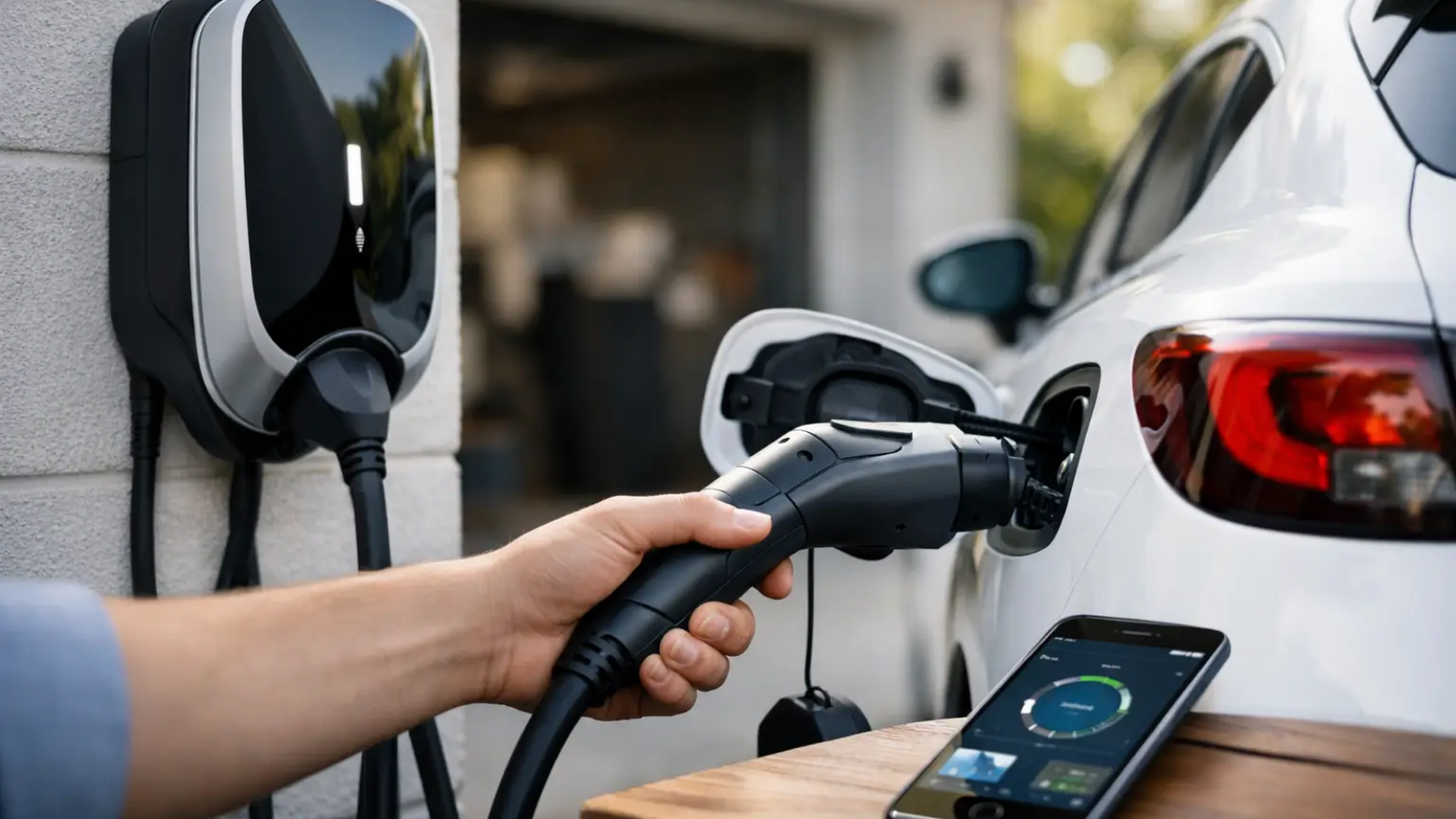
You usually notice the limits of a charger on an ordinary day, not during a product demo. It shows up when your EV did not finish charging overnight, when energy rates spike during peak hours, or when two vehicles need power at the same time. That is why a smart EV charger review should look past glossy features and focus on how a charger performs in real life.
For homeowners, the right charger can lower charging costs, support solar use, and make daily driving easier. For businesses and property managers, it can affect operating costs, driver satisfaction, and future scalability. Smart chargers promise more control than basic plug-and-charge units, but not every feature carries the same value.
Smart EV charger review: the difference between smart and basic
A basic Level 2 charger does one core job well – it delivers power to your vehicle at a consistent rate. For some drivers, that is enough. If your electricity price is flat, your driving schedule is predictable, and you do not need data or remote access, a simpler charger may cover your needs.
A smart EV charger adds connectivity, software controls, and energy management features. Most connect through Wi-Fi, Ethernet, Bluetooth, or cellular service. From there, the charger can schedule sessions, track usage, respond to time-of-use pricing, and in some cases coordinate with solar production or building energy demand.
That added intelligence is what makes smart charging attractive, but it also creates a trade-off. More software can mean more convenience, yet it also means setup quality, app design, and long-term support matter just as much as hardware quality.
What matters most in a smart EV charger review
Charging speed gets the most attention, but it is rarely the only factor that shapes satisfaction. A charger with strong power output but weak software can become frustrating quickly. The best products balance electrical performance with reliable controls.
Power output and real charging needs
Most home smart chargers fall into the Level 2 category, commonly delivering between 32 and 48 amps. In practical terms, that is often enough to fully recharge a daily-driven EV overnight. More power sounds better, but not every home electrical panel can support the highest output without upgrades.
This is where product reviews often miss the point. The fastest charger is not automatically the best charger. If your car caps charging at a lower rate, or your home would require costly electrical work to support maximum amperage, paying for extra capacity may bring little real benefit.
For commercial settings, power strategy matters even more. A workplace or multifamily property may prefer multiple chargers with managed load sharing rather than a few high-output units that strain the building supply.
Smart scheduling and energy cost control
One of the strongest reasons to choose a smart charger is the ability to charge when electricity is cheaper. Time-of-use scheduling can shift charging to off-peak hours automatically, which is especially valuable in markets where utility pricing changes by time of day.
This feature sounds simple, but the user experience matters. The best chargers make schedules easy to set and easy to trust. If an app is confusing or the charger drops connection often, a money-saving feature can become one more thing to troubleshoot.
For many households, scheduling alone can justify the move from a basic charger to a smart one. For businesses managing several vehicles or offering charging to tenants and employees, the savings can be much more significant over time.
App quality and connectivity
A charger is only as smart as the platform behind it. Good apps provide clear status updates, charging history, alerts, and remote controls without making the process feel technical. Weak apps bury useful settings, lose device connections, or make firmware updates harder than they should be.
This part of a smart EV charger review deserves more attention because it affects daily use more than marketing specs do. A charger may look excellent on paper, but if the app is unreliable, owners often end up using it like a basic charger anyway.
Wi-Fi dependence is another issue worth checking. In garages or parking structures with poor signal, some chargers struggle unless they offer Ethernet or cellular backup. That matters for both homes and commercial sites.
Smart EV charger review for solar-compatible charging
For buyers interested in clean energy, solar compatibility can be one of the most valuable smart features. A charger that can align EV charging with rooftop solar generation helps turn your vehicle into a more direct extension of your renewable energy system.
Not every smart charger handles solar integration the same way. Some simply allow manual scheduling so you can charge during daylight hours. Others offer more advanced energy coordination, adjusting charging speed based on available solar output or household demand.
This distinction matters. If your goal is to maximize self-consumption of solar power, basic scheduling may help, but dynamic solar matching usually delivers better results. It can reduce grid reliance and improve the economics of your solar investment.
For homeowners, that means lower-carbon charging and potentially lower utility bills. For businesses with solar installations, it can support broader energy management goals and strengthen sustainability reporting. Charge & Go operates in that space where EV charging and solar planning should work together, not as separate decisions.
Load management is where smart chargers prove their value
Load management is one of the least flashy and most important features in any serious charger review. It allows a charger, or a network of chargers, to balance electricity use so the building does not exceed safe or cost-effective limits.
At home, this can help avoid expensive panel upgrades. A smart charger may reduce charging speed temporarily when other major appliances are running, then increase it again when demand drops. That flexibility can make EV charging possible in homes where capacity is limited.
In commercial properties, load management is often essential. Offices, fleets, retail sites, and apartment buildings rarely have unlimited electrical capacity waiting for EV charging. Smart systems that share available power across multiple chargers can expand access without forcing immediate infrastructure expansion.
If you are evaluating chargers for a property with more than one parking space, this feature often matters more than top-end charging speed.
Reliability, safety, and support
A charger is part of your electrical infrastructure. That makes reliability and safety non-negotiable. Certifications, weather resistance, cable quality, and thermal protection all deserve attention, especially for outdoor installations.
But support is part of reliability too. Chargers receive firmware updates, apps change, and utility programs evolve. A manufacturer with responsive customer support and a track record of software maintenance is usually a safer long-term choice than one offering a long feature list with uncertain follow-through.
This is where cheaper smart chargers can disappoint. A lower upfront price may look attractive, but if the app stops improving or support is slow when issues arise, the total ownership experience can suffer.
Which buyers benefit most from a smart charger
Not every EV owner needs a smart charger, but many will benefit from one. If you charge overnight on a fixed rate, drive moderate distances, and do not care about monitoring usage, a basic charger can still be a practical choice.
Smart chargers make the most sense when your energy decisions are more dynamic. That includes households with time-of-use pricing, homes with solar panels, drivers tracking charging costs, and properties where available electrical capacity needs to be managed carefully.
For businesses, the case is even stronger. Access control, usage reporting, load balancing, and future network expansion can turn charging from a simple amenity into a manageable energy asset. Property managers and employers should think beyond today’s charger count and consider how the system will perform when EV adoption grows.
A better way to judge smart charger value
The smartest way to evaluate a charger is not to ask which one has the most features. It is to ask which one solves the right problem. Do you want to reduce charging costs, make better use of solar energy, support multiple users, or avoid an electrical upgrade? Those goals point to very different products.
That is why a useful smart EV charger review should stay grounded in context. A homeowner with one EV, strong Wi-Fi, and rooftop solar needs something different from a retail site planning six shared chargers. Both may need smart charging, but not in the same form.
The market is moving in a clear direction. EV chargers are becoming part of a broader energy system that includes home power management, renewable generation, and intelligent demand control. Buyers who think about charging that way now will make better decisions that last longer.
If you are comparing options, look for a charger that fits the way you actually use energy, not the way product pages describe it. The right charger should make clean transportation easier, cheaper, and more practical every day.
Add a Comment