
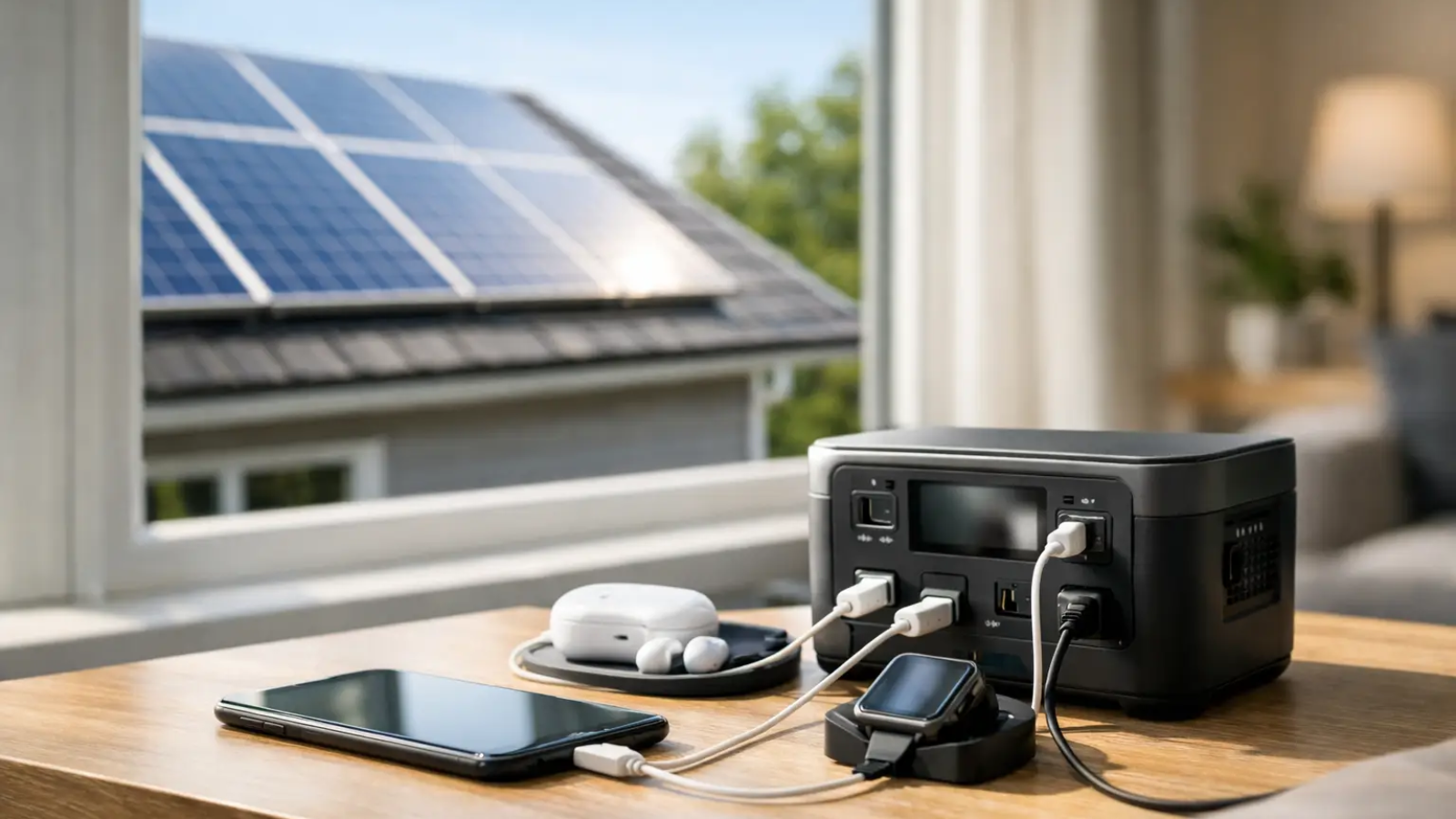
A sunny roof can offset far more than household lighting. For an EV owner, it can turn the hours when a car sits parked at home into an opportunity to use locally generated electricity. But learning how to power chargers with solar starts with one practical distinction: solar panels do not usually connect straight to an EV charger or a device charger. They feed a complete electrical system designed to make power safe, stable, and available when you need it.
That distinction matters because sunlight and charging demand rarely line up perfectly. Solar production peaks around midday, while many vehicles arrive home in the evening. A well-designed setup manages that gap with grid connection, battery storage, intelligent charging controls, or a combination of all three.
Start With the Charger and Its Energy Demand
“Chargers” can mean anything from a USB phone charger to a Level 2 EV charger. The underlying principle is similar, but the equipment and power levels are very different.
A phone, laptop, e-bike, or small power station can often be charged from a portable solar panel through a compatible charge controller and battery. An EV charger, by contrast, is a major household load. A typical Level 2 charger draws 7.2 to 11.5 kilowatts, depending on the circuit and vehicle. At 7.2 kW, one hour of charging adds roughly 7.2 kilowatt-hours of energy before minor system losses.
The right first question is not, “How many panels do I need?” It is, “How many kilowatt-hours do I need to add each day or week?” If your EV uses 30 kWh for a typical week of driving, your solar system needs to produce at least that much additional energy over time if the goal is to cover the vehicle’s consumption. It does not have to produce it at the exact minute the vehicle charges, provided the home is connected to the grid or has sufficient storage.
How to Power Chargers With Solar in a Home System
For most homes, the most dependable arrangement is a grid-connected solar system paired with a properly installed EV charger. Solar panels generate direct current electricity. An inverter converts it to the alternating current used by the home’s electrical panel, appliances, and most Level 2 EV chargers.
During sunny hours, the home uses solar generation first. Any remaining power can charge an EV, charge a home battery, or flow to the utility grid, depending on system settings and local utility rules. When solar output drops, the charger can draw from the battery or grid.
This is often called solar-powered charging, even when the car is not connected during daylight. Over a billing period, exported solar energy may offset electricity imported later, subject to your utility’s net-metering or solar compensation policy. The economics depend on those local rates, which can differ sharply by state and utility.
Solar panels and inverter capacity
Panel capacity is measured in kilowatts, while energy production is measured in kilowatt-hours. A 10 kW solar array does not produce 10 kW all day. Its output changes with season, weather, roof orientation, shade, and temperature.
A useful planning estimate is to calculate expected annual solar production for the property, then compare it with annual household use plus expected EV charging. A home that uses 12,000 kWh per year and adds 3,000 kWh of EV charging needs a system sized around that combined demand if the goal is broad annual offset. Local solar professionals can model this using the roof’s actual conditions rather than generic assumptions.
The inverter also needs to be appropriate for the solar array and home electrical design. This is not the same as sizing it to match the EV charger’s maximum power draw. The grid can support the charger when solar output is lower, while the inverter handles the solar generation entering the home system.
The EV charger and electrical panel
A dedicated Level 2 charger usually requires a 240-volt circuit. Its charging rate must fit the available capacity of the home’s electrical service and panel. A 40-amp charging circuit, for example, typically supports a 32-amp continuous charging load under electrical code requirements.
If panel capacity is limited, a load-managed charger can be a smarter alternative to a costly service upgrade. These chargers monitor total household demand and reduce or pause EV charging when other loads, such as air conditioning or an electric range, are high. When demand falls, charging resumes. This protects the electrical service while helping the EV use available solar production.
Match Charging Times to Solar Production
The simplest way to increase direct solar use is to charge when the sun is producing energy. If an EV is at home during the day, set the charger or vehicle to begin charging late morning and stop before evening. This may be especially effective for remote workers, households with a second vehicle at home, and workplaces where employees park for several hours.
Smart chargers can take this further. Some use solar-aware controls to adjust charging current as household solar surplus rises and falls. Instead of importing power at a fixed 7.2 kW, the charger may begin at a lower rate and increase only when excess solar is available. This helps maximize self-consumption of solar energy.
There is a trade-off. Solar-only charging can be slower and less predictable on cloudy days. If the vehicle must be ready by a specific time, use a minimum charging target or a scheduled overnight backup window. Reliable mobility should not depend on perfect weather.
Time-of-use electricity rates also matter. In areas where evening power is expensive, daytime solar charging can reduce costs even without a battery. Where overnight rates are exceptionally low, it may be cheaper to charge at night and use solar to serve other household loads. The best strategy balances cost, carbon reduction, driving needs, and utility rules.
When a Home Battery Makes Sense
A battery stores excess solar generation for later use. It can help charge an EV after sunset, provide backup power during an outage, and reduce grid purchases during costly peak periods. For homeowners with frequent outages or high evening electricity prices, that added flexibility can be valuable.
Still, a battery is not automatically required for solar EV charging. Batteries add significant upfront cost, have finite storage capacity, and incur energy losses as power moves in and out. A standard home battery may store roughly 10 to 15 kWh, while a single substantial EV charging session can require much more. Using a home battery to fully recharge a large EV every night can deplete it quickly.
For many properties, the strongest first step is solar plus a smart, grid-connected charger. Add battery storage when backup resilience, evening self-use, or demand-charge management has clear value. Commercial sites may find batteries more compelling when they need to control peak demand from multiple chargers.
Portable Solar Charging for Small Devices
Portable solar charging works best for low-power equipment: phones, tablets, lights, cameras, laptops, and small batteries. The reliable chain is panel, charge controller, battery, then device. The battery acts as a buffer, preventing fluctuating sunlight from interrupting charging and allowing devices to charge after dark.
Avoid connecting a solar panel directly to a device unless the equipment is specifically designed for that use. Panel voltage can vary, cloud cover can cause charging to cycle on and off, and USB output may not remain stable. A solar generator or power station with regulated USB and AC outputs is often the more practical choice for camping, fieldwork, or emergency preparedness.
Portable panels are not a realistic primary method for charging an EV. Their output is modest relative to an EV battery, and the charging process requires compatible equipment and careful electrical management. For transportation, a fixed rooftop solar system or a solar-supported charging site is the practical path.
Plan for Safety, Permits, and Future Growth
Solar and EV charging both involve high-voltage electrical equipment. Work with qualified installers who can assess roof conditions, electrical service capacity, local permitting, utility interconnection rules, and charger placement. A professionally designed system also accounts for grounding, disconnects, overcurrent protection, and code-compliant wiring.
For businesses, plan beyond the first charger. Consider how many vehicles may charge in two to five years, whether drivers will charge during solar hours, and how charging loads could affect demand charges. Load management, shared power across chargers, and solar can often scale more cost-effectively than oversizing every circuit on day one.
For homeowners, leave room for changing needs. An additional EV, electric heat pump, induction range, or home battery can alter the electrical picture quickly. Designing with a clear path to expansion protects the value of the investment.
Solar-powered charging is most effective when it is treated as an energy strategy, not a single piece of equipment. Start with your driving and electricity habits, build a safe system around them, and let smart controls turn every available sunny hour into cleaner miles.
Add a Comment