
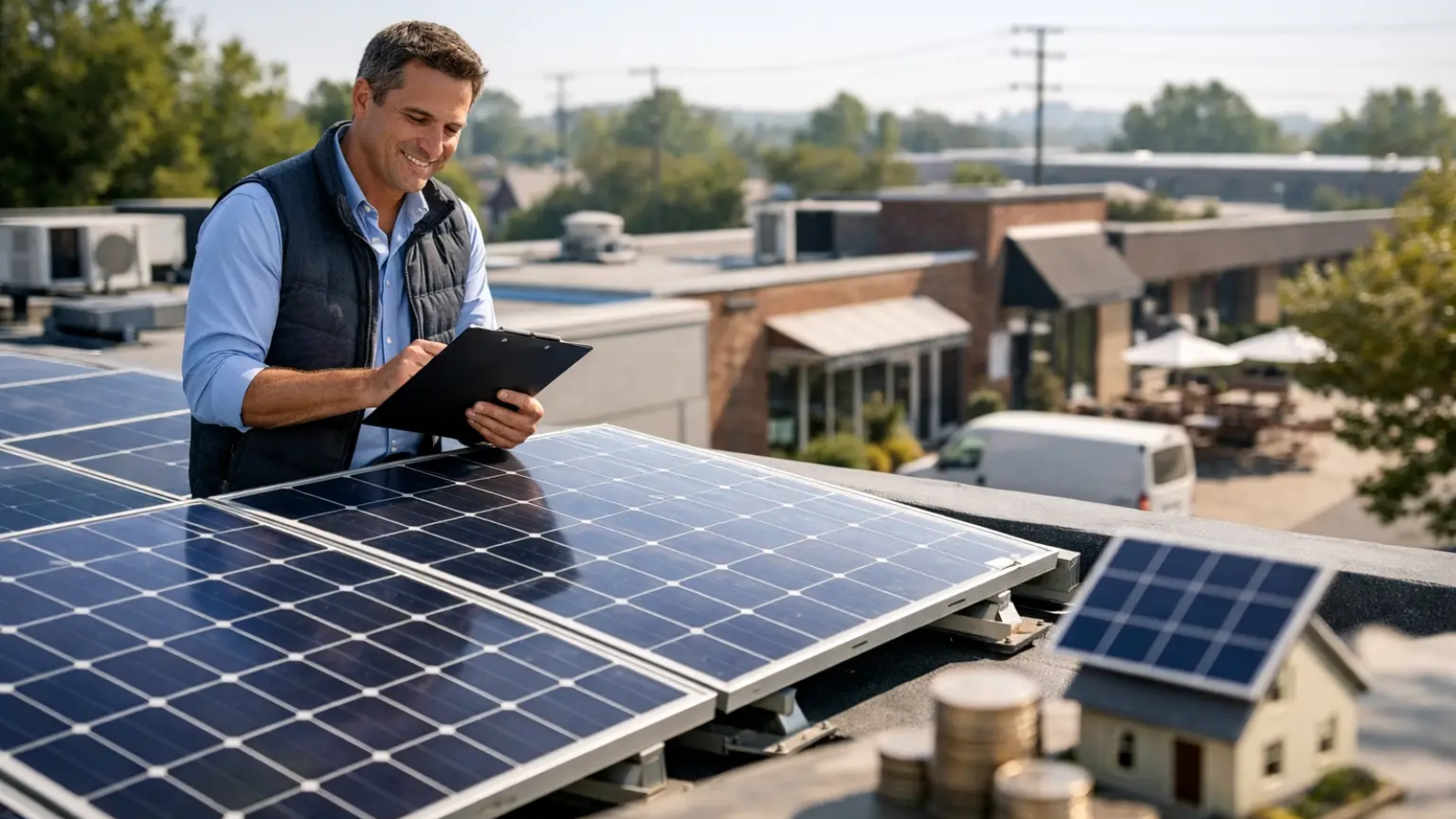
A restaurant’s walk-in refrigerators, a retail store’s air conditioning, and a small warehouse’s daytime equipment all draw power when the sun is high. That overlap is why solar solutions for small businesses can be more than a sustainability statement. When designed around how a property actually uses electricity, solar can reduce exposure to utility-rate increases, make operating costs more predictable, and support a visible commitment to cleaner operations.
The strongest projects are not built around the biggest possible panel count. They are built around a business’s energy profile, building constraints, financial goals, and future plans such as workplace EV charging. For owners, property managers, and operations teams, the question is not simply whether solar works. It is whether the system is sized and structured to work for their business.
Why solar solutions for small businesses make sense
Electricity is an operating expense that can be difficult to control. Businesses may be able to adjust hours, replace inefficient equipment, or negotiate supplier contracts, but they cannot eliminate the need for power. Solar gives an organization a way to produce part of its own electricity at the point of use.
The value is often strongest for businesses with significant daytime demand. Offices, clinics, cafés, shops, gyms, light manufacturers, and service facilities may consume much of their energy during the same hours a solar array produces. Rather than sending all solar generation to the grid, the property can use a meaningful share on site. That generally improves project economics.
Solar also supports customer and employee expectations. A rooftop system is a practical signal that a business is taking action on energy use, not merely making a claim. For companies that serve environmentally conscious customers, pursue sustainability targets, or recruit talent in competitive markets, that signal can carry real value. It should not replace a sound financial case, but it can strengthen one.
Start with the load, not the panels
A solar proposal should begin with at least 12 months of utility data. Monthly bills show total consumption, but interval data, where available, offers a clearer view of when electricity is used and whether demand charges are a major part of the bill. This distinction matters because solar production peaks during the day, while some businesses see their highest loads in early morning, late afternoon, or after sunset.
A bakery with daytime production may be an excellent solar candidate. A venue that uses most of its power at night may still benefit, but it could need a different system size, a battery, efficiency upgrades, or a pricing structure that reflects lower direct solar consumption. The right answer depends on the load profile.
Assess the property before committing
Roof condition, usable area, shading, structural capacity, electrical infrastructure, and local permitting rules all influence what is feasible. Replacing an aging roof shortly after installing solar creates unnecessary cost and disruption, so roof life should be part of the decision from the beginning.
Ground-mounted canopies and parking structures can be alternatives where rooftops are limited. They may cost more than a straightforward roof installation, but they can create shade for staff and customers while opening a path for EV charging. For businesses with visible parking and a growing number of EV-driving visitors, this can turn an energy project into a customer experience improvement.
The electrical panel also deserves early attention. A solar system, battery, and EV chargers all connect to the property’s electrical service. If the existing equipment has little spare capacity, an upgrade may be required. That is not necessarily a reason to abandon the project, but it must be included in the scope and budget rather than treated as a surprise later.
Size for value, not maximum generation
A larger array does not automatically create a better return. The economics depend on the value of every kilowatt-hour generated, including how much is consumed on site, local export compensation rules, and utility rate design. In some areas, exporting excess electricity earns less than avoiding a purchase from the utility.
A well-designed system therefore balances production with expected consumption. It also considers planned changes in the business. New HVAC equipment, longer operating hours, added refrigeration, or a fleet of electric vehicles could increase demand. Conversely, a planned move, lease expiration, or reduction in floor space may call for a more conservative investment.
Build the financial case with realistic assumptions
Solar should be evaluated as a long-term infrastructure decision. The upfront price matters, but it is only one part of the picture. A credible analysis estimates annual generation, expected utility savings, operations and maintenance needs, equipment warranties, financing costs, and the value of available tax incentives.
For eligible US businesses, the federal Investment Tax Credit can materially improve project economics. Some projects may qualify for additional incentives based on factors such as domestic-content requirements, location, or the type of organization involved. Eligibility and tax treatment are specific to each business, so owners should work with qualified tax and legal advisors before relying on an incentive in a financial forecast.
Financing changes the decision as well. A cash purchase may deliver the strongest lifetime savings, but it ties up capital that could be used for inventory, hiring, or expansion. Loans can spread the cost while preserving ownership benefits. Third-party arrangements may reduce upfront expense, though they can limit the share of long-term savings retained by the business. There is no universal best option – the appropriate structure depends on cash flow, tax position, risk tolerance, and how long the organization expects to occupy the property.
Do not assume utility policies will remain unchanged for the full life of a system. Net metering and export rates vary by state and utility, and they can evolve. A prudent model tests more than one scenario, including lower export value and modestly different utility-price growth. If the project remains compelling under conservative assumptions, the business has a firmer foundation for moving ahead.
Pair solar with EV charging when the timing is right
For small businesses, EV charging can serve employees, company vehicles, tenants, or customers. Solar and charging naturally complement one another, particularly for daytime workplace charging, because solar generation can offset part of the charging load. The combination also gives a business a clearer clean-energy story: power is being produced where vehicles are parked and charged.
Still, solar does not mean every charging session is powered directly by sunlight. Electricity flows through the property’s electrical system, and charging demand may occur when solar production is low. The goal is usually to improve the property’s overall energy balance, not to promise one-for-one solar charging at every moment.
Charging equipment should be selected based on who will use it. Employee charging may prioritize dependable access during work hours. A customer-facing site may need payment options, usage controls, and clear parking policies. A small electric fleet may require load management so vehicles can charge without creating avoidable demand peaks. Planning solar, electrical upgrades, and EV charging together can reduce rework and help a property scale intelligently.
A practical path from idea to installation
The most successful projects follow a deliberate sequence. Begin by collecting utility bills, determining ownership or lease rights, and identifying the decision-makers who need to approve the project. Next, commission a site assessment that covers the roof, electrical equipment, shading, and potential locations for future chargers or batteries.
Then compare proposals on more than the quoted price. Look at projected annual production, assumptions about utility rates, equipment quality, warranty terms, monitoring access, permitting responsibilities, and the installer’s plan for service after commissioning. If one proposal promises dramatically higher savings than the others, ask what assumptions produce that result.
A clear implementation plan should also address operations. Staff should know whom to contact if monitoring identifies an issue, how to access production information, and what site work will occur during installation. For customer-facing locations, communicate any temporary parking or access changes early. Solar is a long-lived asset, and a thoughtful handoff helps ensure it performs as intended.
Avoid common planning mistakes
Small businesses can lose value when solar is treated as a standalone purchase. Oversizing without understanding export rules, overlooking roof repairs, ignoring demand charges, or installing EV chargers without load planning can all weaken an otherwise promising project.
It is equally risky to chase a short payback period at the expense of reliability. Quality components, credible generation estimates, and accessible maintenance support matter over decades of operation. The lowest bid can be the most expensive choice if it leaves a business with poor performance data, unclear warranty support, or equipment that cannot accommodate future energy needs.
For businesses considering solar and charging together, providers such as Charge & Go can help connect the energy and mobility sides of the plan. The key is to ask for a design that reflects the property’s actual operations, not a generic package.
A well-planned solar project gives a small business something valuable: more control over an essential cost while making room for cleaner transportation and future growth. Start with the building, the bills, and the people who use the property every day. The right system will follow from there.
Add a Comment