
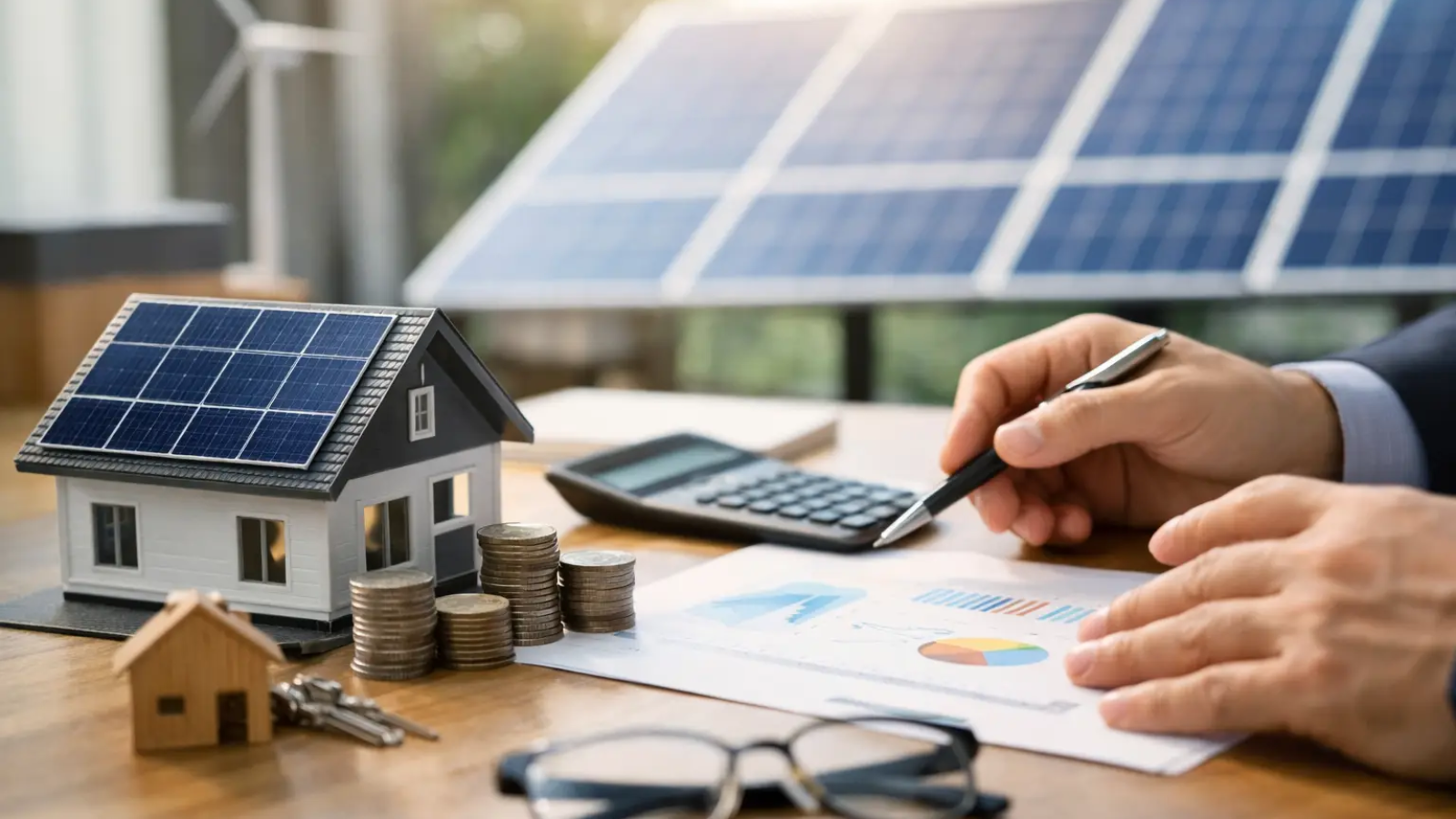
A solar proposal can look compelling until the payment conversation begins. The right solar financing options do more than make a system affordable on day one. They shape who owns the equipment, who receives available incentives, how much you save over time, and how easily solar can support future EV charging.
For homeowners, property managers, and business leaders, the best route is rarely the one with the lowest monthly payment. It is the one that fits your cash flow, tax position, energy goals, and plans for the property. A system designed to power an EV charger, for example, deserves a different conversation than a system intended only to offset daytime office consumption.
Solar Financing Options at a Glance
Most projects fall into four broad categories: cash purchases, solar loans, leases, and power purchase agreements, often called PPAs. Each approach can work well in the right situation, but they create very different long-term outcomes.
A cash purchase means you pay for the system upfront and own it from the start. A solar loan also generally gives you ownership, while spreading the cost into monthly payments. With a lease or PPA, a third party typically owns the panels and you pay to use the energy or equipment.
The ownership question matters because it often determines who can claim eligible tax benefits, who is responsible for certain maintenance obligations, and how solar is handled when the building is sold. It also affects the value you receive if utility rates rise over the next 20 to 30 years.
Paying Cash: Highest Upfront Cost, Strongest Long-Term Return
Paying cash is the most straightforward way to buy solar. There is no interest expense, no lender underwriting, and no monthly financing payment after installation. Once the system is operating, the electricity it produces can reduce the amount of power you buy from the utility.
For a homeowner with available savings or a business with capital allocated for facility improvements, a cash purchase often produces the strongest lifetime financial return. You own the asset outright, and any available incentives generally belong to you, subject to program rules and tax eligibility.
The trade-off is opportunity cost. Cash used for solar cannot be used for inventory, hiring, renovations, or other investments. Businesses should compare the expected return from solar against their cost of capital and other planned projects. Homeowners should avoid draining an emergency fund simply to eliminate a loan payment.
Solar Loans: Ownership Without the Full Upfront Payment
A solar loan lets you own the system while paying over time. This can make solar practical for customers who want the benefits of ownership but prefer to preserve cash for other priorities.
Loan terms vary widely. Interest rate, repayment period, dealer fees, prepayment rules, and whether the rate is fixed can matter as much as the advertised monthly payment. A longer term can reduce the monthly bill, but it may increase the total amount paid in interest. Some offers also feature a low stated rate paired with a sizable upfront fee built into the project price.
Ask for both the cash price and the financed price. Then review the annual percentage rate, total payments over the full loan term, and whether the payment changes after an introductory period. If you expect to use a tax credit or other incentive, understand whether the loan assumes you will make a principal reduction after receiving it. That assumed payment can be a surprise if the incentive is delayed or unavailable.
For many EV owners, a solar loan offers a useful middle ground. The system can be sized around household consumption, planned EV charging, and future electrification while keeping the upfront expense manageable. The goal is not necessarily to erase every utility bill. It is to build a system that performs well against your actual energy profile.
Solar Leases: Predictable Payments, Less Ownership Control
Under a solar lease, a provider installs and usually owns the equipment on your property. You make a scheduled payment for use of the system, commonly over a long contract term. The provider may handle monitoring, maintenance, and certain repairs, which can appeal to buyers who value predictability and do not want ownership responsibilities.
Leases can lower the barrier to adoption, especially when upfront capital is limited. But they deserve careful review. You generally do not own the panels, and eligible incentives typically go to the system owner rather than the customer. Lease payments may also escalate each year, so a low initial payment is not the entire story.
Before signing, ask what happens if you sell the property, replace the roof, or need to remove panels for repairs. Find out whether the contract can be transferred to a buyer, bought out early, or extended at the end of its term. These details can influence a future real estate transaction more than the installation itself.
PPAs: Pay for Solar Energy Produced
A PPA is similar to a lease in that a third party usually owns the system. Instead of paying a fixed equipment fee, you agree to buy the electricity the panels generate at a stated per-kilowatt-hour rate. That rate may be lower than your utility rate, offering savings without an upfront equipment purchase.
PPAs are especially common for commercial properties, schools, nonprofits, and organizations that want clean energy benefits without managing a capital asset. They can also work for homeowners in markets where residential PPAs are available.
The central question is how the PPA rate changes over time. Compare the starting price, annual escalator, contract length, and estimated utility-rate assumptions used in the proposal. A PPA with a modest escalator may still create value if utility costs rise faster, but there is no guarantee. Also check whether you are charged for all energy produced or only energy you use, and how excess generation is treated under local utility rules.
How to Compare a Solar Offer Beyond the Monthly Payment
A credible proposal should make the financial assumptions visible. The system size, projected annual production, degradation estimate, utility-rate forecast, financing terms, and incentive assumptions all affect the expected savings. If one proposal promises dramatically better results than another, ask which assumption is driving the difference.
Use the same questions for every provider:
- What is the total installed price before financing, incentives, and utility savings?
- Who owns the system, and who receives eligible tax benefits or renewable-energy credits?
- What will I pay in year one and over the entire contract or loan term?
- Is there an annual payment or price escalator?
- What happens if I sell the property, replace the roof, or want to add batteries or EV charging later?
For businesses, include demand charges, operating hours, and planned fleet electrification in the analysis. Solar production peaks during daylight hours, while fleet vehicles may charge overnight. That does not make solar a poor fit. It means the project may benefit from smart charging controls, battery storage, or a rate plan designed around the facility’s load profile.
For homeowners, look at charging behavior before choosing system size. An EV driven 12,000 miles per year can add a meaningful amount of electricity use, but the impact depends on vehicle efficiency and where charging occurs. A home charger paired with solar can improve the economics of electric driving, particularly when charging is scheduled around solar production or favorable utility rates.
Incentives and Utility Rules Can Change the Math
Federal, state, local, and utility programs can materially affect the cost of a solar project, but eligibility is never automatic. Rules differ by location, customer type, equipment, project date, and tax situation. The availability of incentives can also change through legislation, funding limits, or utility program updates.
Treat projected incentives as a line item to verify, not a discount to assume. A tax professional can help determine whether an ownership structure works with your tax position. Your installer should also explain interconnection requirements, net metering or export compensation rules, permitting, and any utility fees that affect savings.
This is particularly relevant for commercial properties. A company may have multiple ways to structure a project, including direct ownership or third-party ownership, and the best choice can depend on taxable income, balance-sheet preferences, and the length of the building lease. A lower-cost proposal is not automatically the better financial decision if it creates constraints later.
Choose a Structure That Supports the Next Step
Solar is not just a panel decision. It is infrastructure for how a property will use energy over the coming decades. A home may add a second EV, a heat pump, or battery backup. A business may install chargers for employees, customers, or delivery vehicles. Financing should leave room for that progress rather than locking the property into an inflexible arrangement.
Charge & Go approaches clean energy with that wider system in mind: solar, charging, and everyday energy use should work together. Ask for a proposal that reflects where your energy needs are headed, not only where they were last year.
The best financing choice is the one you can understand clearly, afford confidently, and still feel good about when your energy needs grow. Read the full agreement, test the assumptions, and build for the cleaner, more electric future you actually plan to use.
Add a Comment