
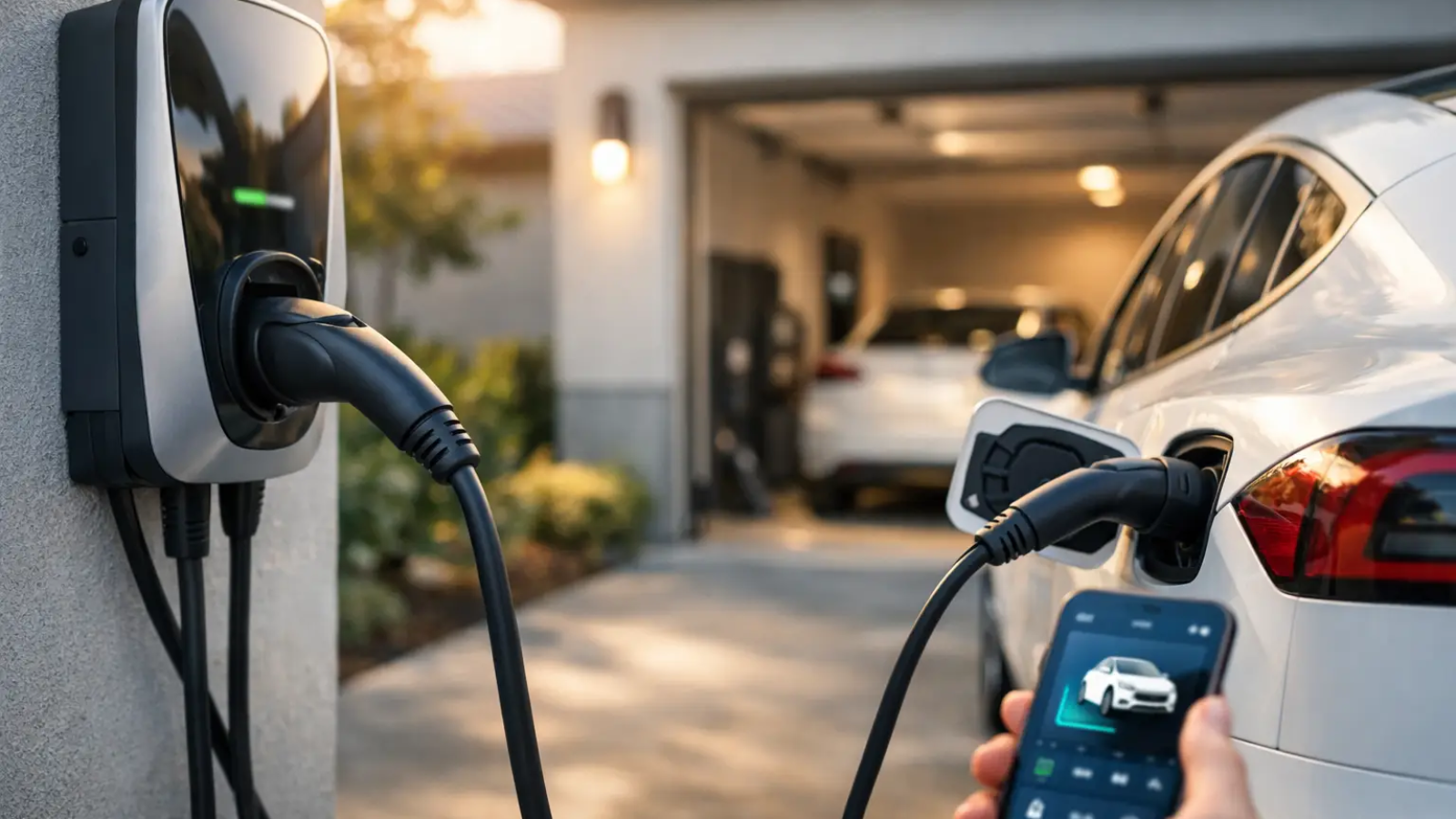
A home charger earns its keep between dinner and morning. Instead of planning errands around public stations, you return home, plug in, and start the next day with the range you need. But the best home EV charger features are not always the flashiest ones on a product page. The right choice depends on your vehicle, driving habits, electrical capacity, parking layout, and whether solar is part of your long-term energy plan.
For most households, a Level 2 charger is the practical starting point. It provides far more useful overnight charging than a standard wall outlet and can turn home charging into a routine rather than a compromise. From there, focus on the features that improve safety, efficiency, and everyday control.
Start With the Right Charging Speed
Charging speed is usually expressed in kilowatts, or kW. A typical Level 2 home charger operates on a 240-volt circuit and may deliver anywhere from roughly 16 to 80 amps, depending on the charger, circuit, and vehicle. More power can reduce charging time, but it is not automatically the better investment.
Your EV has its own onboard charging limit. If the vehicle can accept 32 amps, installing a 48-amp charger will not make it charge at 48 amps. Your home’s electrical panel also matters. A qualified electrician should assess available capacity and size the circuit correctly before recommending a charger.
For many drivers, a 32- or 40-amp unit is more than enough to replenish daily commuting miles overnight. Higher-output models make sense for households with long daily drives, larger battery packs, or two EVs sharing a charging setup. They can also provide more flexibility when a late arrival leaves fewer hours to charge.
Adjustable Amperage Adds Flexibility
One of the most useful features is adjustable charging current. It lets the charger operate at a lower setting when panel capacity is limited or when an electrical upgrade is planned for later. It can also help homeowners match charging to a dedicated circuit without buying more capacity than they need today.
This flexibility is especially valuable in older homes, where an immediate panel upgrade may add significant cost. A properly installed charger at a suitable lower amperage can still provide a meaningful improvement over Level 1 charging.
Look for Safety Features That Protect Your Home
A charger is a high-power electrical appliance installed close to your vehicle, so safety should never be treated as an optional extra. Choose equipment that has been independently tested and certified for use in the United States, such as a charger carrying a recognized safety certification mark. This helps confirm that the unit has been evaluated for electrical and fire safety.
Ground-fault protection is another essential feature. It monitors the circuit for an unintended electrical path and can stop charging if it detects a potentially dangerous fault. Thermal monitoring matters too. A quality charger can detect abnormal heat at the unit or connector and reduce or pause charging when necessary.
If the charger will be outdoors or in an exposed carport, confirm that its enclosure is rated for the environment. Weather resistance is not just about surviving rain. It also affects long-term performance in heat, cold, humidity, dust, and direct sunlight. A durable cable that remains manageable in seasonal temperatures is worth considering, particularly for homes with no enclosed garage.
Hardwired or Plug-In Installation?
A plug-in charger can be convenient, especially when using a properly installed 240-volt receptacle. It may be easier to replace or take with you after a move. However, a hardwired installation often supports higher charging output and removes one connection point from the system.
The best option depends on local electrical requirements, the charging level you need, and your installation conditions. In either case, avoid treating a charging circuit as a DIY project. Professional installation protects your equipment, your home, and your eligibility for applicable incentives or warranty support.
The Best Home EV Charger Features for Smarter Energy Use
Smart charging is useful when it gives you control without requiring constant attention. Wi-Fi or cellular connectivity can allow you to view charging status, receive notifications, set schedules, and track energy use through an app. These tools can help drivers understand how much electricity their vehicle uses and identify the most economical time to charge.
Scheduled charging is particularly helpful in areas with time-of-use utility rates. You can plug in when you arrive home but instruct the charger to begin during lower-cost overnight hours. That supports household savings while helping reduce demand during peak periods on the grid.
Energy monitoring is also valuable for homeowners who want clearer visibility into their electricity consumption. Look for charging data that is easy to read and export if needed. The most useful reports show charging sessions, total kWh used, charging duration, and estimated cost. Keep in mind that cost estimates are only as accurate as the electricity rates entered into the app.
Connectivity has a trade-off. Smart functions depend on software, account access, and sometimes a stable home network. Core charging should still work safely if Wi-Fi goes down. Before buying, check whether essential functions are available from the charger itself and whether the manufacturer provides reliable software updates.
Plan for Solar and Home Energy Management
An EV can become one of the largest electrical loads in a home, which makes solar compatibility a meaningful consideration. Solar panels do not need to be directly connected to a charger for the vehicle to benefit. When your home produces solar energy, that generation can offset electricity used for charging across the household energy system.
Some chargers and home energy platforms go further by coordinating EV charging with solar production, battery storage, or household demand. For example, a system may prioritize charging when surplus solar energy is available or reduce charging when the home approaches a demand limit. These capabilities can support a cleaner energy strategy, but they require compatible equipment and thoughtful system design.
Do not assume every charger labeled “solar-ready” operates the same way. Ask what hardware, software, metering, or home battery system is required. Also consider your schedule. Drivers who are away during the day may gain more value from overnight off-peak charging than from solar-following features alone. A well-designed system should fit how your household actually uses energy.
Choose a Connector and Cable That Suit Your Vehicle
For most new EVs sold in the United States, connector compatibility is straightforward, but the market is changing. Many chargers use the J1772 connector, while a growing number of vehicles use or are moving toward the North American Charging Standard, often called NACS. Adapters can expand compatibility, but a permanent home installation is easier when the connector aligns with the vehicle you own or expect to own next.
Cable length deserves attention as well. Measure the distance from the planned charger location to your vehicle’s charge port, including how the cable will route around the car. A cable that is too short limits where you can park. An unnecessarily long cable can be heavier to handle and more prone to clutter unless there is a proper holster or cable-management system.
If your household has more than one EV, consider load sharing. Compatible chargers can communicate so they divide available electrical capacity rather than overloading the circuit. This is often more cost-effective than immediately upgrading the service panel to support two high-output chargers.
Installation Quality Is a Feature in Practice
Even an excellent charger cannot compensate for poor installation. The charger should be placed where the cable reaches comfortably, the connector is protected from damage, and the unit is convenient enough to use every day. In a garage, that may mean positioning it near the vehicle’s charge-port side. In a driveway, it may require a weather-rated location that does not create a trip hazard.
An electrician can also assess panel capacity, breaker sizing, wire routing, grounding, permits, and local code requirements. This upfront review is the moment to think ahead: a conduit sized for future expansion, a panel upgrade, or a second charging location can be far easier to plan now than to retrofit later.
The most effective home charging setup is one you barely have to think about. Select features that fit your real driving pattern, install the equipment correctly, and let each overnight charge support a cleaner, more confident way to travel.
Add a Comment