
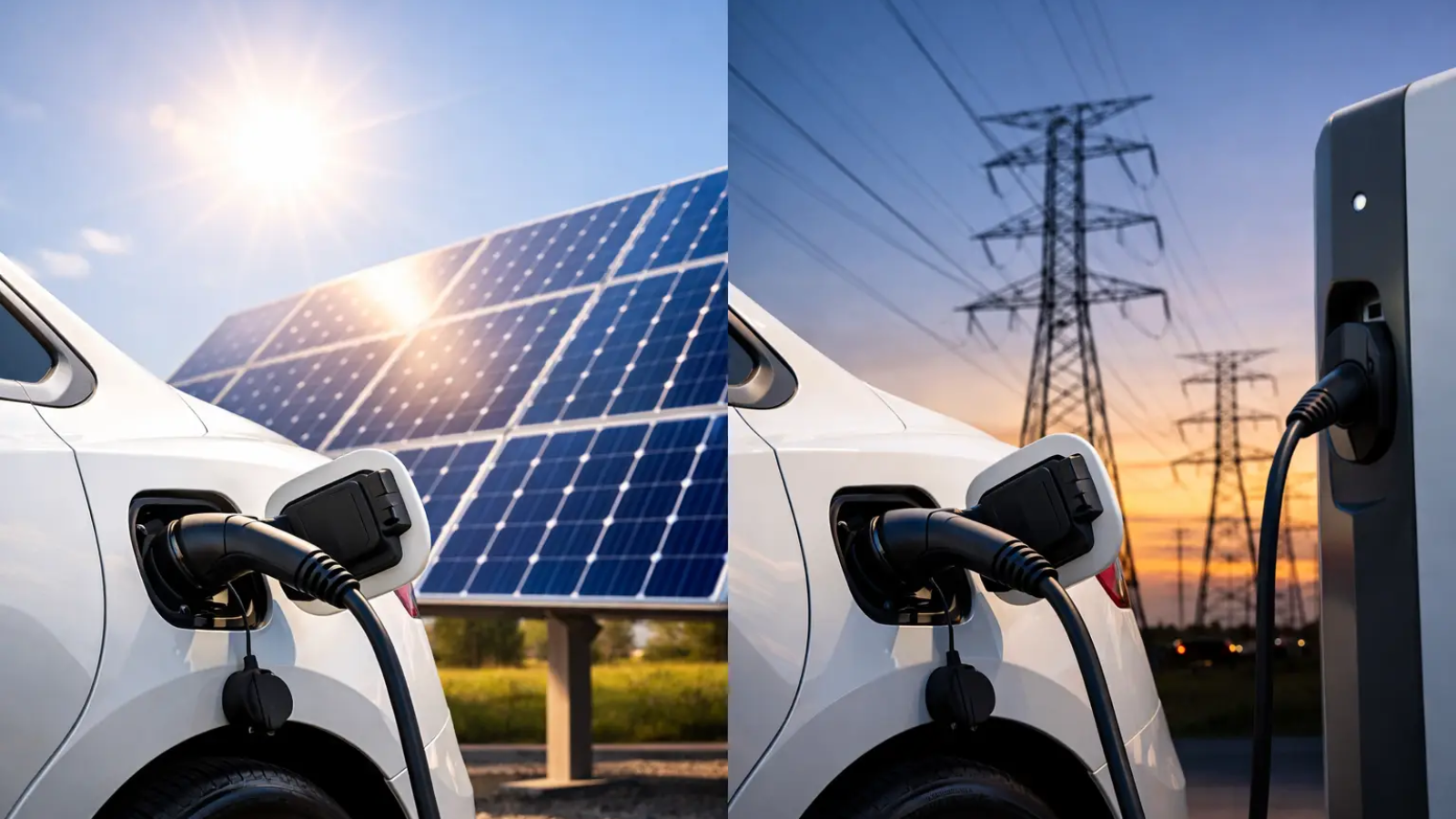
If you own an EV or manage a property with charging stations, the real question is rarely whether to charge – it is where that electricity comes from. Solar charging versus grid charging is not just a technical comparison. It affects operating costs, resilience, emissions, and how future-ready your home or business will be.
For some drivers, the answer is simple: use the grid because it is already there. For others, adding solar feels like the obvious next step, especially if the goal is to reduce long-term energy costs and shrink the carbon footprint of every mile driven. But the best setup depends on usage patterns, property constraints, and what kind of control you want over your energy.
Solar charging versus grid charging: what changes in practice?
At the most basic level, grid charging means your EV charger pulls electricity from the utility network. That is the default for most homes, workplaces, and commercial sites. It is familiar, available around the clock, and generally easy to install if the electrical capacity is already in place.
Solar charging uses energy generated by solar panels on-site to power EV charging directly or indirectly. In many cases, the system still works alongside the grid. During sunny hours, solar can offset part or all of the charging demand. When solar production drops, the grid fills the gap. If battery storage is included, excess solar energy generated during the day can be stored and used later for evening or overnight charging.
That means this is not always an either-or decision. In real projects, solar and grid often work together. The real comparison is about which source does more of the work, and under what conditions.
Cost is usually the first deciding factor
Grid charging is often cheaper to start with. If you already have electrical service and only need a charger installation, the upfront investment is relatively predictable. Your ongoing charging costs then depend on local utility rates, demand charges for commercial sites, and whether you can take advantage of off-peak pricing.
Solar charging typically requires more capital up front because you are adding generation capacity, and sometimes battery storage as well. That higher entry cost can be worth it when electricity prices are high, charging demand is steady, and the site gets strong sunlight. Over time, solar can reduce dependence on utility power and improve the economics of charging.
For homeowners, the equation often comes down to how much daytime charging happens at home and whether the solar array also offsets broader household energy use. For businesses, the math is more strategic. A property with fleet vehicles, employee charging, or customer-facing chargers may benefit from using solar to lower operating costs and manage peak demand.
The trade-off is timing. Grid charging keeps costs low at the beginning. Solar charging is often about lowering costs over years, not weeks.
Reliability is more nuanced than it looks
A lot of people assume the grid is always more reliable because it is constant. In many cases, that is true. Utility power is available day and night, and most EV charging systems are designed around it.
But reliability is not just about availability. It is also about exposure. If your site depends entirely on the grid, you are fully exposed to rising utility prices, power disruptions, and capacity constraints. Solar can reduce that exposure by giving you an on-site energy source. If battery storage is part of the system, reliability improves even further because charging can continue during some outages or during periods when grid power is expensive or limited.
Without storage, though, solar alone has obvious limits. Cloud cover, weather, and nighttime conditions all affect output. A solar-only charging model is difficult for most users unless charging patterns align closely with daylight hours.
That is why hybrid systems are often the most practical. Solar handles what it can, the grid supports the rest, and battery storage adds flexibility where it makes financial and operational sense.
Charging speed depends on more than the energy source
When people compare solar charging versus grid charging, they often assume grid charging is automatically faster. That is not exactly right. Charging speed depends on the charger, the electrical design, the vehicle, and available power capacity.
A grid-connected charger can support fast charging if the site has the electrical infrastructure to handle it. That makes the grid the more straightforward option for high-power commercial charging, especially in locations with unpredictable demand or high vehicle turnover.
Solar charging can also support EV charging effectively, but speed depends on system size and whether the solar output is being supplemented. A modest rooftop array may cover a portion of Level 2 charging during the day, but it usually will not support high-speed charging on its own. If the goal is fast charging, solar works best as part of a broader energy system rather than as the sole power source.
For many homeowners, this is less of an issue. Overnight charging at Level 2 speeds is already enough for daily driving needs, and solar can still play a strong role by offsetting the energy used over the course of the day. For commercial operators, the charging profile matters more. A workplace with long dwell times is very different from a retail site where customers expect quick top-ups.
Emissions and sustainability are where solar has a clear edge
If the goal is to make EV charging cleaner, solar has a major advantage. Grid electricity may be getting cleaner in many markets, but it still depends on the utility’s energy mix. In some regions, charging from the grid still involves a meaningful share of fossil fuel generation.
Solar charging reduces that impact by using renewable energy produced on-site. It brings the source of electricity closer to the point of use and helps align electric mobility with broader sustainability goals. That matters for environmentally conscious homeowners, and it matters even more for businesses that want their EV infrastructure to support measurable ESG progress.
There is still nuance here. Solar panels have manufacturing impacts, and a poorly designed system will not deliver the expected environmental return. But over the long run, using solar to power EV charging is one of the clearest ways to lower transportation-related emissions.
The right choice depends on the property
Not every building is equally suited for solar charging. Roof space, shade, structural conditions, orientation, and local regulations all affect viability. A homeowner with a sunny roof and consistent daytime energy use may be an excellent candidate. A commercial warehouse with large roof area and fleet charging needs may be even better.
On the other hand, some sites simply do not have the physical conditions for strong solar generation. In those cases, efficient grid charging may be the smarter near-term move, especially if paired with load management and smart charging controls.
Electrical capacity matters too. Some properties can add chargers easily but struggle to support major expansion without an upgrade. In those cases, solar can sometimes help reduce pressure on the grid connection, but it is not a cure-all. System design has to reflect actual load patterns, not just ideal conditions.
Solar charging versus grid charging for homes
For homeowners, the decision usually comes down to three things: driving habits, roof suitability, and budget. If you charge mostly overnight and have low mileage, grid charging may already be efficient enough, especially with time-of-use rates. It is simple, dependable, and easy to live with.
If you own your home, expect to keep the EV for years, and want to reduce both charging costs and household electricity bills, solar becomes much more attractive. The strongest case is when solar is not just for the vehicle but part of a broader home energy strategy.
Adding battery storage can improve that strategy, but it is not always required. Some households get strong value from solar alone, while others need storage to make the economics work. It depends on local utility pricing and how much charging can be shifted into solar production hours.
What businesses should weigh more carefully
For commercial properties, the decision is less about preference and more about load management, customer experience, and long-term energy planning. Grid charging is often the fastest path to deployment, particularly for sites that need immediate charging access. But relying entirely on utility power can create cost volatility, especially where demand charges are significant.
Solar can improve the business case by lowering operating costs and reinforcing sustainability commitments. It can also send a strong market signal. A charging station powered partly by on-site solar shows that the business is thinking beyond compliance and moving toward a cleaner operating model.
Still, commercial success depends on sizing and scheduling. A site with daytime workplace charging is usually a better match for solar than one with late-night fleet returns. A property manager may benefit from a blended system that balances tenant needs, utility constraints, and available roof or canopy space.
Charge & Go’s approach to clean energy reflects this reality well: EV charging works best when it is treated as part of a broader energy ecosystem, not as a standalone product.
So which one wins?
If you need the shortest path to charging, grid power usually wins. It is more accessible, easier to implement, and available whenever the vehicle is parked.
If your priority is lower long-term emissions and more control over energy costs, solar has the stronger upside. But it works best when the property, charging schedule, and budget all support it.
For many homes and businesses, the best answer is not solar or grid. It is solar plus grid, with smart controls and possibly storage layered in over time. That kind of setup gives you flexibility now without closing the door on lower-cost, lower-carbon charging later.
The smartest energy decisions are rarely the most dramatic ones. They are the ones that fit the way you live, drive, and operate today while moving you closer to the cleaner system you want tomorrow.
Add a Comment