
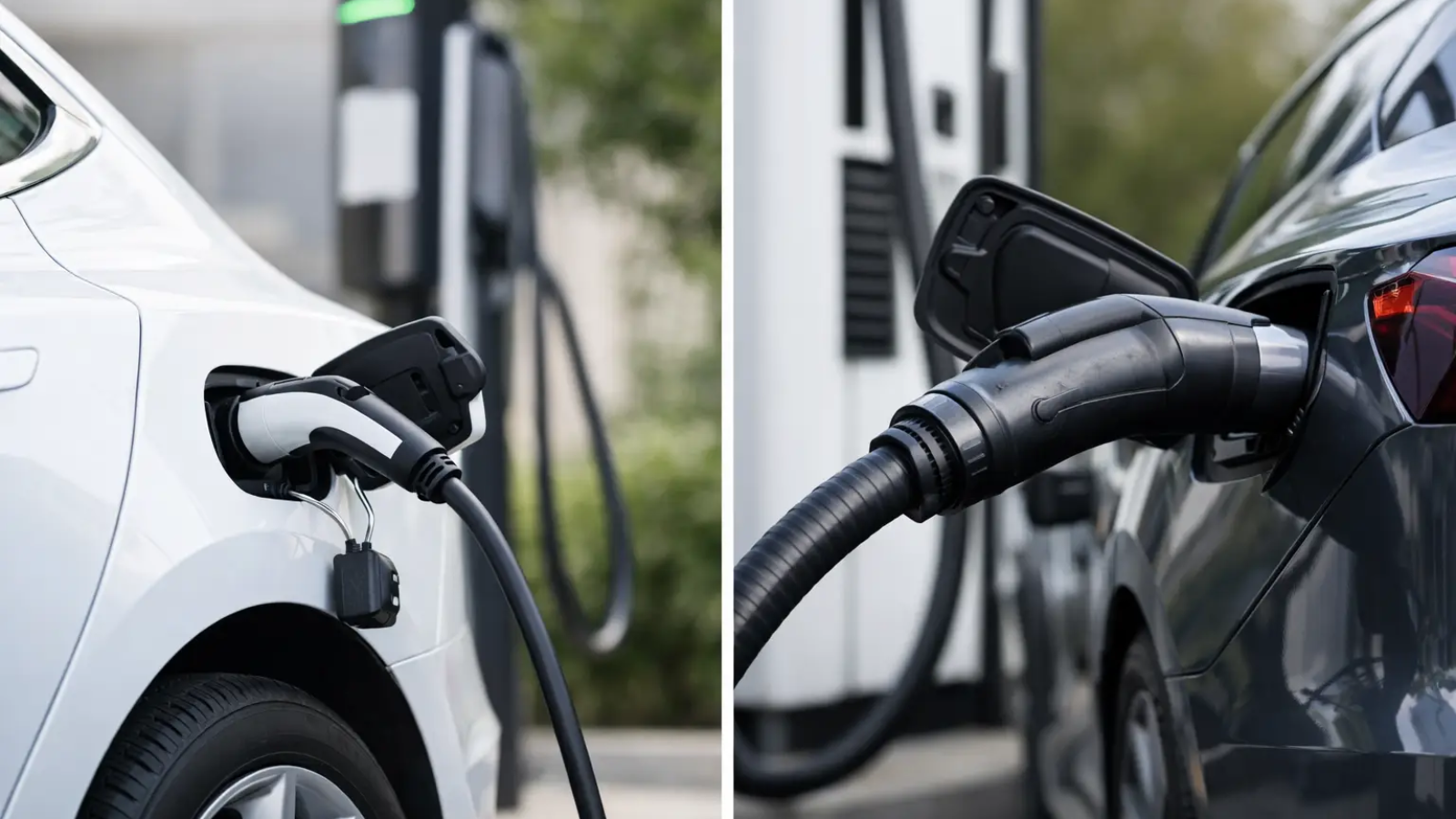
If you have ever stood next to a public charger watching the battery percentage climb, you already know that not all EV charging feels the same. The real question in Level 2 versus DC fast charging is not simply which one is faster. It is which one makes sense for how people actually live, drive, and power their properties.
For homeowners, site managers, and businesses, this comparison shapes more than convenience. It affects installation cost, electrical capacity, user experience, and how well your charging setup fits a broader clean energy plan. Choosing the right charger is less about chasing maximum power and more about matching charging speed to daily behavior.
Level 2 versus DC fast: the core difference
Level 2 charging uses alternating current, or AC, to deliver power to the vehicle. The car then converts that AC power into direct current, or DC, to store energy in the battery. This is the standard approach for home charging, many workplace installations, and destination charging at apartments, hotels, and retail sites.
DC fast charging works differently. It sends direct current straight to the battery, bypassing the vehicle’s onboard charger. That is why it can charge much faster, especially when the battery is at a lower state of charge.
In practical terms, Level 2 is built for longer parking sessions. DC fast is built for quick turnarounds. That sounds simple, but it leads to very different outcomes when you factor in equipment cost, electrical upgrades, and how often drivers really need speed.
How fast is each one in real life?
Level 2 chargers typically add around 20 to 35 miles of range per hour, though actual performance depends on the vehicle, charger output, battery size, and temperature. For many drivers, that is more than enough. An EV parked overnight at home or for several hours at work can easily recover a full day of driving.
DC fast chargers operate on a different scale. Depending on charger power and vehicle compatibility, they can add substantial range in 20 to 40 minutes rather than several hours. Some newer systems are much faster than older ones, but the vehicle still determines how much power it can accept.
That last point matters. A charger may be rated for very high output, but not every EV will charge at that maximum rate. Battery chemistry, thermal management, and charge curve behavior all affect real-world speed. That means a faster charger does not always guarantee a dramatically faster session for every vehicle.
Why Level 2 is often the better fit for everyday charging
There is a reason Level 2 charging has become the backbone of EV ownership. Most vehicles spend far more time parked than driving. If a driver is home overnight, at the office during the day, or parked at a destination for a couple of hours, charging does not need to be extreme to be effective.
For homeowners, Level 2 usually offers the best balance of cost and convenience. It is fast enough to support daily driving without the complexity of commercial-grade power requirements. It also pairs naturally with a long-term energy strategy that may include solar, load management, and time-of-use electricity planning.
For workplaces and multifamily properties, Level 2 often makes even more sense. Drivers are parked long enough to gain meaningful range, while site owners avoid the higher infrastructure costs tied to DC fast equipment. In many cases, that means serving more vehicles across the day without overspending on charging speed that users may not need.
Where DC fast charging makes sense
DC fast charging is valuable when time matters more than cost. Highway corridors are the obvious example. Drivers on longer trips need to recharge quickly and get back on the road. Fleet operations can also benefit, especially when vehicles have tight turnaround windows or cannot remain parked for long charging sessions.
Retail, fuel-adjacent, and high-traffic commercial locations may also find a strong use case for DC fast charging. If customers expect quick service and short dwell times, Level 2 may feel too slow. In that environment, fast charging becomes part of the business model rather than just an amenity.
Still, speed comes with trade-offs. DC fast systems are significantly more expensive to purchase and install. They may require substantial electrical upgrades, utility coordination, and more complex site planning. For many properties, the real question is not whether DC fast is impressive. It is whether the charging pattern justifies the added investment.
Cost is not just about the charger
The biggest mistake in comparing charger types is focusing only on hardware price. Total project cost includes installation, electrical work, permitting, utility capacity, software, maintenance, and future scalability.
Level 2 chargers are generally much more affordable across the board. They are easier to install, especially in homes and many existing commercial settings. In some cases, they can be added without major service upgrades, which keeps the project manageable.
DC fast chargers can be a very different story. Higher power demand may require new transformers, switchgear, trenching, or service expansion. Demand charges from utilities may also affect ongoing operating costs, depending on the rate structure. For businesses, that can materially change the return on investment.
This is why charger selection should start with a usage model, not a speed preference. If drivers are only topping up while parked for several hours, paying for ultra-fast charging capacity may not create real value.
Installation and site planning considerations
In Level 2 versus DC fast decisions, site readiness often decides the outcome before charging speed does. A home garage, small office lot, or apartment property may be physically better suited to Level 2 because the electrical infrastructure is simpler and the installation footprint is lighter.
DC fast charging usually demands more planning. Power availability, ventilation considerations, equipment placement, cable reach, traffic flow, accessibility, and future expansion all become more important. A poorly planned fast charging site can create bottlenecks, underused assets, or expensive upgrades later.
This is where a solutions-oriented approach matters. Charging should fit the property, the users, and the broader energy system. For businesses looking at sustainability and long-term resilience, that may also include solar integration, smart energy management, and phased deployment over time.
The battery question: does faster mean worse?
Many EV drivers ask whether DC fast charging is bad for battery health. The honest answer is that it depends on frequency, battery design, and charging behavior.
Modern EVs are engineered to handle fast charging, and battery management systems are designed to protect the pack. Occasional or routine DC fast charging is not automatically harmful. But as a general pattern, slower charging places less stress on the battery than repeated high-power sessions, especially in extreme temperatures.
That is one reason Level 2 remains the preferred everyday method for many EV owners. It supports battery-friendly charging habits while meeting routine transportation needs. DC fast works best as a strategic tool, not always as the default.
Best fit by use case
For a single-family home, Level 2 is usually the clear choice. It supports overnight charging, keeps installation practical, and aligns with normal driving patterns. For homeowners investing in cleaner energy infrastructure, it also fits well with solar-powered living and smarter energy use.
For apartments and condos, Level 2 is often the foundation, though shared charging design becomes important. Residents need reliable access more than extreme speed. Good scheduling, load balancing, and enough ports can matter more than pushing maximum power.
For workplaces, Level 2 typically delivers the strongest value. Employees stay parked long enough to recharge meaningfully, and employers can offer a useful amenity without building a high-cost fast charging site.
For fleets, the answer depends on duty cycle. Vehicles that return to base for predictable dwell times may do well with Level 2 or a mix of Level 2 and lower-power DC systems. Fleets with constant rotation or limited downtime may need DC fast to stay operational.
For public corridor charging and rapid-turn retail environments, DC fast is usually the right tool. In these settings, drivers are paying for speed and convenience, and the site economics depend on quick turnover.
A smarter way to think about charging speed
It is easy to assume faster is better. In practice, better means aligned. The best charging setup supports real behavior, fits the site, and makes financial sense over time.
That is why many successful EV charging strategies use both technologies in different roles. Level 2 handles the daily rhythm of charging where cars naturally rest. DC fast fills the gap where uptime, travel, or quick access matter most. They are not direct competitors in every context. Often, they are complementary pieces of a larger clean energy system.
As EV adoption grows, the strongest charging decisions will come from asking a practical question first: when are vehicles parked, and for how long? Start there, and the right answer becomes much clearer.
The goal is not to install the fastest charger possible. It is to build charging that works for people, properties, and a lower-carbon future.
Add a Comment