
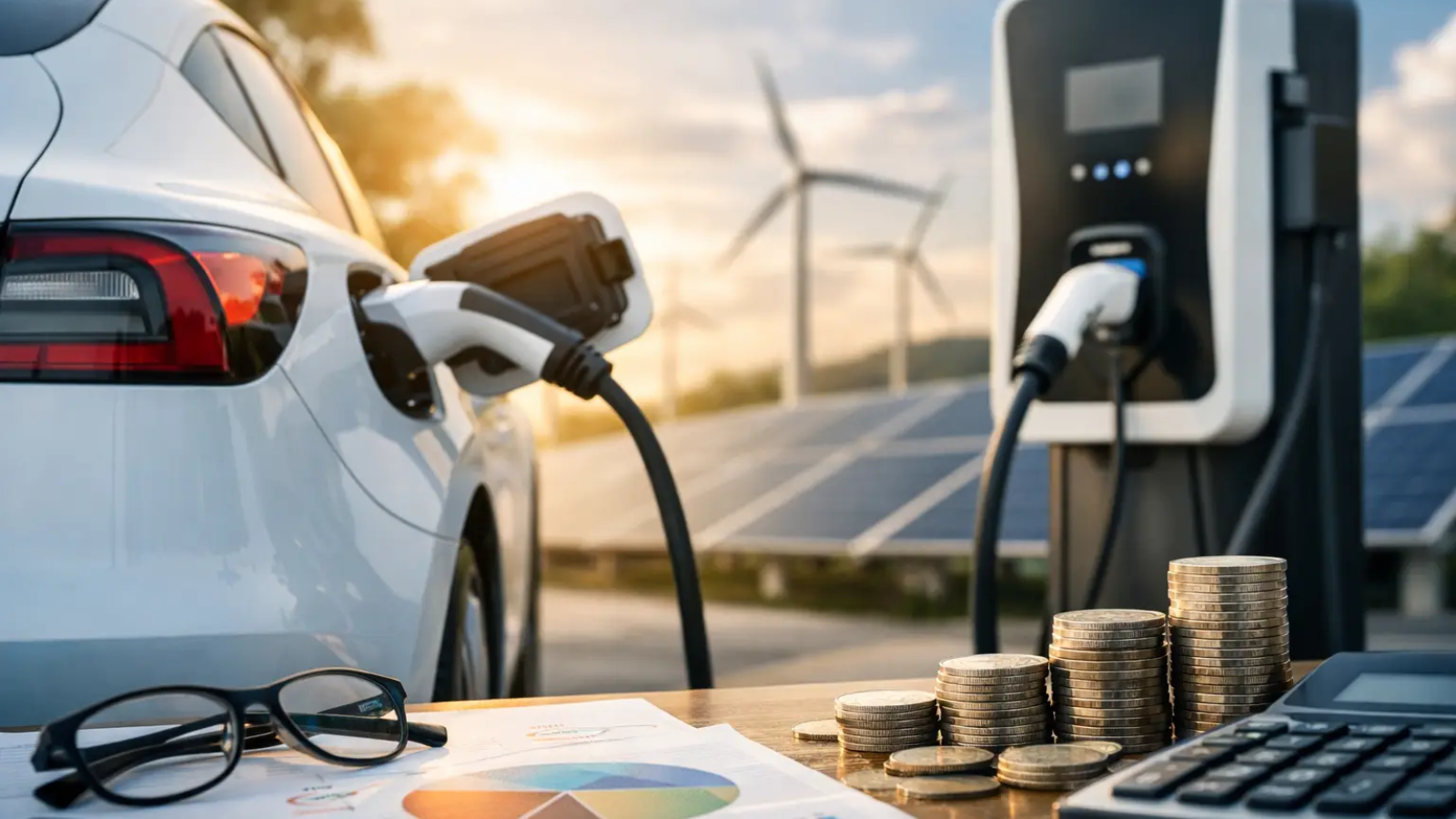
A full charge can cost less than a takeout lunch or more than a tank of discounted gas on a per-session basis. That wide range is exactly why electric vehicle charging cost can feel confusing at first. The price you pay depends less on the car itself and more on where you charge, when you charge, how fast you need the energy, and what your local electricity rates look like.
For drivers and property owners thinking beyond the next bill, that difference matters. Charging strategy affects household energy spending, fleet operating costs, and the long-term value of installing charging infrastructure. Once you understand the few variables that move the number up or down, EV charging becomes much easier to budget for.
What affects electric vehicle charging cost most?
The biggest factor is the price of electricity. If your utility charges a low residential rate, home charging is usually the most affordable option. If you rely on public fast charging, the price per kilowatt-hour can be significantly higher because the site operator is covering equipment, installation, maintenance, software, and demand charges from the utility.
Battery size also matters, but not in the way many people assume. A larger battery does not always mean higher day-to-day cost if your driving habits are moderate. What really drives cost is how much energy you use between charges. If you drive 30 miles a day, your charging expense is tied to replacing that energy, not filling the battery from empty every night.
Charging speed adds another layer. Level 1 charging at home uses a standard outlet and is slow, but the electricity itself may be inexpensive. Level 2 charging is faster and often the practical choice for homes, workplaces, and commercial sites. DC fast charging delivers the quickest turnaround, but that convenience usually comes at a premium.
Location matters too. Utility pricing, network fees, local regulations, and energy demand vary by region. The same vehicle can cost noticeably more to charge in one city than another.
Home charging vs public charging
For most EV owners, home charging sets the baseline for affordable driving. You are paying your utility rate, and if you charge overnight, you may benefit from lower time-of-use pricing. That makes home charging predictable, which is valuable for households trying to manage monthly energy costs.
Public charging is different because you are paying for access as well as electricity. A public station has to recover the cost of hardware, site preparation, electrical upgrades, network management, and ongoing service. Fast-charging stations carry even higher infrastructure costs, so pricing often reflects the speed and convenience offered.
That does not mean public charging is a bad value. It can be essential for apartment residents, drivers without dedicated parking, road-trip travel, and businesses that need vehicles back on the road quickly. The trade-off is simple: greater convenience and flexibility usually mean a higher cost per charge.
Why fast charging often costs more
Fast charging is built for time savings. If you need to add substantial range during a lunch break or along a highway corridor, paying more may make perfect sense. But if your car sits at home overnight anyway, using premium-priced fast charging for routine refills can raise your operating costs without adding much benefit.
There is also a battery behavior factor. Charging often slows as the battery reaches a higher state of charge, especially above 80 percent. That means the last portion of a fast-charging session can be less efficient from a time-and-cost perspective. For many drivers, the smarter pattern is fast charge when needed and handle regular charging at home or work.
How utilities shape charging cost
Many people focus only on the charger, but the utility bill often tells the real story. Residential electricity rates may be flat or may change by hour. If your utility offers time-of-use pricing, charging after peak evening demand can reduce costs noticeably over time.
For commercial properties, the calculation can be more complex. In addition to energy consumption, some utilities apply demand charges based on the highest level of power drawn during a billing period. That can affect the economics of high-powered charging installations, especially for businesses with multiple chargers operating at once.
This is where planning matters. A charging setup that matches actual usage patterns can help avoid oversized infrastructure and unnecessary operating costs. Smart charging software, load management, and solar integration can all play a role in controlling expenses.
Electric vehicle charging cost for homeowners
For homeowners, the most cost-effective setup is often Level 2 charging paired with a schedule that favors off-peak hours. That approach gives you faster charging than a wall outlet while keeping your rate as low as possible when your utility supports timed pricing.
Installation cost is separate from charging cost, but it still influences the bigger financial picture. If your electrical panel is ready and the charger is close to the power source, installation may be straightforward. If the project requires trenching, panel upgrades, or long cable runs, upfront costs can rise. Over the long term, though, a well-designed home charger can deliver consistent convenience and lower fueling costs compared with frequent public charging.
Homeowners interested in energy independence should also look at the connection between EV charging and solar. Charging with on-site solar generation can reduce grid reliance and make your transportation energy cleaner. The exact savings depend on system size, charging habits, and local net metering rules, so it is not a one-size-fits-all answer. Still, for many households, EVs and solar are a practical combination rather than two separate investments.
Electric vehicle charging cost for businesses and properties
Businesses, multifamily properties, and commercial sites need a broader view. The question is not only what charging costs, but who is paying, when charging happens, and what purpose the chargers serve. A workplace offering employee charging may value retention and sustainability goals as much as direct revenue. A retail site may see charging as a way to increase dwell time. A fleet operator may care most about predictable overnight fueling at the lowest possible cost.
That is why pricing models vary. Some sites offer free charging as an amenity. Others bill by kilowatt-hour, session, or time connected. Each model has strengths and limitations. Charging by energy use is usually the clearest for drivers, but local rules and equipment capabilities can affect what is possible.
Commercial operators should also think carefully about peak load. If several vehicles begin charging at full power during the same window, the site may face higher utility costs than expected. Managed charging helps balance that load, supporting both cost control and grid efficiency.
How to estimate what you will actually pay
The cleanest way to estimate charging cost is to start with energy use, not battery size alone. Look at how many kilowatt-hours your EV typically uses per 100 miles, then compare that with your electricity rate. If your vehicle uses 30 kilowatt-hours per 100 miles and your home rate is $0.15 per kilowatt-hour, you would spend about $4.50 to drive 100 miles.
If you use a public fast charger at $0.40 per kilowatt-hour, that same 100 miles would cost about $12. The car did not change. The charging environment did.
This is why broad claims about EV affordability can be misleading. Yes, electric driving can be significantly cheaper than gasoline. But the gap depends on your local energy prices, your access to home or workplace charging, and how often you rely on premium public charging.
How to lower charging costs without sacrificing convenience
The most effective way to reduce charging cost is to shift routine charging to lower-cost periods and locations. For homeowners, that usually means charging at home overnight. For businesses, it means matching charger power, scheduling, and site energy management to real demand rather than assuming every vehicle needs the fastest option available.
If you are planning new infrastructure, design decisions matter. The right number of chargers, the right power level, and the right software can prevent overbuilding and keep utility costs in check. For customers balancing EV adoption with broader energy goals, companies like Charge & Go increasingly connect charging strategy with solar and smart energy planning, which is where long-term savings often become more meaningful.
The real opportunity is not just finding the cheapest charge. It is building a charging approach that fits how you live, drive, and manage energy. When that alignment is right, cost becomes far more predictable, and the shift to electric mobility feels less like a compromise and more like progress.
Add a Comment