
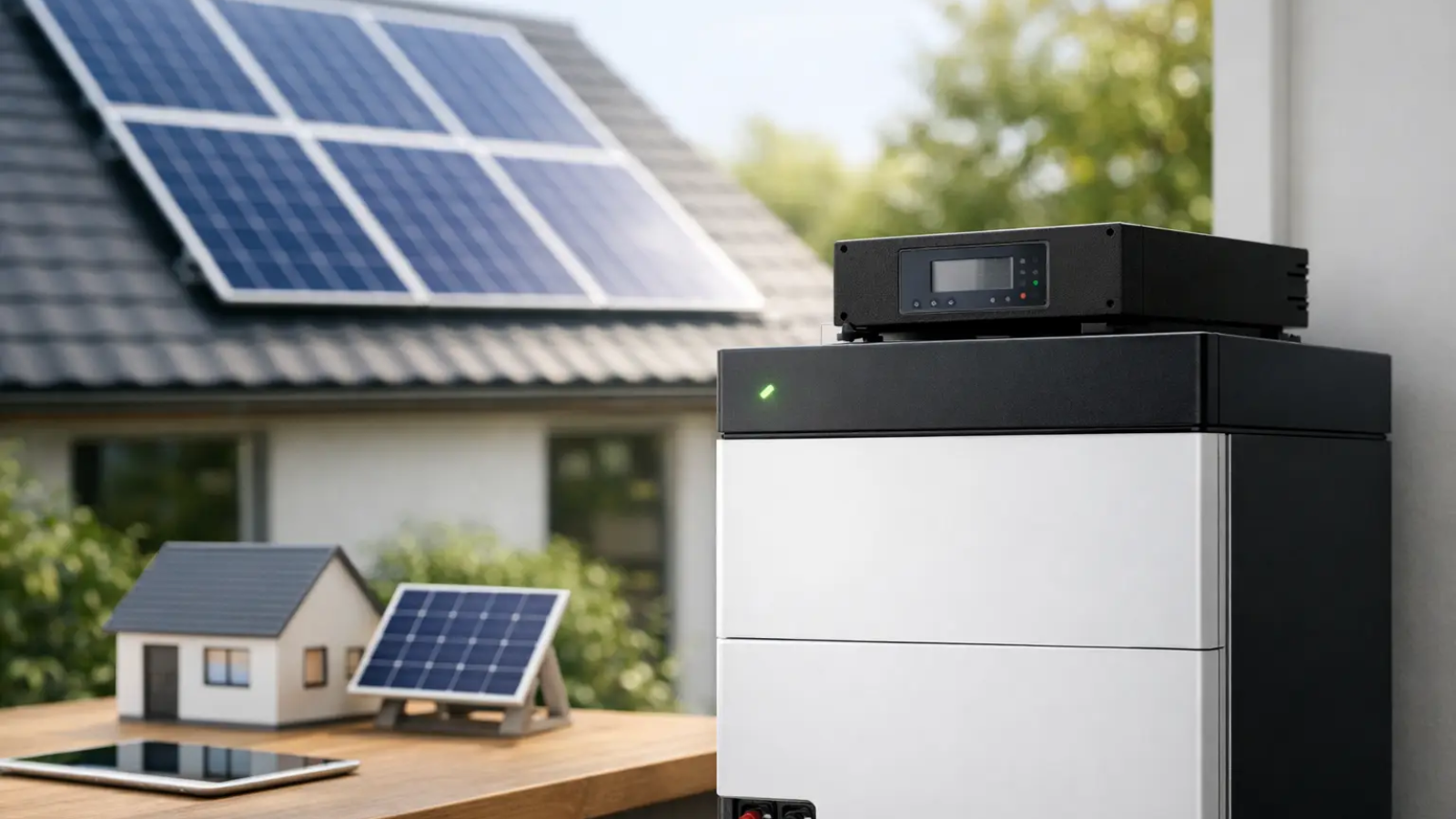
A power outage changes your priorities fast. The question stops being whether solar sounds like a smart upgrade and becomes much more practical: what will keep the lights on, the fridge cold, and your EV ready to move when the grid goes down? If you are trying to choose solar battery for home use, the right answer depends less on brand hype and more on how your home actually uses energy.
For many homeowners, battery storage starts as a resilience decision and quickly becomes a cost decision too. Time-of-use rates, rising electricity prices, and the growing appeal of pairing solar with EV charging all make battery storage more relevant than it was even a few years ago. But not every home needs the biggest battery on the market, and not every battery works equally well with every solar setup.
What matters most when you choose solar battery for home
The best place to start is not battery chemistry or product specs. It is your goal. Some homeowners want whole-home backup during outages. Others only want to keep essential loads running, like internet, lights, refrigeration, medical devices, and a few outlets. Some are mainly trying to lower utility bills by storing solar energy for use at night.
Those goals lead to very different system designs. A whole-home backup system usually needs more storage capacity, higher power output, and often a more advanced electrical setup. An essentials-only system can be smaller and more cost-effective. If your main goal is bill savings rather than backup, your installer may prioritize how the battery charges and discharges around your utility rate schedule.
This is where a lot of buyers overspend. They shop for the most impressive battery instead of the battery that fits their load profile. A right-sized system often delivers better value than a larger one that sits underused most of the year.
Start with your energy use, not the battery brochure
Your utility bill gives you a useful starting point, but it does not tell the full story. To choose the right battery, you need to know both how much electricity you use and when you use it.
Capacity, measured in kilowatt-hours, tells you how much energy the battery can store. Power, measured in kilowatts, tells you how much electricity it can deliver at one time. A home with modest daily consumption can still need high power if it wants to run central air conditioning, an electric oven, or EV charging alongside other loads.
That distinction matters. A battery may have enough stored energy to last several hours, but if its power output is too low, it may not support multiple large appliances at once. For homeowners with EVs, this becomes even more important. If you plan to use stored solar energy to support charging, your battery and electrical design need to reflect that demand.
A good installer will review interval usage data, identify critical circuits, and estimate runtime during an outage. That level of analysis is more valuable than any simple rule of thumb.
Battery type affects safety, lifespan, and value
Most residential systems today use lithium-ion batteries, especially lithium iron phosphate or similar chemistries designed for stationary storage. They are popular for good reason. They are compact, efficient, and generally require less maintenance than older battery types.
Lead-acid batteries still exist in some backup applications, but they are usually less attractive for modern homes. They tend to have shorter usable lifespans, lower depth of discharge, and bulkier designs. Lower upfront cost can look appealing, but total value over time is often weaker.
Within lithium options, the differences are not always obvious to homeowners, but they matter. Safety profile, cycle life, warranty terms, thermal performance, and integration with solar inverters can vary significantly by manufacturer. If a battery is going in a garage or exterior wall in a hot climate, thermal management and operating temperature range deserve extra attention.
Size the battery for real life
Battery sizing is where expectations need to meet budget. Many people imagine a battery as a replacement for the grid. In reality, most home systems are designed to support selected loads for a certain number of hours, not to run every device in the house indefinitely.
If outage protection is your priority, ask a simple question: what absolutely needs to stay on? Once you define that list, your installer can estimate required storage and power. If you want overnight energy shifting with solar, the target may be enough battery capacity to carry your home from sunset to morning, not enough to cover multiple cloudy days.
It also helps to think seasonally. Summer cooling loads and winter heating loads can change battery performance expectations. If your home relies on electric heat, your storage needs may be much higher than you expect.
For households with electric vehicles, there is another trade-off. Using the battery to support home loads and reserving enough power for EV charging are not always the same goal. Depending on your driving patterns, it may be smarter to prioritize overnight solar storage for the house and rely on off-peak grid charging for the car, or the reverse. The best setup depends on your rates, commute, and solar production.
Solar compatibility is not automatic
One of the biggest misconceptions is that any battery can simply be added to any solar system. Some batteries are designed for AC coupling, which can work well when retrofitting an existing solar array. Others are better suited to DC-coupled systems, which may be more efficient in new installations because solar can charge the battery with fewer conversion steps.
Your inverter matters too. Some battery systems come with integrated inverter technology, while others must be paired with specific hybrid or storage-ready inverters. If your current solar system is older, adding a battery may require electrical upgrades beyond the battery itself.
This is why system design should be treated as one conversation. Solar panels, inverter, battery, backup panel, and EV charger can all affect one another. Charge & Go’s broader clean energy perspective is useful here because home energy no longer lives in silos. Storage, solar, and transportation electrification increasingly work best when planned together.
Look closely at warranty and usable capacity
A battery’s headline capacity does not always equal the energy you can actually use. Manufacturers often specify total capacity and usable capacity separately. The usable number is the one that matters most in everyday operation.
Warranties also deserve a closer read. Some are based on years, some on cycles, and some on remaining capacity after a set period. A 10-year warranty sounds strong, but the details tell you more. How much capacity is guaranteed at year 10? Is the battery expected to retain 70 percent, 80 percent, or more? Are labor and installation covered, or only the hardware?
These details affect long-term value, especially if you plan to stay in the home for many years. A lower-priced battery with weaker degradation performance may cost more over time than a premium option with higher retained capacity.
Cost is more than the battery price
When homeowners compare quotes, the battery itself tends to get the most attention. But total installed cost can include electrical work, subpanels, gateway devices, permitting, and labor. Homes that want backup functionality often need more than just storage hardware.
That does not mean the most expensive quote is best. It means you should compare proposals based on scope, not just sticker price. Ask what loads are backed up, how long they are expected to run, whether the system can expand later, and how the battery will interact with your solar array and EV charger.
Payback also depends on your local utility structure. In areas with high electricity prices or time-of-use rates, battery storage may help reduce expensive peak-period consumption. In places with strong net metering, direct bill savings may be less dramatic, and backup value may be the bigger reason to invest. It depends on where you live and how your utility compensates exported solar power.
Questions worth asking before you buy
A good battery proposal should answer a few practical questions clearly. What loads will the battery support during an outage? How long will it run those loads under typical conditions? Can the system restart and recharge effectively after several cloudy days? Is it expandable if your energy use grows later?
You should also ask how monitoring works. A strong app experience is not just a convenience. It helps you understand battery behavior, track savings, and spot issues early. If you are integrating storage with EV charging, visibility becomes even more useful.
Finally, ask who will support the system after installation. Battery storage is a long-term energy asset. Service quality, commissioning, and future troubleshooting matter as much as the equipment spec sheet.
Choosing a home battery is really about choosing how you want your home to perform in the years ahead – during outages, during peak pricing, and as your household adds more electric technology. The smartest choice is not the one with the boldest marketing. It is the one that fits your home, your solar setup, and the cleaner, more resilient lifestyle you are building.
Add a Comment