
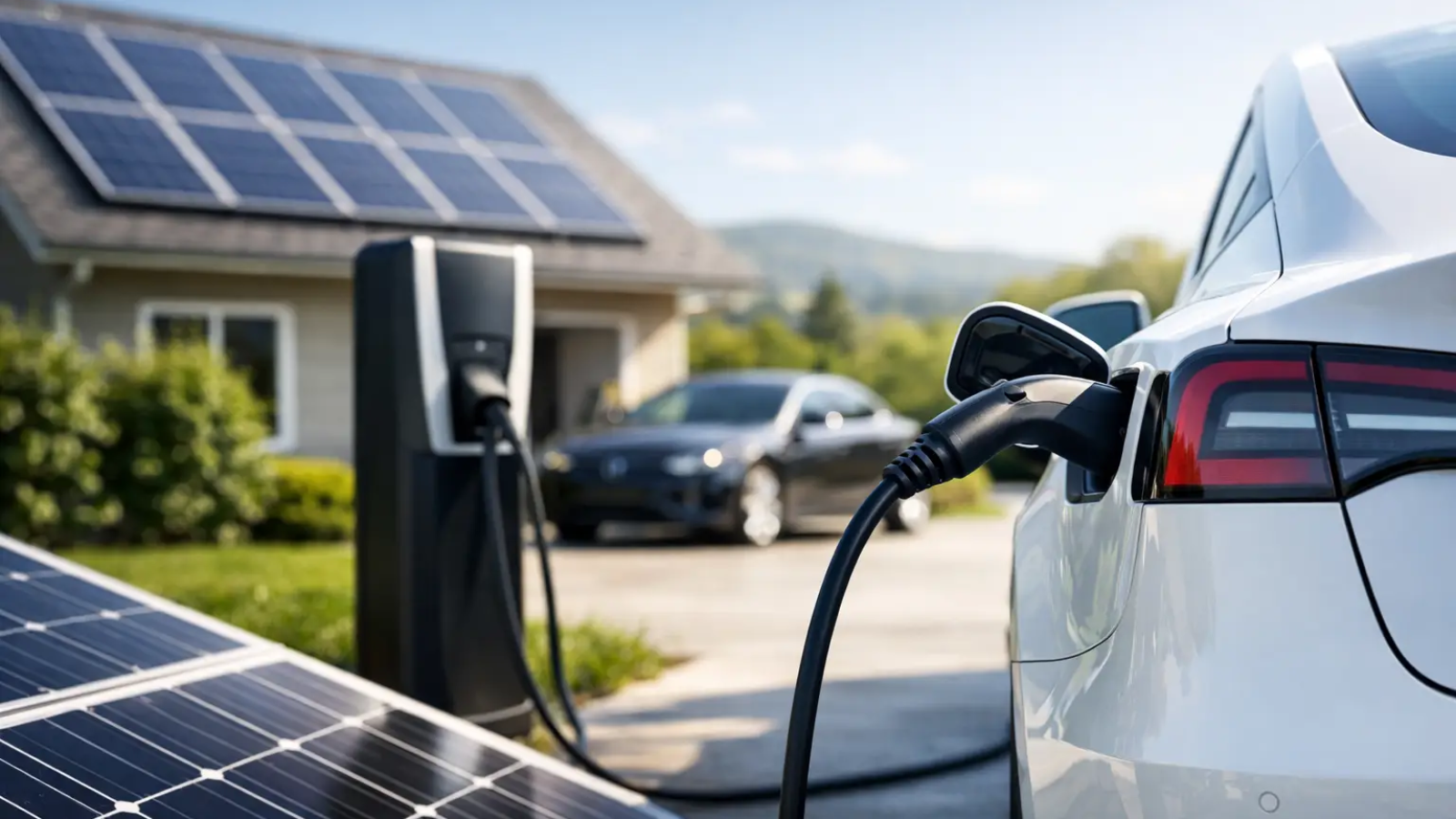
Your EV charger can quietly become one of the biggest energy loads on your property. A single habit change – like charging overnight every day instead of twice a week – can shift your power needs more than many people expect. That is why understanding how to size solar for EV charging matters before you add panels, a charger, or both.
The good news is that sizing is not complicated once you break it into a few practical numbers. The goal is simple: estimate how much electricity your EV uses, compare that with your solar production potential, and account for when charging actually happens. From there, you can decide whether you want to offset all EV charging, only part of it, or a broader share of your total building load.
How to size solar for EV charging at home
For most homeowners, the first step is not panel count. It is daily driving.
Start with the number of miles you drive per day or per week. Then estimate your EV’s energy use in kilowatt-hours per mile. Many EVs land around 0.25 to 0.35 kWh per mile, though larger SUVs and trucks can run higher. If you drive 40 miles a day and your vehicle averages 0.30 kWh per mile, that is about 12 kWh of charging energy per day.
On an annual basis, that becomes 4,380 kWh. That number gives you a much clearer target than looking at charger power alone. A Level 2 charger may be capable of delivering 7.7 kW, 11.5 kW, or more, but charger size tells you how fast energy flows, not how much you need over time.
Next, compare that annual EV demand to local solar production. In much of the U.S., each kilowatt of solar capacity produces roughly 1,200 to 1,700 kWh per year depending on sun exposure, roof angle, shading, and climate. If your area averages 1,400 kWh per year per kW of solar, then covering 4,380 kWh of EV charging would require about 3.1 kW of solar capacity.
That is the cleanest version of the math:
Required solar size in kW = annual EV charging kWh / annual kWh produced per kW of solar
In real projects, it is smart to add a buffer. Weather variation, system losses, panel degradation, and changing driving patterns all affect output. Many property owners size with a 10% to 20% cushion, especially if they expect to drive more later or add a second EV.
The key variables that change your solar size
Two drivers with the same EV can need very different systems.
The first variable is mileage. Someone driving 8,000 miles a year may only need a modest solar addition to cover charging. Someone driving 20,000 miles a year for commuting, delivery work, or regional sales travel may need several times more generation. This is why annual mileage matters more than charger brand or charging speed.
The second variable is vehicle efficiency. A compact EV will generally need fewer kilowatt-hours per mile than a large electric pickup. If you are choosing between vehicles and plan to pair the purchase with solar, efficiency has a direct effect on system size.
The third variable is solar resource. A south-facing roof with minimal shade can dramatically improve output. A partially shaded roof or limited usable roof area may mean you cannot offset 100% of charging from rooftop solar alone. In those cases, the answer may be a partial offset, a carport canopy, or a broader energy strategy that includes battery storage.
The fourth variable is timing. Solar generates most strongly during the day. Many EV owners charge at night. That mismatch does not always mean solar is a poor fit, but it does affect the economics and design approach.
Solar sizing for EV charging is not the same as charger sizing
This point causes a lot of confusion.
A 7.2 kW charger does not mean you need a 7.2 kW solar array. It only means the charger can deliver up to 7.2 kW while it is operating. If your car receives 12 kWh during a charging session, that could happen in less than two hours on a higher-power charger or over a longer period on a lower-power charger.
Solar sizing is based on energy use across days and years. Charger sizing is based on power delivery at a moment in time. You need both numbers, but they solve different problems.
For example, a homeowner who drives modestly may only need 3 to 4 kW of additional solar to offset annual EV charging, even if they install an 11.5 kW Level 2 charger. The charger is sized for convenience and charging speed. The solar is sized for energy production over time.
What if you want solar to cover both your home and your EV?
That is often the better planning approach.
Instead of treating the EV as a separate load, many homeowners look at the full property consumption profile. You take your annual household electricity use from utility bills, then add expected annual EV charging demand. The combined total becomes the target for your solar design.
This matters because EV charging can push a previously right-sized solar system into undersized territory. A home using 9,000 kWh per year that adds an EV needing 4,000 kWh per year has effectively increased electricity demand by almost 45%. If you are installing solar at the same time as an EV charger, accounting for both from day one usually leads to a better long-term result.
It also helps if your future includes another EV, electrified heating, or battery storage. Clean energy decisions tend to stack. A system that fits only your current snapshot may feel tight much sooner than expected.
How businesses should approach solar for EV charging
Commercial sizing follows the same logic, but the load profile is usually more complex.
A workplace, retail site, fleet depot, or multifamily property needs to understand who is charging, when they are charging, and whether charging demand is predictable. Employee charging during business hours often aligns well with solar production. Fleet charging may or may not, depending on vehicle return times. Public charging can be harder to forecast because usage varies by location, pricing, and traffic patterns.
The basic formula still starts with annual kWh demand from EV charging. But commercial buyers should also look at peak demand charges, available utility rate structures, parking layout, and expansion plans. A site with six chargers today may need twelve within a few years. Designing solar around only the current load can limit future value.
For businesses, the question is often not just how much solar offsets EV charging, but how solar changes operating costs across the entire property. Daytime EV charging paired with solar can reduce grid consumption during expensive hours, improve sustainability reporting, and strengthen the business case for adding more charging capacity.
Should you add battery storage?
It depends on your charging pattern and local utility setup.
If most charging happens at night, solar alone may still reduce your bill through net metering or time-based savings, but it will not directly power the vehicle in real time. A battery can store excess daytime generation and shift it to evening charging, which may improve self-consumption and resilience.
Still, batteries add cost. They make the most sense when utility rates reward load shifting, backup power matters, or site constraints make energy management more valuable. If your utility offers favorable solar export terms, a battery may be less urgent. If rates are volatile or outages are a concern, it becomes more compelling.
Common sizing mistakes to avoid
The biggest mistake is sizing around charger power instead of driving energy. The second is using ideal solar output assumptions without accounting for shading, orientation, weather, and losses. The third is forgetting growth.
People often install solar to match current EV use, then add a second driver, buy a less efficient vehicle, or start commuting farther. Commercial sites do the same thing when charger utilization rises faster than expected. A little planning margin goes a long way.
It is also easy to ignore the electrical side of the project. Your roof may have room for more panels, but your service capacity, panelboard, or site layout may shape what is practical. That is one reason integrated planning matters. At Charge & Go, this intersection between solar production and charging demand is where good project design makes the difference.
A simple example of how to size solar for EV charging
Say you drive 15,000 miles per year and your EV averages 0.29 kWh per mile. Your annual charging need is 4,350 kWh. If your site produces about 1,450 kWh per year for each kW of installed solar, you would need roughly 3.0 kW of solar to offset that use in annual terms.
Add a planning buffer and you may choose a 3.3 to 3.6 kW system instead, especially if your mileage fluctuates or you expect some production losses from roof conditions. If your goal is only partial offset, you could size smaller. If your goal is to cover both EV charging and a larger share of household energy use, you would size up from there.
That is the real answer to how to size solar for EV charging: start with actual transportation energy use, translate it into annual electricity demand, and then match it to realistic solar production at your property. When you size from real behavior instead of assumptions, the system works harder for your budget and your sustainability goals.
The best solar-plus-charging setups are not the biggest ones. They are the ones designed around how you actually live, drive, and plan to grow.
Add a Comment