
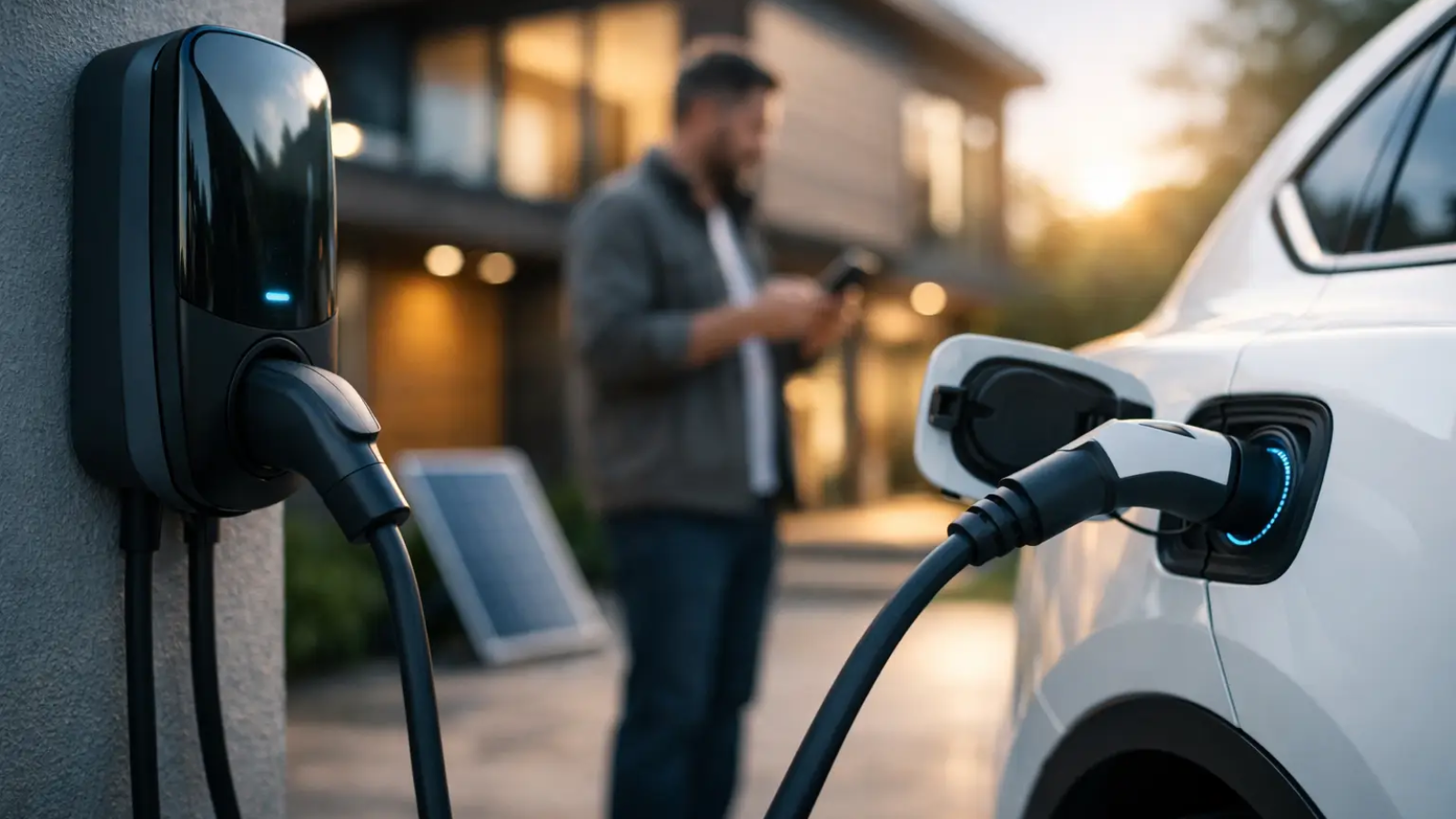
The difference often shows up on your electric bill, not in the charger itself. A basic Level 2 charger can power your EV perfectly well, but if you are asking are smart chargers worth it, the real question is whether better control over charging adds enough value to your home or business. For many drivers, it does. For others, a simpler setup is the smarter buy.
A smart charger is an EV charger with connectivity and software-based features. That usually means Wi-Fi or Bluetooth access through an app, along with scheduling, energy monitoring, load management, notifications, and sometimes integration with solar systems or utility programs. A standard charger focuses on delivering power. A smart charger adds data, timing, and automation.
That distinction matters because EV charging is no longer just about plugging in. As more households add electric vehicles, home batteries, rooftop solar, and time-of-use utility plans, charging becomes part of a broader energy system. The more variables you are trying to manage, the more useful smart features become.
Are smart chargers worth it at home?
For many homeowners, yes – especially if you want to charge at the cheapest times, track energy use, or prepare for a more advanced home energy setup.
The most immediate benefit is scheduled charging. If your utility charges different rates depending on the time of day, a smart charger can automatically shift charging to off-peak hours. That sounds small, but over months and years, it can meaningfully reduce operating costs. You do not have to remember to plug in at midnight or reset your vehicle settings every time your routine changes. The charger handles it.
Energy visibility is the next advantage. A smart charger can show how much electricity your EV uses, how long charging sessions take, and sometimes what that energy costs. For households trying to understand where power is going, that level of detail is useful. It can also help if more than one driver shares charging costs or if you want cleaner reporting for tax or reimbursement purposes.
Then there is convenience. Many smart chargers send notifications when charging starts, stops, or reaches a selected battery level. That is not essential, but it does remove friction from daily charging. If your charging setup is outdoors, shared, or installed at a second property, remote access becomes even more valuable.
Still, smart does not always mean necessary. If you drive predictable distances, have a flat electricity rate, and charge one vehicle overnight, a basic charger may cover your needs at a lower upfront cost. In that case, the premium for connected features may take a long time to justify financially.
When are smart chargers clearly worth the extra cost?
The value becomes easier to see when your charging setup is even slightly more complex.
If your utility offers time-of-use pricing, a smart charger can help you avoid expensive peak periods without daily effort. If you have rooftop solar, some chargers can prioritize solar generation or better align charging with daylight production. That can increase self-consumption and make your clean energy investment work harder.
Households with two EVs should pay particular attention. Charging two vehicles on one electrical service can put pressure on your panel, especially during evening hours when air conditioning, cooking, and appliances are all running. Smart chargers with load balancing can adjust charging speeds to keep total demand within safe limits. In some cases, that avoids or delays the need for a costly electrical upgrade.
The same logic applies to multifamily properties and commercial sites. Property managers and business owners often need access control, usage reporting, user permissions, and the ability to manage multiple chargers at once. A basic charger is not built for that environment. A smart charger is.
For fleets, workplaces, and shared parking areas, software matters just as much as hardware. If different users need different access levels, if charging costs need to be allocated, or if power capacity is limited, smart charging stops being a nice feature and starts becoming part of day-to-day operations.
The trade-offs people overlook
Smart chargers are not automatically better in every situation. They cost more upfront, and some features depend on a stable internet connection or app support from the manufacturer. If the software is clunky, or the company stops maintaining the platform, some of the value disappears.
There is also a difference between useful intelligence and feature overload. Not every driver needs advanced analytics, geofencing, or deep customization. Paying for tools you will never use is no better than buying an oversized charger for a small battery.
Compatibility matters too. Some smart features work best with specific vehicles, utility providers, or solar systems. Before buying, it is worth checking whether the charger can integrate with the energy setup you already have – or the one you plan to build over the next few years.
And then there is the practical question of reliability. A charger should first be dependable, weather-appropriate, and correctly installed. Smart features are valuable only if the core charging experience is solid. For that reason, the best buying decision is rarely about choosing the most advanced option. It is about choosing the charger that fits your electrical capacity, charging habits, and energy goals.
Smart chargers and sustainability
This is where the case gets stronger for many EV owners. Smart charging can support a lower-impact energy lifestyle in ways that a standard charger cannot.
Charging during off-peak periods can help reduce stress on the grid. In regions with cleaner nighttime generation or strong renewable supply windows, timing your charging can also improve the carbon profile of the electricity your EV uses. If your home has solar, smart charging can help align vehicle charging with renewable generation rather than pulling as much power from the grid later in the evening.
That does not mean every smart charger automatically delivers environmental benefits. The gains depend on your utility mix, charging behavior, and whether the charger is actually used in a more intentional way. But for households and businesses trying to connect transportation with broader clean energy goals, smart charging creates more room to optimize.
That broader view is becoming more relevant. EV adoption is rising, utilities are expanding managed charging programs, and more buildings are adding distributed energy resources. In that context, a charger is no longer just an accessory for the car. It is part of the energy infrastructure of the property.
Are smart chargers worth it for businesses and property managers?
In most shared or commercial settings, yes.
For a business, the question is less about convenience and more about control. Smart chargers can help manage who uses the equipment, when charging happens, and how much power is available across the site. If you need reporting for expenses, workplace policies, or tenant billing, connected software can make those tasks much easier.
Property managers also benefit from future readiness. Installing EV charging in apartments, condos, hotels, or office buildings is rarely a one-and-done decision. Demand usually grows. A smart charging system makes it easier to expand without losing visibility over usage patterns or overwhelming available electrical capacity.
There is also a customer experience factor. Tenants, guests, and employees increasingly expect charging access that feels modern and dependable. App-based controls, session visibility, and managed access can improve that experience while reducing the manual work behind the scenes.
How to decide if a smart charger is worth it for you
Start with three questions. Do you want to lower charging costs through scheduling? Do you need visibility or control over how energy is used? And is your home or property likely to become more energy-connected over time, whether through solar, multiple EVs, or shared charging access?
If the answer is yes to even one of those, a smart charger is probably worth serious consideration. If the answer is yes to all three, it is often the better long-term choice.
If your needs are simpler, a standard charger may still be the right move. There is nothing outdated about choosing a reliable charger that does one job well. The point is not to buy the most technology. The point is to buy the right amount of technology.
At Charge & Go, we see this shift clearly: charging decisions are increasingly energy decisions. The charger you install today may shape how easily you add solar, manage household demand, or support a second EV tomorrow.
Smart chargers are worth it when they help you use energy with more intention – spending less, wasting less, and building a charging setup that is ready for what comes next. That is usually where the real return shows up.
Add a Comment