
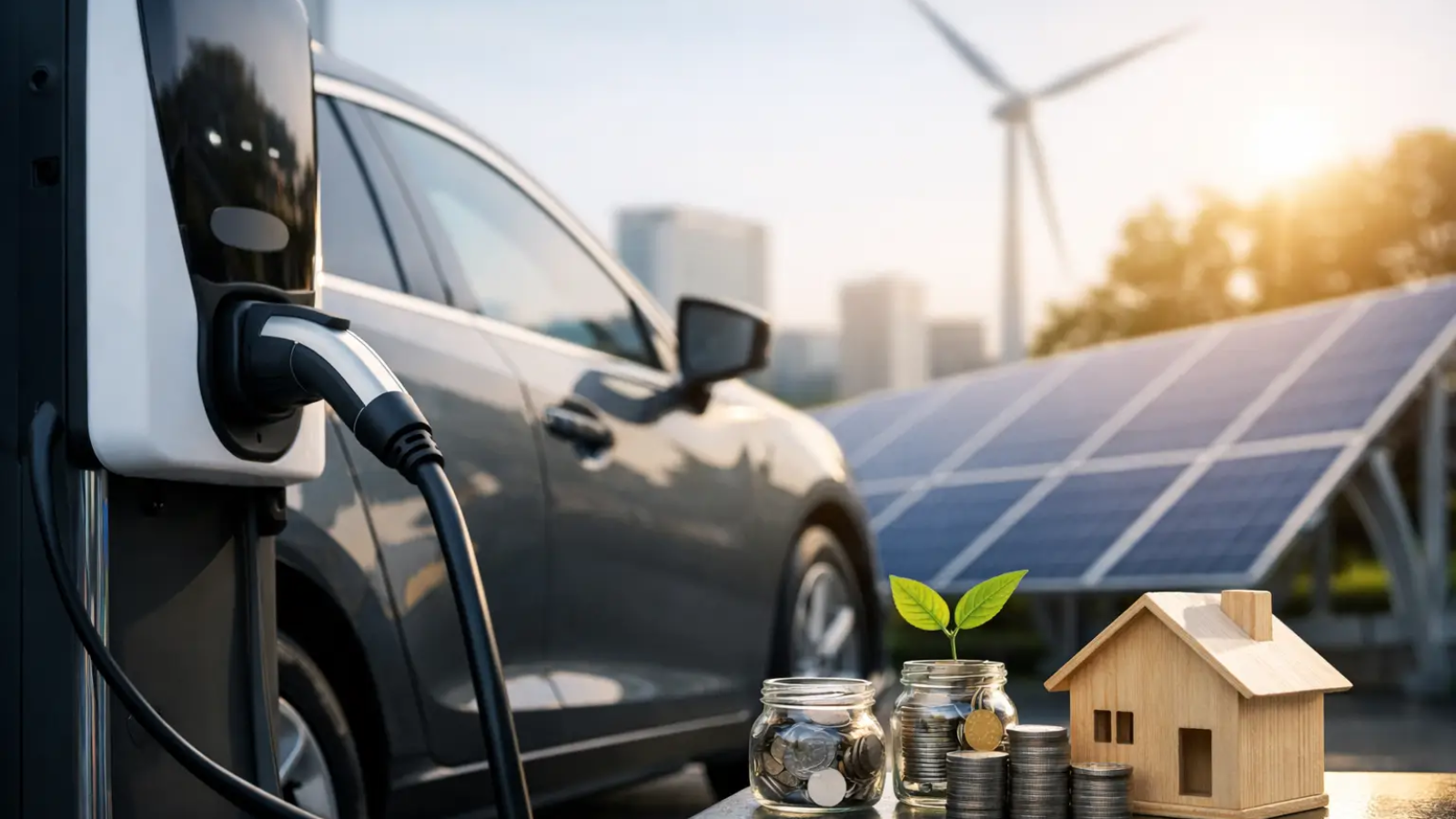
Your EV can be cheaper to run than a gas vehicle and still leave you wondering why the electric bill jumped. That disconnect usually comes down to when you charge, how fast you charge, and whether your setup matches the way you actually drive. If you want to reduce EV charging energy bills, the goal is not simply to charge less. It is to charge smarter.
For homeowners and businesses alike, the biggest savings rarely come from one dramatic change. They come from a handful of practical decisions that work together – rate plans, charger settings, load management, and in some cases, solar. The good news is that most of these decisions are within your control.
Why EV charging costs more than expected
Electricity rates are not always flat. Many utilities charge different prices depending on the time of day, and some commercial tariffs add demand charges based on your highest short burst of power use. That means two people can add the same number of miles to an EV and pay very different amounts for it.
Charging equipment also matters. A Level 2 charger is convenient and often the right choice, but convenience can hide inefficiency if the charger runs during peak-rate hours or if several vehicles charge at once without coordination. For businesses, unmanaged charging can quietly push a site into a more expensive billing pattern.
Then there is behavior. Plugging in as soon as you get home at 6 p.m. may feel responsible, but it often overlaps with the most expensive window on the grid. At a workplace or commercial property, a cluster of drivers charging mid-morning can have the same effect.
1. Shift charging to off-peak hours
If you do one thing first, make it this. Time-of-use rates reward drivers and property owners who can move charging away from peak demand periods. Overnight charging is often the lowest-cost option for homes, while businesses may benefit from scheduling charging after operating hours or staggering sessions during the day.
Most EVs and smart chargers let you set charging windows in the app or vehicle dashboard. That feature is more valuable than many people realize. A simple schedule can cut charging costs without changing how much you drive.
There is one trade-off. Off-peak charging works best when your routine is predictable. If your vehicle needs a fast turnaround every day, you may need a mixed strategy that balances lower-cost charging with occasional convenience charging.
2. Match charging speed to actual need
Faster is not always cheaper. If your vehicle sits parked for 10 hours overnight, you may not need the highest charging rate available. Charging at a moderate speed can reduce strain on your electrical system and, in some commercial settings, help avoid costly demand spikes.
For homeowners, this may mean using programmable settings on a Level 2 charger rather than running at maximum output every night. For businesses with multiple chargers, it may mean sharing available power across vehicles instead of allowing all chargers to pull at full capacity at once.
The right setting depends on your daily mileage, dwell time, and electrical capacity. A household with one EV and a short commute has very different needs from a fleet depot with vehicles that must be ready by dawn.
How to reduce EV charging energy bills with smart charging
Smart charging does more than turn a charger on and off. It lets you control power levels, prioritize certain vehicles, and align charging with the lowest-cost periods. For commercial properties, this can be the difference between a useful amenity and an avoidable operating expense.
Load balancing is especially important where several chargers share one service. Instead of upgrading the entire electrical connection right away, a managed system can distribute power intelligently based on demand. That keeps charging available while lowering the risk of expensive peaks.
For workplaces and multifamily buildings, smart charging also improves fairness. Users get access without the site owner absorbing unnecessary costs from inefficient charging patterns.
3. Review your electricity tariff before upgrading equipment
Many people invest in better charging hardware before checking whether they are on the right electricity plan. That order can leave money on the table. Utilities may offer EV-specific residential rates, business tariffs designed for managed loads, or programs that reward charging at certain times.
Before installing additional chargers or increasing charging capacity, look at how your bill is structured. If demand charges, peak periods, or seasonal rates apply, your ideal setup may be different from what works at another property.
This is one area where advice should be site-specific. The cheapest tariff for a single-family home is not necessarily the best option for a hotel, office building, or retail site.
4. Reduce wasted energy from your broader electrical load
EV charging does not happen in isolation. It stacks on top of air conditioning, lighting, refrigeration, and whatever else is using power at the same time. Sometimes the path to lower charging costs is not about the charger itself. It is about reducing competing loads during charging windows.
At home, you might avoid running high-draw appliances when the car is charging. At a business site, building management systems can help shift nonessential loads so charging happens more efficiently. This matters most where demand charges apply, because a brief overlap in heavy loads can raise the bill disproportionately.
That does not mean obsessing over every appliance. It means understanding your load profile well enough to avoid expensive stacking.
5. Use solar where it makes economic sense
Solar can be one of the most effective ways to reduce EV charging energy bills, especially when charging happens during daylight hours or when paired with a strategy for using stored or self-generated energy wisely. For homeowners who charge during the day, rooftop solar can offset a meaningful portion of vehicle energy use. For businesses with daytime parking, the fit can be even stronger.
The economics depend on system size, usage pattern, local rates, and available roof space. Solar is not a shortcut to free charging, and it works best when the charging profile aligns with solar production. A workplace with vehicles parked during business hours may see more direct benefit than a commuter who charges only late at night.
That said, combining EV charging with solar creates a more resilient and future-ready energy setup. It reduces grid dependence and supports a broader sustainability strategy, which is why this pairing continues to gain traction across homes and commercial properties.
6. Track charging data instead of guessing
If you do not measure charging behavior, you are left reacting to the bill after the fact. Good charging data shows when energy is used, how much each vehicle consumes, and whether charging sessions are clustering at expensive times.
For a homeowner, this might be as simple as reviewing charger app reports and utility usage data. For a business, it should go further – session analytics, site load trends, user behavior, and cost allocation. Once that visibility exists, savings opportunities become much easier to spot.
This is also where policy decisions become clearer. If employees are charging on site, should there be time limits, scheduled access, or user fees? If residents share chargers in a multifamily building, should charging be managed differently overnight? Data helps answer those questions with evidence rather than assumptions.
7. Maintain equipment and settings over time
Charging systems are not set-and-forget assets. Software settings change, user behavior changes, and a site that worked well with two EVs may struggle with six. Periodic reviews help make sure charging still aligns with both energy costs and operational needs.
For homes, this can be a quick check of schedules, charging limits, and firmware updates. For commercial properties, it may involve reviewing user demand, charger uptime, and whether load management rules still make sense.
This is easy to overlook because charging usually feels invisible when it works. But small mismatches in settings can persist for months and quietly inflate costs.
8. Plan for growth before it becomes expensive
The cheapest charging system is not always the one with the lowest upfront cost. If you expect to add more EVs, more tenants, or more employee drivers over the next few years, design for that now. A scalable system with smart controls can reduce the need for costly retrofits later.
This matters especially for property managers and business operators. Adding chargers one by one without a site plan can create uneven utilization, electrical bottlenecks, and higher bills. A coordinated approach usually delivers better long-term economics, even if the first phase looks more deliberate.
Reduce EV charging energy bills without sacrificing convenience
The most effective charging strategy feels almost invisible. Your vehicle is ready when you need it, your site avoids unnecessary peaks, and your energy bill reflects intention rather than habit. That is the real target.
At Charge & Go, we see the strongest results when charging decisions are treated as part of a broader energy strategy, not a standalone purchase. EV adoption is moving fast, but lower operating costs still come from fundamentals – timing, control, and a system designed around real usage.
If you are trying to cut charging costs, start with your bill, your schedule, and your load profile. Small changes there often deliver the first win. From that point, smarter infrastructure and solar can build on the savings in a way that supports both your budget and a cleaner energy future.
The best setup is rarely the flashiest one. It is the one that fits how you live, work, and charge every day.
Add a Comment