
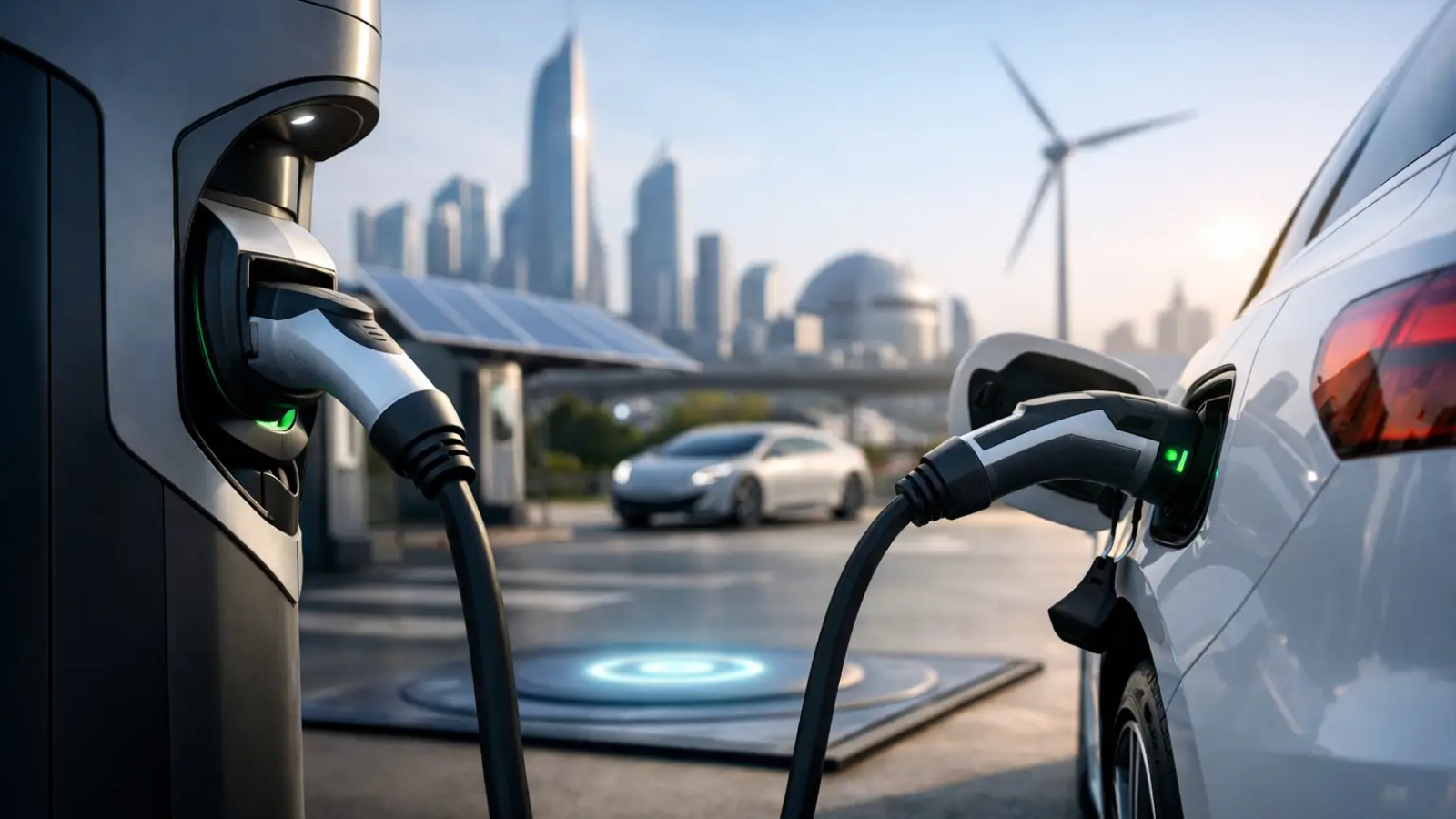
A charger is no longer just a place to plug in. It is becoming an active part of a property’s energy system, responding to utility rates, solar production, building demand, and driver schedules. The most meaningful EV charging technology trends are moving charging away from a simple hardware purchase and toward smarter energy management.
For homeowners, property managers, and business operators, that shift creates real opportunity. It can lower operating costs, make limited electrical capacity go further, and help clean energy support everyday transportation. But it also makes planning more important. The right charging solution depends on how long vehicles are parked, how much power a site can provide, and whether solar or battery storage is part of the picture.
EV charging technology trends are becoming energy trends
The early EV charging conversation focused heavily on charging speed. Faster charging still matters, particularly for public locations and commercial fleets, but it is only one measure of a successful installation. A charger that delivers the most power possible at the wrong time can increase demand charges, strain a building’s electrical service, or add unnecessary cost.
The next phase is about using electricity more intelligently. Connected chargers can communicate with software platforms, utilities, and sometimes other energy assets on-site. This gives owners more control over when charging happens and how available electricity is shared.
Smart load management makes capacity go further
Smart load management is one of the most practical developments in EV charging. Rather than assigning every charger its maximum possible power at all times, a system monitors total demand and distributes available power across vehicles.
Consider an apartment building with 20 parking spaces and limited room in its electrical panel. Without load management, adding chargers may require a costly service upgrade. With intelligent power sharing, the building can install more charging ports while ensuring the property stays within its capacity limit. Drivers who park overnight can still receive the energy they need, even if each vehicle does not charge at full power continuously.
This approach is equally relevant for workplaces and fleets. Vehicles are often parked for hours, which means there is usually flexibility to schedule charging around building loads or lower-cost electricity periods. The trade-off is that site operators need reliable software, clear driver expectations, and a design that reflects actual parking behavior instead of peak charging assumptions.
Managed charging responds to price and grid conditions
Managed charging, sometimes called smart charging, takes power sharing a step further. It schedules or adjusts charging based on factors such as time-of-use rates, peak demand, utility signals, and a driver’s selected departure time.
For a homeowner, this may mean starting a charge after overnight electricity rates drop or using excess solar generation during the day. For a business, it may mean avoiding a period when HVAC equipment, machinery, and EV chargers would otherwise create an expensive demand peak.
The value depends on local utility pricing and the level of control a customer is comfortable giving an automated system. Drivers should always be able to set a minimum state of charge or a required departure time. Smart charging works best when it supports daily routines rather than asking people to change them.
Bidirectional charging puts EV batteries to work
EV batteries are large energy resources that spend much of their time parked. Bidirectional charging allows compatible vehicles to do more than receive electricity. They can also send it back to a home, building, or potentially the grid.
Vehicle-to-home, or V2H, can provide backup power during an outage. Vehicle-to-building, or V2B, can help a commercial site reduce peak demand or support critical loads. Vehicle-to-grid, or V2G, could enable EVs to supply power when the grid needs it most, with participating drivers or fleet operators compensated for the service.
This is a promising trend, but it is not yet a universal solution. Vehicle compatibility, charger compatibility, utility programs, local rules, and battery warranty terms all matter. Many customers will see the strongest near-term value in using an EV as a carefully managed backup power source, especially when paired with solar and stationary storage.
For businesses with predictable fleets, bidirectional charging may eventually become a meaningful operational tool. A group of delivery vehicles, school buses, or service vans can represent substantial stored energy when parked. The planning challenge is ensuring every vehicle has enough charge for its next route before its battery is used for anything else.
Solar, storage, and charging are increasingly designed together
Solar-powered EV charging is becoming less about placing a few panels above parking spaces and more about coordinating energy across an entire property. Solar can reduce the electricity purchased from the grid, while battery storage can capture excess generation, reduce demand peaks, and provide resilience when the grid is unavailable.
For homes, the combination can make daytime charging particularly attractive for drivers who work remotely or return home during the day. For commercial sites, solar and storage can support charging infrastructure without forcing all power demand onto the grid at the most expensive moments.
That does not mean every EV charger needs its own dedicated solar array. In many cases, a whole-home or whole-building energy strategy is more efficient. The best design considers annual solar production, charging patterns, utility rates, roof or canopy space, and the property’s existing electrical load.
Battery storage can also support high-power charging where grid upgrades are slow or expensive. A battery can charge gradually from the grid or solar system, then deliver additional power when several vehicles need to charge at once. This can be useful for fleet depots, retail sites, and highway-adjacent locations, though storage economics must be evaluated carefully against the expected charging volume.
Faster public charging is improving, but reliability matters more
Public DC fast charging continues to expand, with higher-power equipment designed to reduce stops for drivers traveling long distances. Newer systems are also being designed for a wider range of vehicle architectures, including heavier electric trucks that require more energy and more accessible parking layouts.
Still, speed is not the only issue drivers notice. A fast charger that is out of service, difficult to activate, or blocked by poor site design delivers little value. Reliability, clear pricing, sufficient lighting, accessible cable reach, and easy payment are becoming essential measures of charging quality.
Interoperability is improving as the industry works toward more consistent connectors, communications standards, and payment experiences. Yet transition periods can be messy. Property owners should avoid making decisions based solely on a single connector trend or a headline charging speed. Equipment with strong support, clear maintenance pathways, and software that can adapt over time is usually the safer long-term choice.
Fleet charging is becoming a planning discipline
Fleet electrification is accelerating because many commercial vehicles follow predictable routes and return to a central depot. That predictability makes charging easier to manage than public charging, but fleet projects are rarely simple.
A fleet operator needs to understand vehicle dwell time, route mileage, battery size, charging windows, utility demand charges, and future vehicle growth. Installing the highest-power chargers everywhere can be an expensive mistake if vehicles sit overnight and need only moderate charging rates. Conversely, undersizing the system can disrupt operations when schedules change or vehicles need rapid turnaround.
The most effective fleet sites use charging management software to prioritize vehicles by departure time and energy need. They also plan electrical infrastructure in phases. Installing conduit and making space for future equipment during the first construction phase can cost far less than rebuilding the site later.
Multifamily charging is shifting from amenity to infrastructure
For apartment and condominium residents, dependable home charging is often more valuable than access to a nearby public station. The challenge is that multifamily buildings must serve many drivers fairly while working within shared electrical capacity and parking rules.
Networked charging gives property managers tools to assign access, set pricing, monitor usage, and recover electricity costs. It also creates a path to expand the system as EV adoption grows. A small pilot may make sense at first, but the electrical plan should account for the day when charging is expected rather than exceptional.
Fairness matters. Residents need transparent rules around access, parking duration, and pricing. A building that installs chargers without a clear management policy can create friction even when the technology performs well.
What to prioritize before buying charging equipment
The most future-ready EV charging investment is not necessarily the most advanced-looking charger. It is the system that fits the site, supports current drivers, and can adapt as energy needs change.
Start with parking duration and vehicle usage. An overnight residential parking space has different needs from a retail location where drivers stay for 30 minutes, and both differ from a fleet depot with fixed morning departures. Then assess electrical capacity, utility rates, internet connectivity, maintenance responsibilities, and whether solar or storage could improve the economics.
It is also worth asking how the system will grow. Can more chargers be added without replacing the entire platform? Can power be shared dynamically? Will the software provide useful data without creating a complex administrative burden? These questions turn a charger purchase into an infrastructure plan.
The most helpful next step is to view EV charging as part of a property’s broader clean-energy strategy. When charging, solar, storage, and intelligent controls are planned together, each can make the others more valuable – one practical charge at a time.
Add a Comment