
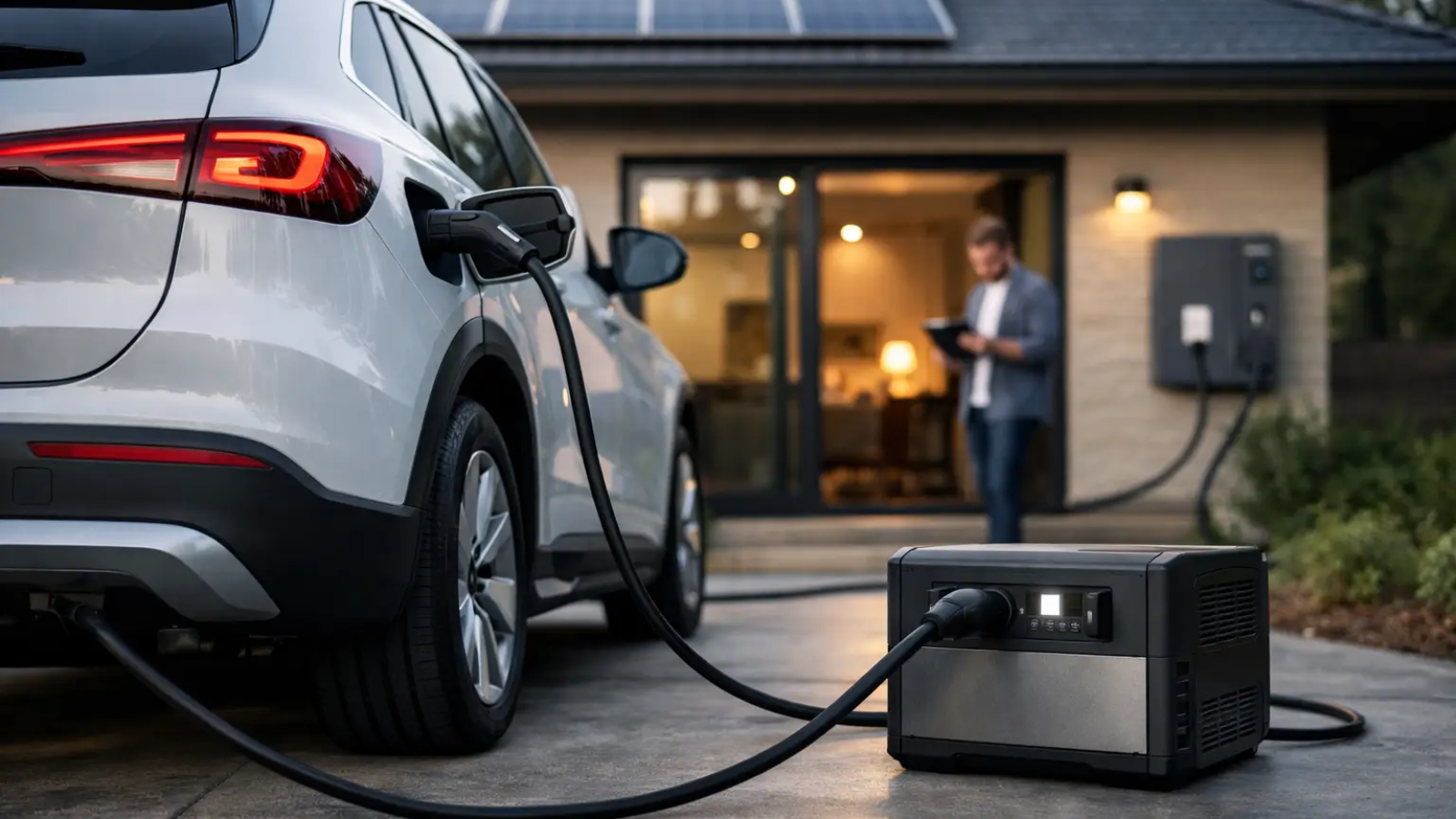
A parked EV is usually treated like a load. In the near future, it may be treated more like an energy resource.
That shift sits at the center of the future of bidirectional charging. Instead of only pulling electricity from the grid, a compatible EV and charger can also send power back out – to a home, a building, or the grid itself. For homeowners, that could mean backup power during an outage. For businesses, it could support smarter energy management. For utilities, it opens the door to more flexible demand balancing as renewable energy grows.
Bidirectional charging has been discussed for years, but it is moving from pilot programs into real planning decisions. The big question is no longer whether the concept works. It is how fast the market can solve the practical issues around cost, standards, battery warranties, and grid integration.
Why the future of bidirectional charging matters
As EV adoption rises, so does the amount of battery capacity sitting idle in driveways, parking lots, and fleet depots. That stored energy has value. The cleaner and more dynamic the grid becomes, the more useful flexible storage becomes too.
Solar energy is a major reason this matters. Solar production peaks during the day, while home energy demand often rises later in the afternoon and evening. A bidirectional EV can help bridge that mismatch. In the right setup, a homeowner could charge from solar when production is high and then use some of that stored energy later. For commercial properties, the same principle can support peak shaving and improve energy resilience.
This is also about grid stability. Renewable power is growing, but wind and solar are variable by nature. Utilities need more ways to balance supply and demand without leaning too heavily on fossil-fuel peaker plants. Distributed storage helps, and EV batteries represent a very large potential storage pool if they can be coordinated safely and efficiently.
Still, the value depends on context. A homeowner in an outage-prone area may care most about backup power. A fleet operator may care more about energy costs and utility incentives. A utility may focus on grid services. The technology is the same, but the business case changes by use case.
What bidirectional charging actually looks like
There are a few different models, and they are often grouped together even though they solve different problems.
Vehicle-to-home, or V2H, allows an EV to power part or all of a home during peak pricing periods or outages. This is one of the most understandable use cases for consumers because the benefit is immediate and visible.
Vehicle-to-building, or V2B, applies similar logic to commercial sites, apartments, and office properties. This can support demand management, resilience, and in some cases lower electricity bills.
Vehicle-to-grid, or V2G, goes one step further by sending electricity back to the utility grid. This is the most ambitious model because it requires coordination with utilities, aggregators, software platforms, interconnection rules, and compensation structures.
The future of bidirectional charging will not unfold evenly across all three. V2H and V2B may scale faster in many markets because they offer clearer local value and fewer regulatory hurdles. V2G has enormous potential, but it depends on more stakeholders moving in sync.
The technology is ready enough – but not simple yet
At a technical level, bidirectional charging is no longer experimental. Compatible vehicles, inverters, energy management systems, and chargers already exist. What is missing is broad consistency.
Not every EV supports bidirectional power flow. Not every charger does either. Communication standards are improving, but hardware and software compatibility still varies by automaker and charging platform. That creates hesitation for buyers who do not want to invest in a system that may feel locked into one ecosystem.
Installation is another factor. A bidirectional setup is more complex than a standard Level 2 charger. It may require additional electrical work, transfer equipment for backup applications, utility approvals, and integration with solar or home energy management systems. For commercial sites, the engineering can become more involved depending on load profiles and site design.
This is why practical adoption will likely start with customers who already think about energy as a system, not just a charging point. Homeowners with solar, businesses managing demand charges, and fleets with predictable dwell times are among the strongest early fits.
Cost will shape adoption more than hype
The promise is compelling, but economics will decide how quickly bidirectional charging grows.
Right now, hardware and installation costs remain a barrier. A customer comparing a standard EV charger with a bidirectional-capable setup may see a meaningful price difference. That gap has to be justified by real savings, resilience benefits, or utility payments.
For some households, backup power alone may justify the investment, especially when compared with a standby generator or separate home battery system. For others, the payback period may still feel too long. It depends on electricity rates, outage frequency, local incentives, and whether the EV is parked and connected often enough to provide value.
For businesses and fleets, the math can be stronger because scale changes everything. A depot with multiple vehicles and predictable schedules may be able to reduce peak demand, support facility operations, and participate in grid programs in ways that create measurable returns. But those benefits depend on software control and clear tariff structures, not just charger capability.
Battery health is the concern everyone asks about
One of the biggest questions around bidirectional charging is battery degradation. If an EV battery is cycled more often, will it wear out faster?
The honest answer is yes, additional cycling can affect battery life. But the impact is not always dramatic, and it depends on how the system is managed. Battery chemistry, depth of discharge, charging speed, ambient temperature, and control software all matter.
This is where smart energy management becomes critical. A well-designed bidirectional program does not need to drain a vehicle battery aggressively or constantly. It can operate within set limits so the driver keeps enough range, and the battery avoids unnecessary stress. Automakers are also getting better at defining acceptable operating windows and building warranties around supported use cases.
The market needs more clarity here. Consumers and fleet managers want confidence that using bidirectional charging will not create hidden replacement costs. Stronger warranty language, more field data, and transparent software controls will be essential for wider trust.
Policy, standards, and utility rules will decide the pace
Technology alone will not determine the future of bidirectional charging. Regulation and market design will matter just as much.
In many areas, interconnection rules were not built with mobile batteries in mind. Utilities and regulators need frameworks for export permissions, compensation rates, safety requirements, and metering. Without that structure, V2G remains difficult to scale even when the equipment is technically capable.
Standards also matter. Automakers, charger manufacturers, utilities, and software providers need common protocols so systems can communicate reliably. The easier it is for a vehicle, charger, and building energy system to work together, the easier the customer decision becomes.
This is where the industry is moving from innovation to infrastructure. Pilot projects have proved interest. The next phase is making deployment repeatable, financeable, and easy to explain.
Where adoption is likely to grow first
Home backup is one of the clearest early applications. When customers already own an EV with sufficient battery capacity, using that asset for resilience is a logical next step. It becomes even more compelling when paired with rooftop solar.
Commercial buildings are another strong fit, especially sites with high demand charges or sustainability targets. Property owners are under pressure to electrify while managing energy costs. Bidirectional charging can support both goals if the economics line up.
Fleets may become the real accelerant. School buses, delivery vans, and service vehicles often return to base on predictable schedules and sit parked for long periods. That makes them easier to orchestrate than private vehicles with less predictable movement. A single fleet depot can provide meaningful storage capacity, making the business case easier to model.
For companies like Charge & Go, this is where clean energy planning gets more interesting. EV charging, solar generation, and site energy management are starting to converge into one conversation rather than three separate purchases.
What buyers should watch next
The market does not need every EV to become a grid asset overnight. It needs a few things to improve steadily: lower equipment costs, better compatibility, clearer incentives, and simpler installation pathways.
If you are evaluating future readiness, look beyond charger speed alone. Ask whether the hardware supports bidirectional capability, how it integrates with solar or building energy systems, what utility programs are available, and what the vehicle manufacturer allows. The best solution is not always the most advanced on paper. It is the one that fits your energy goals, budget, and daily usage patterns.
The future of bidirectional charging is not a single breakthrough moment. It is a gradual shift in how we think about vehicles, buildings, and the grid. As that shift continues, the smartest investments will come from treating charging as part of a broader energy strategy – not just a place to plug in.
The opportunity here is practical: every parked EV has the potential to do more than wait for the next trip.
Add a Comment