
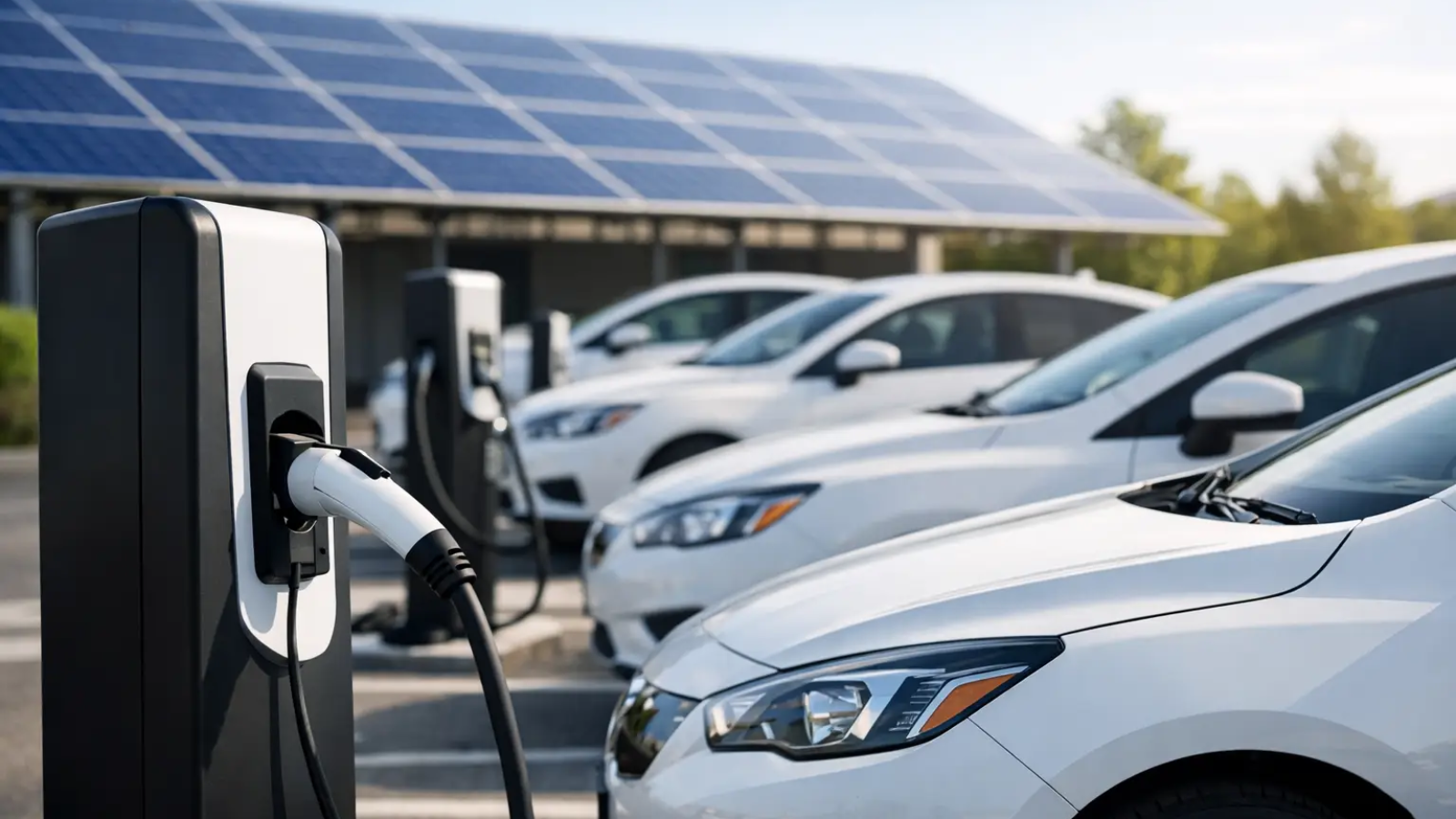
A parking lot can do more than hold cars between meetings. For companies with employees, fleet vehicles, or customer traffic, it can become a practical energy asset. Workplace solar charging connects on-site solar generation with EV charging, helping organizations make cleaner transportation easier to choose while putting available roof or canopy space to work.
The opportunity is especially relevant as more employees arrive in electric vehicles and businesses look for visible, credible ways to act on energy and emissions goals. Done well, a solar-powered charging project is not just a sustainability statement. It is a long-term infrastructure decision shaped by driving patterns, utility rates, site conditions, and the needs of the people who use it.
What workplace solar charging actually means
Workplace solar charging usually combines solar panels, EV chargers, and the building’s electrical system. Panels may sit on a rooftop or on solar canopies above parking spaces. The electricity they produce first serves the site according to the system design, while EV chargers draw power through the facility’s electrical infrastructure.
That distinction matters. A vehicle is not necessarily charging directly from a specific solar panel at every moment. Solar generation rises and falls with weather and daylight, while drivers may plug in at different times. In most commercial installations, solar, chargers, building loads, and the utility grid work together. The grid supplies power when solar production is low, and solar can reduce the amount of electricity the site needs to buy when generation is available.
Battery storage can add another layer of control, but it is not required for every project. Storage may make sense where demand charges are high, resilience is a priority, or charging demand occurs after solar output declines. For many workplaces, a properly sized solar array and managed charging setup deliver a strong starting point without adding unnecessary complexity.
Why employers are investing now
Charging at work solves a simple problem for EV drivers: vehicles spend hours parked there. That dwell time makes Level 2 charging a natural fit. Rather than needing a rapid charge, employees can add meaningful range during a normal workday while the business avoids designing every space around high-power charging.
For employers, this can strengthen an employee benefits package without requiring a major change to daily operations. Access to charging can be particularly valuable for apartment residents, employees without home charging, and people with longer commutes. It also signals that the organization is preparing for how people will travel in the years ahead.
Fleet operators see a different benefit. Vehicles that return to a depot or office parking area can charge during predictable windows. When charging schedules align with solar production or lower-cost utility periods, the organization gains more control over operating costs. The value is not simply free fuel from the sun. It is smarter management of an energy resource the property already has the capacity to produce.
Solar canopies also improve the physical experience of a parking area. They provide shade, protect vehicles from the elements, and make a clean-energy investment highly visible to employees and visitors. In a crowded market for talent, customers, and tenants, that visibility can support a broader sustainability story when it is backed by real performance data.
Start with usage, not charger count
The most common planning mistake is beginning with a number of chargers rather than a clear picture of demand. A 40-person office, a medical facility with rotating shifts, and a delivery fleet may all need workplace charging, but their patterns will be entirely different.
A useful assessment looks at how long vehicles park, how many drivers already own EVs, expected adoption over the next three to five years, and whether chargers will be available to employees, visitors, or fleet vehicles. It should also consider peak building demand. Adding chargers without understanding the site’s electrical profile can create avoidable upgrade costs or higher demand charges.
Charging software and load management are central to the answer. Smart chargers can share available power across multiple vehicles, schedule charging, set access rules, and collect usage data. This lets a business install more charging ports without assuming every port must pull maximum power at the same time.
For example, eight employees parked for eight hours may be better served by eight managed Level 2 ports than by two high-powered chargers. The right choice depends on the range employees need, arrival and departure times, and the site’s available electrical capacity. Faster is not always more useful.
Size solar around the whole property
Solar sizing should also reflect the property’s complete energy profile, not only the anticipated load from EV charging. Office equipment, HVAC systems, lighting, refrigeration, and production equipment all influence when a facility uses electricity. A solar system that complements daytime building demand may provide stronger overall value than one designed around chargers alone.
A qualified assessment should review usable roof or parking-lot area, shading, structural conditions, electrical interconnection, and local permitting requirements. In some locations, a parking canopy makes excellent sense because it creates new solar surface area. In others, a rooftop system may be more cost-effective and less disruptive to install.
The objective is not to force every kilowatt-hour into a vehicle. It is to create an integrated energy system that reduces grid consumption when practical and supports reliable charging whenever drivers need it.
The financial case is about more than solar output
Workplace solar charging can create value through several channels: reduced utility purchases, better management of charging loads, employee retention, fleet fuel savings, and progress toward corporate emissions commitments. The mix will vary by organization.
Utility pricing is one of the biggest variables. Time-of-use rates, demand charges, net metering rules, and commercial tariffs differ by region and can materially change project economics. A site with high afternoon electricity prices may benefit from solar generation differently than a site where overnight fleet charging is the main load.
Charging policy matters just as much. Some employers offer charging at no cost as an employee benefit. Others charge a modest fee to recover electricity, software, or maintenance costs. A third approach provides a set number of complimentary charging hours, then applies a fee if a vehicle remains connected after it is fully charged. Clear policies help keep stations available and prevent frustration.
It is also wise to plan for maintenance, network service fees, signage, accessibility, and future expansion from the beginning. The lowest upfront bid is not always the lowest-cost system over its lifetime. Equipment reliability, service support, software flexibility, and the ability to add ports later deserve real weight in the decision.
Design for growth without overbuilding
EV adoption is growing, but not every workplace needs to install chargers in every parking space immediately. A phased approach is often the most sensible path. Install conduit, electrical capacity, and physical space for future chargers during the initial construction or renovation, then add charging ports as demand increases.
This approach avoids expensive rework while keeping capital aligned with real usage. It also gives facility teams time to learn how employees charge, when congestion occurs, and whether solar output matches expectations. Data from the first phase can guide the next one.
Businesses should also decide who will manage the program. Someone needs to oversee access, pricing, driver communication, maintenance requests, and reporting. For a smaller office, this may be a straightforward facilities task. For a large campus or fleet depot, it may require a more formal operating plan and a charging partner with ongoing support.
Measuring the impact of workplace solar charging
The strongest projects make results visible. Track charger utilization, charging sessions, energy delivered, solar generation, grid energy purchased, and peak-demand trends. These measures help operators improve the system while giving sustainability teams credible data for internal reporting.
Avoid oversimplifying emissions claims. The environmental impact of charging varies by local grid mix, solar production, and the timing of electricity use. Still, on-site solar paired with well-managed charging gives an organization a direct way to reduce reliance on conventional energy and encourage the shift from gasoline-powered travel.
For employees and visitors, the message is even more immediate: cleaner transportation is supported where they work. That practical convenience can turn a broad sustainability commitment into a daily habit.
Workplace solar charging is most effective when it is planned as part of the property, not added as an afterthought. Start with how people park, how the building uses energy, and where demand is headed. From there, the right solar and charging design can give every workday a little more forward momentum.
Add a Comment