
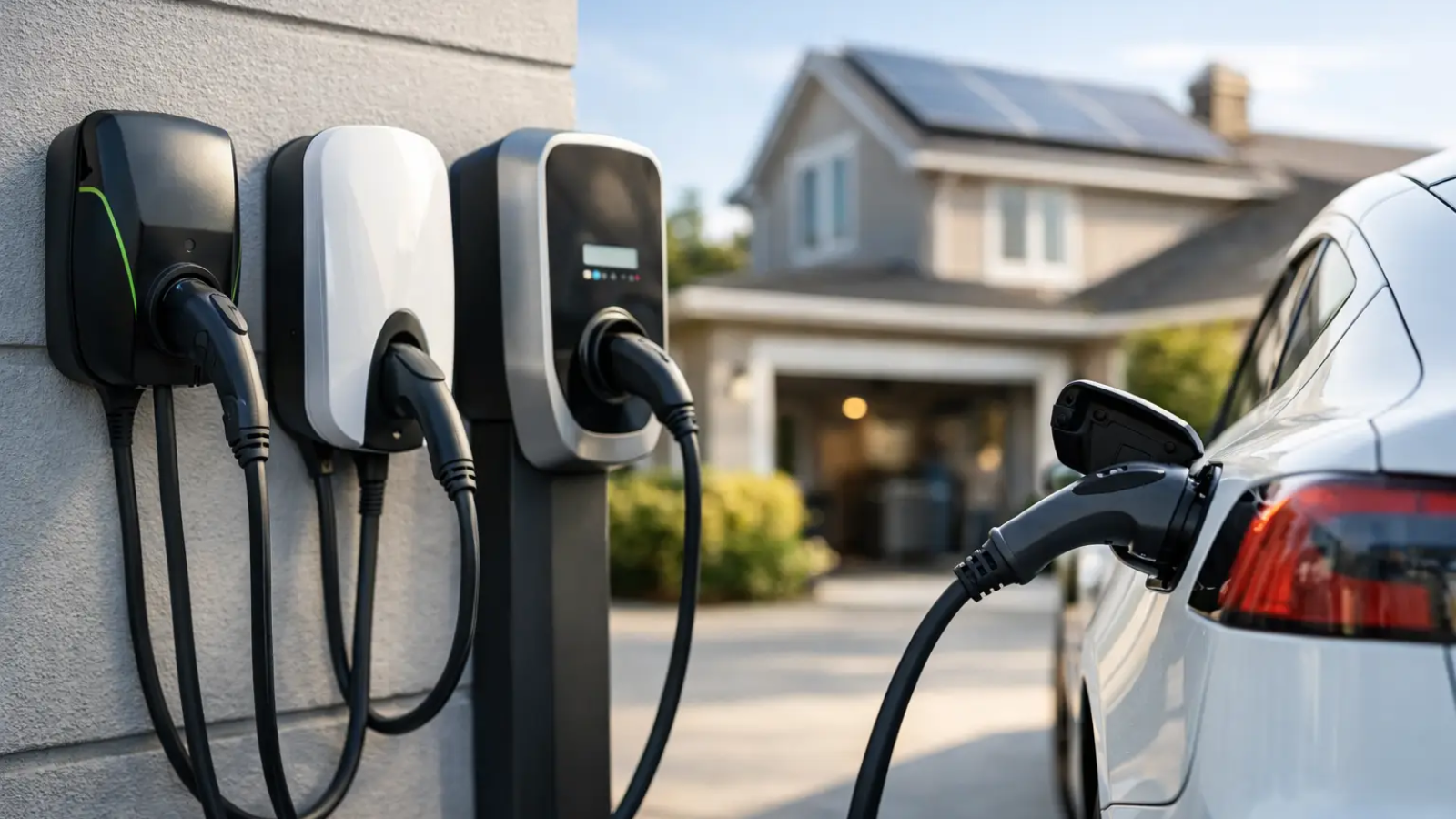
A home charger is not just a faster outlet for your EV. It becomes part of your household energy system, affecting when you use electricity, how easily you can add solar, and whether charging stays convenient as your needs change. This residential EV charger brands review looks beyond headline charging speeds to help U.S. homeowners choose equipment that fits their vehicle, electrical panel, and clean-energy goals.
The best brand is rarely the one with the longest features list. A dependable charger that is correctly sized, professionally installed, and compatible with your vehicle will usually deliver more value than a premium model with functions you never use. Start with the practical constraints, then choose the technology that supports your next step toward cleaner transportation.
What separates a good home EV charger from a great one?
For most households, a Level 2 charger is the practical choice. It uses a 240-volt circuit and can generally add 20 to 50 or more miles of range per hour, depending on the charger, vehicle, and circuit capacity. That makes overnight charging realistic even for drivers with longer daily commutes.
The right amperage depends on both your car and your home. A 40-amp charging output meets the needs of many EV owners, while 48-amp models can reduce charging time for vehicles that accept higher power. But installing a 48-amp charger commonly requires a 60-amp dedicated circuit. An electrician should assess available panel capacity before you buy, particularly in an older home with electric cooking, air conditioning, or heat pumps.
Connector choice also matters more than it once did. J1772 remains common for non-Tesla vehicles, while the North American Charging Standard, or NACS, is increasingly used across the market. Some chargers have a built-in NACS connector, others use J1772, and many drivers rely on an adapter. Choose for the vehicle you own now, but consider the vehicles your household may own in three to five years.
Smart controls can be genuinely useful when they solve an energy problem. Scheduled charging can shift demand to lower off-peak utility rates. Load management can help a charger work within a limited electrical service. Solar-aware charging can prioritize surplus solar production, although its value depends on your solar system, utility billing rules, and daytime parking habits.
Residential EV charger brands review: six strong options
Tesla: a natural fit for Tesla households
Tesla’s Wall Connector is a compelling option for homes with one or more Tesla vehicles. Its NACS cable provides direct compatibility, and its higher-power capability can suit Tesla models that accept it. The design is clean, the charging experience is familiar to Tesla drivers, and Wi-Fi connectivity allows software updates and scheduling.
The trade-off is flexibility. A household expecting to charge a mix of Tesla and J1772-equipped EVs may need an adapter or may prefer a universal model. Tesla offers versions designed for broader compatibility, but buyers should confirm the connector and vehicle support before installation rather than assuming every Wall Connector works the same way.
ChargePoint: strong controls and a familiar charging ecosystem
ChargePoint Home Flex has long appealed to drivers who want configurable power and app-based control from a well-known charging network brand. It can be set to match the circuit installed at your home, a useful advantage where panel capacity limits the size of the circuit. The app supports scheduling and charging information that can help drivers understand their household energy habits.
Its strongest case is for homeowners who value software visibility and want a charger that can adapt to a range of electrical configurations. As with any connected charger, Wi-Fi reliability matters. If the garage or driveway has poor signal, solve that issue early or choose a charger whose core function does not depend heavily on a constant connection.
Emporia: a smart choice for energy-conscious homes
Emporia is especially relevant for homeowners who view EV charging as part of a broader home-energy strategy. Its charger is competitively priced and can pair with Emporia energy-monitoring equipment, giving users more detailed insight into household consumption. For homes with time-of-use rates, solar panels, or plans for an electric heat pump, that visibility can be valuable.
The benefit is not simply more data. When charging is one of the largest electrical loads in a home, seeing it alongside air conditioning, appliances, and solar production can inform better decisions. The limitation is that the full value comes from engaging with the ecosystem. Drivers who want a basic plug-in-and-forget charger may not need that level of monitoring.
Wallbox: thoughtful energy management for constrained panels
Wallbox offers a polished approach to smart charging, with models that emphasize app controls, energy management, and compact design. Its load-management options are worth a close look for homes where a panel upgrade would otherwise be required. By monitoring overall demand and adjusting charging power, the system can help avoid overloading the electrical service.
That can change the economics of a project. A lower-cost energy-management setup may be preferable to a major electrical upgrade, though it will not be right for every property. Homeowners should ask an installer to compare both paths and explain whether reduced charging power would affect their normal driving routine.
Grizzl-E: durable and refreshingly straightforward
Grizzl-E has earned attention among drivers who prioritize a sturdy, uncomplicated Level 2 charger. Its products are often favored for their weather-resistant construction and minimal reliance on apps or subscriptions. This makes the brand a sensible contender for outdoor installations, second homes, or drivers who simply want dependable overnight charging.
The trade-off is fewer advanced energy features. If you want detailed reports, solar-responsive charging, or sophisticated load control, another platform may be better suited. But simple equipment has an advantage: fewer settings to manage and less dependence on a phone for daily charging.
Autel: feature-rich hardware with broad appeal
Autel has become a serious residential charging option by pairing modern hardware with a broad set of smart features. Its home chargers are available in different connector configurations, and the product line often includes practical touches such as clear displays, cable management, scheduling, and adjustable output settings.
Autel can be a good middle ground for homeowners who want more functionality than a basic charger offers without building an entire home-energy ecosystem. Still, compare the specific model rather than choosing by brand alone. Connector type, hardwired versus plug-in installation, and current software capabilities can vary across the lineup.
Installation can matter more than the logo on the charger
A high-quality charger installed on an undersized circuit is not a high-quality charging solution. Before selecting a model, have a qualified electrician review panel capacity, distance from the panel to the parking location, permit requirements, grounding, and whether the charger will be indoors or exposed to weather.
Hardwiring is often the preferred route for higher-output chargers and permanent installations. A plug-in unit can be convenient and may simplify replacement later, but it requires the correct receptacle, wiring, and outlet quality. Avoid treating a 240-volt outlet as a generic appliance connection. EV charging is a sustained, high-load use case, so installation quality is central to safety and reliability.
It is also worth checking local utility programs before work begins. Some utilities offer charging-rate plans, rebates, or managed-charging incentives. These programs may favor certain smart-charger capabilities, but the savings only matter if the program fits your driving and charging schedule.
Choose for your energy future, not only your current car
For a single Tesla household that wants direct compatibility, Tesla is difficult to overlook. For energy monitoring and a solar-minded home, Emporia deserves serious consideration. ChargePoint and Autel suit drivers who want capable app controls and broad everyday usability. Wallbox is particularly interesting where electrical capacity is tight, while Grizzl-E is a strong choice for homeowners who favor durable simplicity.
No charger can create capacity that a home electrical system does not have, and no smart feature can replace a sound installation. The most effective choice is one that matches your vehicle, supports your utility rate plan, and leaves room for the next clean-energy upgrade. As more homes add solar, storage, and electric appliances, a well-planned EV charger can become one of the most useful tools for managing how your home uses power.
Add a Comment