
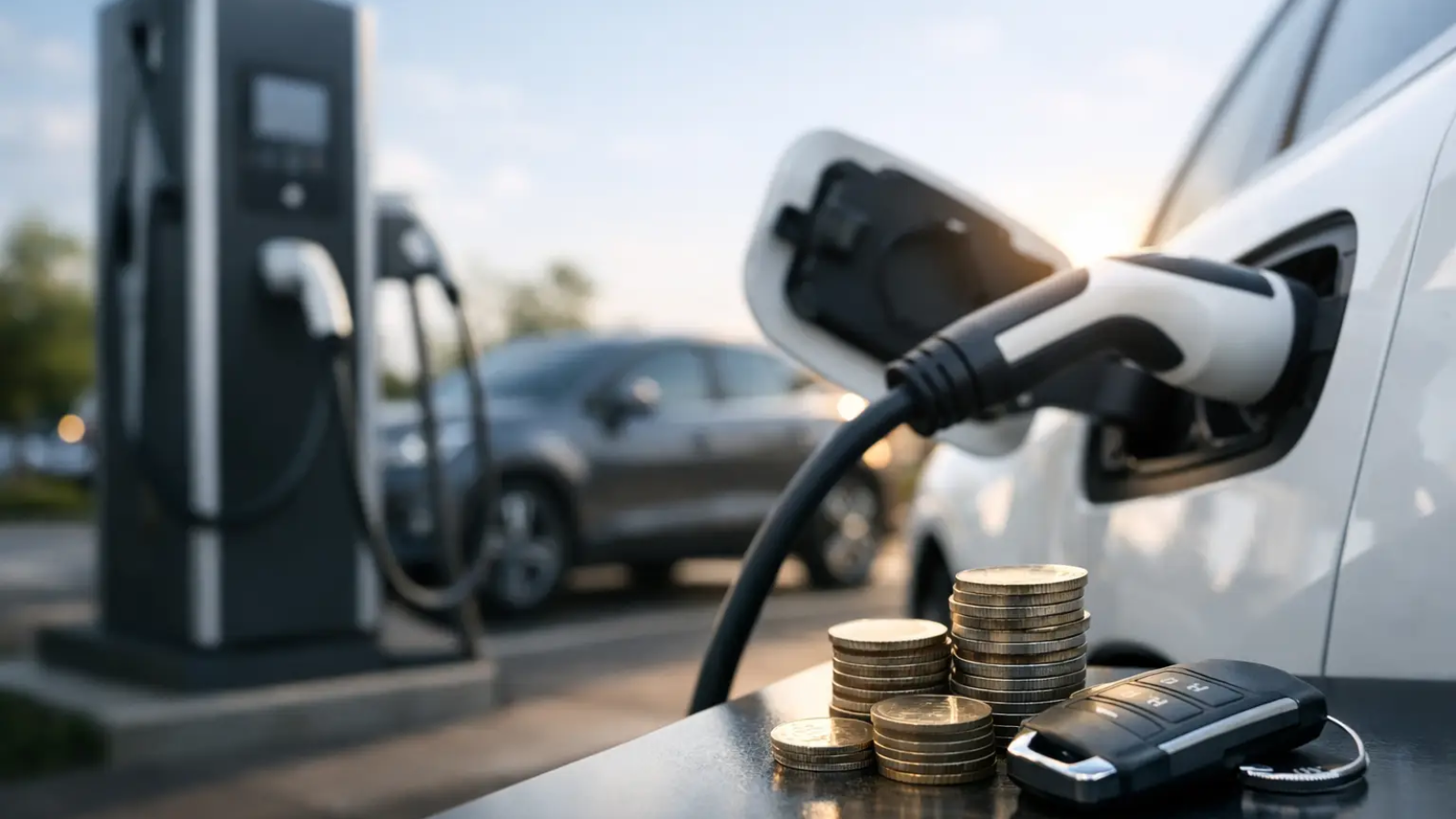
Sticker price is only part of the story. When people ask how much are electric vehicle charging stations, what they usually want to know is the real project cost – equipment, installation, electrical upgrades, software, and long-term value.
That answer varies a lot because a home charger in a garage and a commercial charging setup for a retail site are two very different investments. The good news is that EV charging is no longer a niche purchase. For homeowners, it can be a manageable upgrade that adds daily convenience. For businesses and property owners, it can be a strategic asset that supports tenants, employees, and customers while advancing sustainability goals.
How much are electric vehicle charging stations for homes?
For most homes, a Level 2 charger is the standard choice. In the US, the charger itself often ranges from about $400 to $1,200 for mainstream residential models. If you want smart features like app control, scheduled charging, energy monitoring, or solar integration, the price may move closer to the upper end.
Installation is where costs start to spread out. A straightforward install near the electrical panel may cost roughly $500 to $1,500. If the charger location is farther away, the wiring path is difficult, or the panel needs upgrades, the total can rise to $2,000 or more. In some cases, especially older homes with limited electrical capacity, a panel upgrade can add several thousand dollars.
That means many homeowners end up in a broad all-in range of about $900 to $3,500 for a Level 2 charging station and installation. Some projects land below that. Others go higher if electrical work is extensive.
Why home charging costs vary so much
Distance matters. If your charger will be installed right next to your main panel, labor and materials stay lower. If it needs a long cable run through walls, ceilings, or outdoor conduit, costs rise quickly.
Electrical capacity matters too. A newer home with available breaker space and enough service capacity is usually simpler and less expensive. An older property may need a load calculation, subpanel work, or a full service upgrade before a charger can be added safely.
Then there is the charger itself. A basic plug-in unit may be enough for one EV owner who charges overnight. A hardwired smart charger with Wi-Fi, load management, and better weather resistance may make more sense for a homeowner planning for long-term use or future solar integration.
How much are electric vehicle charging stations for businesses?
Commercial charging costs are on a different scale because the equipment, power requirements, permitting, and site planning are more complex. A commercial Level 2 charger can cost anywhere from around $1,500 to $6,500 per port, depending on power output, durability, network capabilities, payment processing, and brand.
Installation can add another $2,000 to $10,000 or more per charger. On a site with easy access to power and minimal trenching, the numbers stay more manageable. On a site that needs major electrical work, concrete cutting, new panels, transformer coordination, or ADA-related changes, costs can climb fast.
For DC fast chargers, the investment is much higher. Hardware alone often starts around $20,000 to $50,000 and can exceed $100,000 for higher-powered units. Installation may cost tens of thousands more because these systems require substantial electrical infrastructure. A fully installed DC fast charging project can easily land between $50,000 and $150,000 or more per charger, depending on site conditions and utility requirements.
Typical business use cases and budgets
A workplace adding a few Level 2 chargers for employees may be looking at a modest five-figure project. A multifamily property adding resident charging may fall into a similar range, though load management can improve scalability and control costs.
A retail site or fleet operator considering DC fast charging is making a much larger infrastructure decision. At that point, the project is less about buying a charger and more about building an energy asset with operational and customer experience implications.
What actually drives the final cost?
The charger type is the first big factor. Level 1 charging uses a standard household outlet and costs very little upfront, but it is slow and usually not considered a true charging station investment. Level 2 is the most common option for homes, workplaces, multifamily buildings, and destination charging. DC fast charging is designed for speed and high-utilization commercial environments, so the cost profile is dramatically higher.
The electrical system is often the second major variable. If your existing service can support the charger, great. If not, you may need panel upgrades, load balancing equipment, transformers, or utility service improvements. These behind-the-scenes items can cost as much as or more than the charger itself.
Site layout also matters. Trenching, boring, concrete work, protective bollards, pedestal mounts, weatherproofing, and signage all add cost. A charger mounted on a wall next to an electrical room is very different from one installed across a parking lot.
Software and networking can also affect commercial pricing. Many business chargers include subscription fees for access control, usage reporting, payment collection, and remote monitoring. These recurring costs may be worth it for better management and uptime, but they should be included in the budget from day one.
Home vs. commercial: the cost-value tradeoff
For homeowners, the value is usually convenience, faster overnight charging, and better control over energy use. If you drive daily, home charging can make EV ownership simpler and more predictable. The upfront cost may feel significant, but it often pays off in time savings and charging flexibility.
For businesses, the equation is broader. Charging can help attract tenants, customers, and employees. It can support ESG goals, future-proof a property, and create a new amenity in a market that increasingly expects EV readiness. But the return depends on utilization, pricing strategy, maintenance, and whether the charging setup matches the actual needs of the site.
This is where some projects go off track. A business may overinvest in fast charging when Level 2 would have served its audience better. Or a property owner may install too few chargers without planning for future demand. The right answer is not always the most powerful or cheapest option. It is the one that fits the use case.
Hidden costs people often miss
Permitting and inspections are easy to underestimate. Local requirements differ, and commercial projects may involve more coordination than expected. Utility interconnection timelines can also affect cost and schedule.
Maintenance matters too. Residential chargers usually have lower ongoing costs, but commercial chargers may need software subscriptions, network support, repairs, and periodic upkeep to stay reliable. Downtime is not just a technical problem – it affects user trust.
There is also the cost of planning for growth. If you are opening up pavement or upgrading electrical infrastructure now, it may be smart to oversize conduit or prepare additional capacity for future chargers. That can raise near-term cost while lowering future expansion expense.
Can solar help offset charging station costs?
Yes, but the answer depends on the site. Pairing EV charging with solar can improve long-term economics by reducing grid electricity use and supporting a cleaner energy strategy. For homes, that may mean charging with more self-generated power during the day or lowering overall household energy costs.
For commercial properties, solar can be even more strategic, especially where charging demand aligns with daytime production. That said, solar does not automatically reduce the upfront cost of installing EV chargers. It works better as part of a broader energy plan, especially when paired with smart charging and load management.
This integrated approach is where providers like Charge & Go can add real value. The conversation shifts from buying a charger to building a smarter clean energy system.
So, how much should you expect to pay?
If you are a homeowner, a realistic budget for a Level 2 charger is often around $1,000 to $3,500 installed, with some projects below or above that range depending on electrical work. If you are a business, a Level 2 setup may start in the low thousands per port and move much higher based on site complexity. If you need DC fast charging, expect a serious infrastructure investment that can reach six figures.
The smartest way to think about cost is not just asking what the charger costs. Ask what the full site-ready solution costs, what your power capacity looks like, how drivers will use it, and whether the setup supports your long-term energy goals.
EV charging is becoming part of how homes and properties are designed for the future. If you budget with the full picture in mind, the investment becomes easier to evaluate – and much more likely to pay off where it counts.
Add a Comment