You pull into a public charger with 12% battery left, plug in, and then hit the part nobody talks about enough – payment. If you are wondering how to pay electric car charging sessions without delays, extra fees, or app confusion, the answer depends on where you charge, which network you use, and how your vehicle fits into your routine.
Paying for EV charging is getting easier, but it is not yet as standardized as paying for gas. Some stations let you tap a credit card and start charging in seconds. Others require a mobile app, a stored balance, or a membership account. For drivers, homeowners, and property managers, understanding those differences matters because the payment method can affect convenience, charging cost, and even which stations you choose to use regularly.
How to pay electric car charging in different places
The simplest way to think about EV charging payments is by location. At home, the cost usually appears on your monthly electricity bill. At workplaces, multifamily buildings, retail sites, and public fast chargers, payment is often managed through a charging network.
At home, you are not typically paying a charging company each time you plug in. You are paying your utility for the electricity your charger uses. If you install a smart home charger, you may also use an app to track energy use, schedule charging for off-peak hours, or separate vehicle charging from the rest of your household consumption. That does not always create a separate payment transaction, but it does give you better visibility into what charging is costing you.
Public charging works differently. Most stations either bill per kilowatt-hour, per minute, or by session. Per kilowatt-hour pricing is usually the clearest because you are paying for the actual energy delivered. Per-minute pricing can be less favorable if your vehicle charges slowly or if the charger shares power with another car. Session fees may appear small but can make short top-ups more expensive than expected.
For businesses and property owners, the question is not just how drivers pay electric car charging costs. It is also how the site owner chooses to collect revenue, subsidize charging, or offer it as a free amenity. That choice shapes user experience and long-term operating costs.
The most common ways to pay
In practice, most EV drivers use one of four payment methods: mobile apps, RFID cards, contactless bank cards, or auto billing through a home energy account.
Mobile apps are the most common option on public networks. You download the charging provider’s app, create an account, add a payment method, and start a session by scanning a QR code, selecting the charger number, or tapping a start button inside the app. This works well once you are set up, but it can be frustrating if you arrive with poor cell service, a low phone battery, or no account on that specific network.
RFID cards or charging cards are physical cards linked to your account. You tap the card at the charger to begin and end the session, and the cost is billed automatically. Many frequent EV drivers like this option because it is fast and does not depend on phone reception.
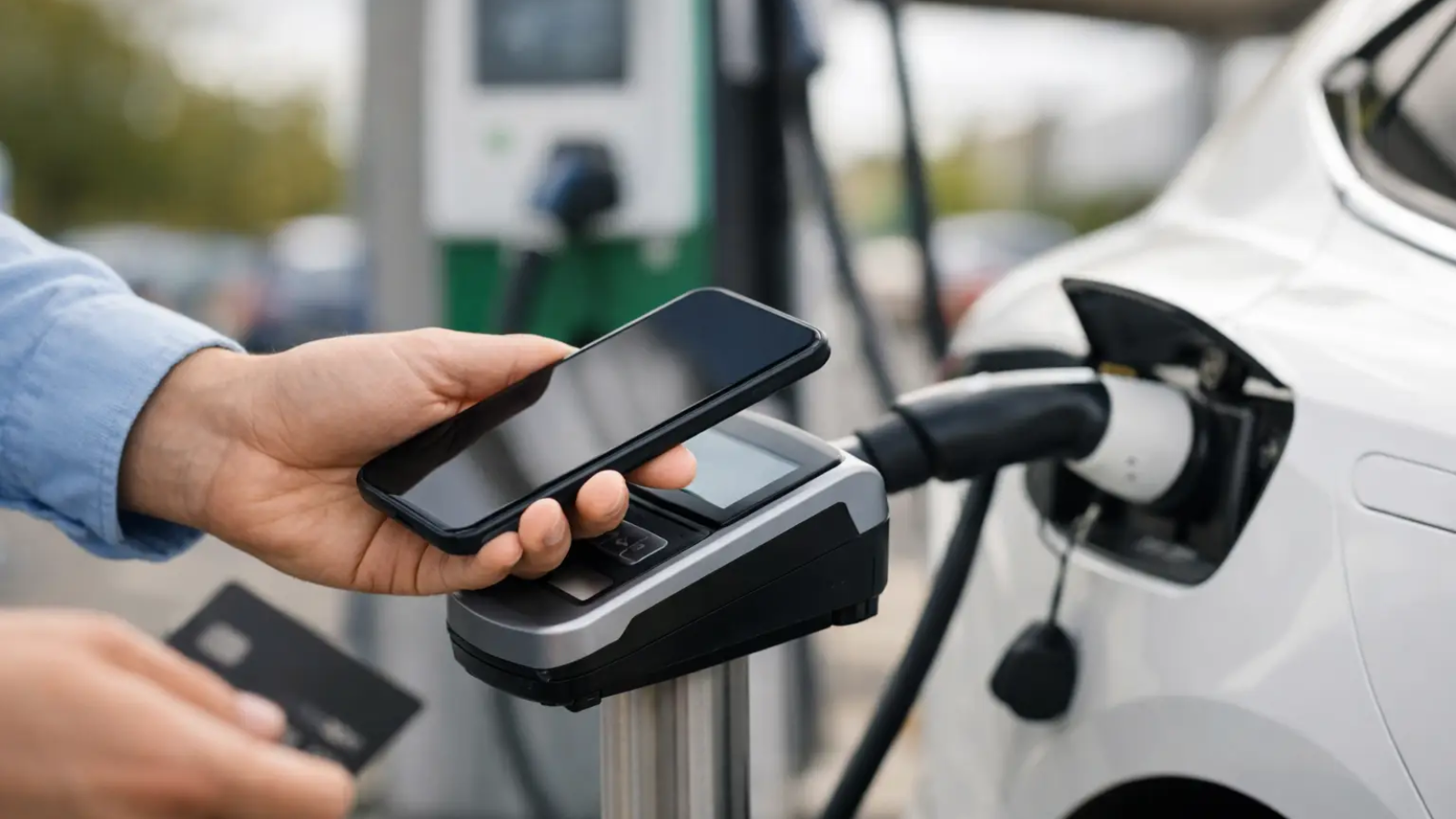
Contactless bank card payment is the most familiar model for new drivers. If a charging station has a card reader, you can tap your debit or credit card just as you would at a regular retail terminal. This is one of the best solutions for reducing friction, especially for travelers and occasional users. The catch is that not every charger supports it, and older stations often still rely on apps or memberships.
Home charging is usually the least complicated. Your charger draws power through your electrical system, and you pay through your regular utility bill. Some smart charging platforms can estimate charging costs and energy use, which is useful if you want to manage household expenses, claim reimbursements, or understand whether solar is offsetting part of your charging demand.
What you need before you arrive at a public charger
A little preparation saves time. Many first-time EV drivers assume every charger accepts every payment method. That is not the case.
Before a trip, it helps to check which charging networks operate along your route and whether they require an app or account. If you use public charging often, setting up two or three major network accounts ahead of time is usually enough to avoid most payment problems. Add a payment card, enable notifications, and make sure the app is updated before you need it.
It is also worth checking whether the charger bills by energy, time, or session. Two chargers can appear similar but produce different final costs based on your vehicle’s charging speed and how long you stay connected. This matters even more at DC fast chargers, where idle fees may apply after charging slows or after your car reaches a certain state of charge.
Memberships, roaming, and hidden friction
One reason EV charging can feel inconsistent is that networks operate under different billing models. Some offer pay-as-you-go pricing. Others provide member discounts, monthly subscriptions, or roaming access across partner networks.
Memberships can lower per-session costs, especially if you use the same network frequently. But they are not always worthwhile. If you mostly charge at home and only use public stations occasionally, a monthly plan may add cost without real benefit.
Roaming agreements are improving the experience by allowing one app or account to work across multiple charging networks. That is a positive step, but it does not always mean the pricing is identical. A session started through a partner network may carry different rates or service fees. For drivers, the lesson is simple: convenience is valuable, but it is still worth checking the price before tapping start.
Paying for charging at home versus paying on the road
Home charging is usually the lowest-cost option, and it gives you the most control. If your utility offers time-of-use rates, charging overnight can significantly reduce your cost per mile. Pairing EV charging with solar can strengthen that advantage by offsetting part of your vehicle’s energy consumption with on-site renewable generation.
Public charging trades lower cost for speed and convenience. Level 2 public chargers are often reasonably priced, particularly at workplaces, hotels, and parking facilities. DC fast charging costs more because it provides rapid energy delivery and requires more expensive infrastructure. That premium can make sense on long drives or busy days, but for routine charging, relying too heavily on fast charging can increase your transportation costs.
For commercial sites and multifamily properties, this distinction matters strategically. If you are installing chargers, you need to decide whether to pass through electricity costs, recover infrastructure investment, or offer charging as a tenant or customer benefit. There is no single best model. A retail destination may treat EV charging as a traffic driver, while an apartment property may need controlled user billing and energy monitoring.
Common payment issues and how to avoid them
Most payment problems come down to setup, compatibility, or timing. The charger may be operational, but the payment flow can still break if the app is outdated, the card on file has expired, or the charger requires a different authentication step than expected.
If a session will not start, first confirm that the connector is fully inserted and the charger is available. Then check the network app or screen for a payment or authorization message. Some chargers place a temporary hold on your card before the final amount is settled, which can surprise first-time users. That hold is not usually the final charge, but it can look alarming if you are not expecting it.
Idle fees are another point of confusion. These charges are meant to prevent drivers from occupying a charger after the useful part of the session is over. If you are using a fast charger, set notifications so you know when charging slows or stops. Paying attention here is not just about saving money. It also improves charger access for other drivers.
What businesses and property owners should consider
If you manage a site with EV charging, payment design is part of the product experience. A charger that is technically available but difficult to access or pay for creates friction for users and missed value for the property.
The best payment approach depends on the audience. Residents may want simple account-based billing and usage tracking. Office users may need employee access controls or subsidized rates. Public-facing commercial sites often benefit from easy guest payment through contactless cards or straightforward app access. In each case, the goal is the same: make charging easy to start, easy to understand, and easy to trust.
This is where a solutions-oriented provider can make a real difference. Charge & Go approaches EV infrastructure as part of a larger clean energy system, which means payment, charger selection, energy use, and long-term operating strategy should work together rather than as separate decisions.
The future of how to pay electric car charging
The industry is moving toward simpler, more consistent payments. More chargers now support contactless card readers. Plug-and-charge technology is advancing, allowing compatible vehicles to authenticate automatically and bill the driver without opening an app or tapping a card. Over time, that should make charging feel much closer to the effortless experience drivers expect.
Until that becomes universal, the practical approach is to combine convenience with planning. Set up your preferred charging accounts, understand how your most-used stations bill, and treat home charging as the foundation of your routine whenever possible. The cleaner transportation future is not just about where you charge. It is also about making every charge easier to access, easier to manage, and easier to trust.
Add a Comment