
The first time an EV owner plugs into a standard wall outlet and sees how slowly the battery climbs, the question changes fast. It is no longer whether home charging matters. It becomes which of the best home charging setups actually fits the way you drive, your electrical system, and your long-term energy goals.
For most households, the right setup is not simply the fastest charger available. It is the one that matches daily mileage, panel capacity, parking layout, and future plans. A compact plug-in hybrid in a garage has very different needs from a two-EV household trying to pair charging with rooftop solar. The smartest setup balances convenience, installation cost, energy efficiency, and room to grow.
What the best home charging setups need to get right
A good home charging setup should make daily driving easier, not add another layer of planning. That means reliable overnight charging, safe electrical design, and enough power to recover your typical daily use without overbuilding the system.
For many drivers, Level 1 charging is technically workable but practically limiting. Using a standard 120V outlet, it can add a few miles of range per hour. That may be enough if you drive short distances and have plenty of idle time. But if your commute is longer, your schedule is unpredictable, or your household has more than one vehicle, Level 1 usually starts to feel restrictive.
Level 2 charging is where home charging becomes truly convenient. With a 240V circuit, charging speeds increase significantly, often adding enough range overnight to fully support daily driving. The exact output depends on the charger, vehicle, and electrical capacity, but the difference in usability is substantial. This is why most of the best home charging setups center on Level 2.
There is still no single best option for everyone. The right answer depends on how much you drive, where you park, and whether you want a system that can work with solar or time-of-use electricity rates.
Best home charging setups by household type
The simple setup for low-mileage drivers
If you drive under 30 to 40 miles most days and have reliable access to a dedicated outlet, a basic approach may be enough. In some cases, keeping the manufacturer-provided Level 1 charger is the lowest-cost entry point. It avoids installation work and lets new EV owners learn their charging habits before committing to a bigger upgrade.
The trade-off is speed. You gain simplicity, but you lose flexibility. Cold weather, weekend road trips, and back-to-back driving days can make this setup feel tight. It works best for drivers with light mileage and patience.
The everyday Level 2 setup for most homes
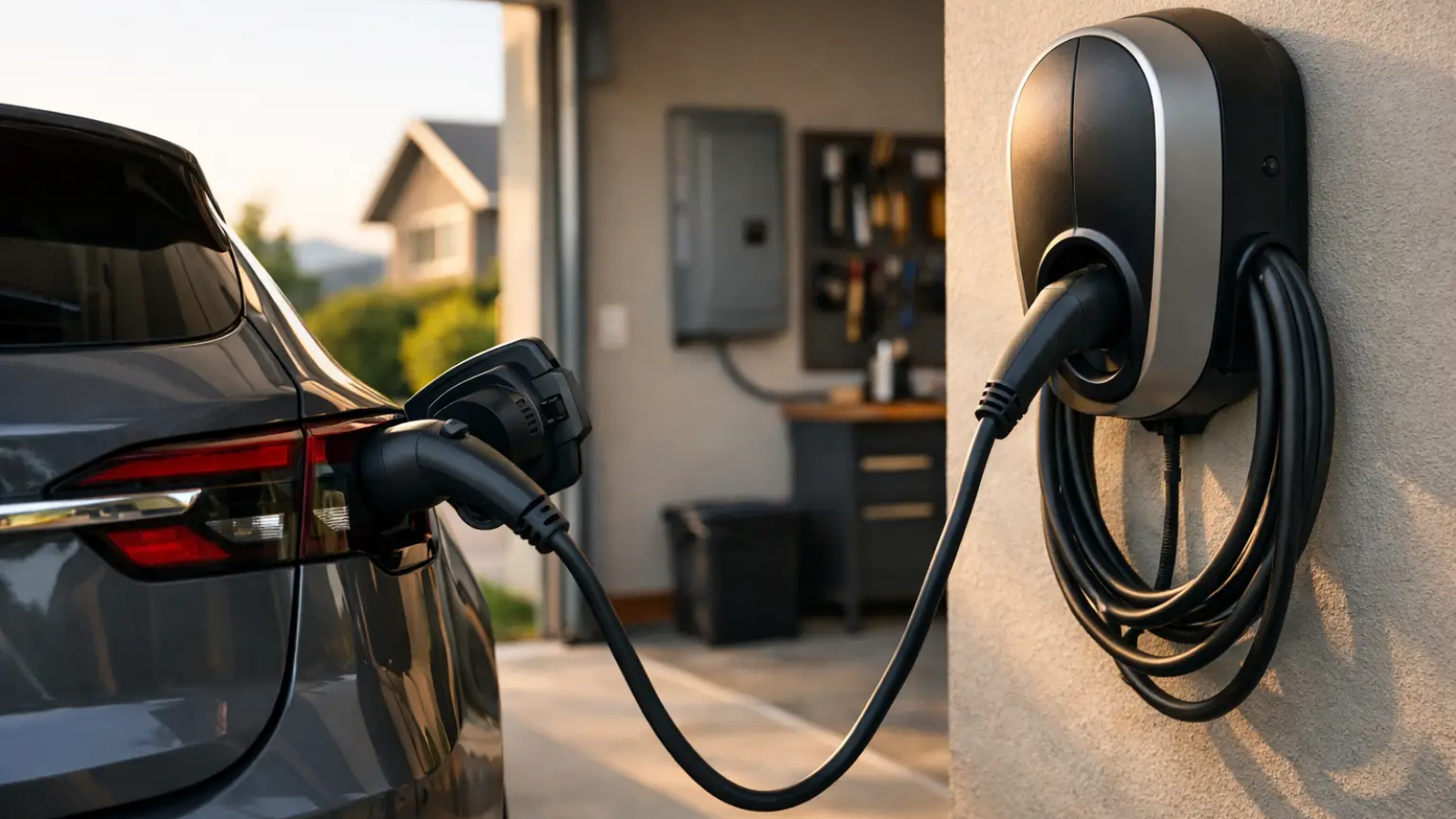
For the average EV owner, this is the sweet spot. A wall-mounted Level 2 charger on a dedicated 240V circuit offers reliable overnight charging with enough power for commuting, errands, and unexpected schedule changes. It turns charging into a background task rather than something you actively manage.
This setup is especially effective for single-EV households with a garage or driveway close to the electrical panel. Hardwired chargers are often preferred because they provide a cleaner installation and can support higher amperage in some cases. Plug-in units can still be a good fit when flexibility matters, such as renters with permission to install a 240V outlet or homeowners who may want to move the charger later.
The dual-EV setup for growing households
When two EVs share one property, charging strategy matters more than charging speed alone. Some households can manage with one Level 2 charger and a rotation schedule, especially if both vehicles are not heavily used every day. Others benefit from a charger with load-sharing features or a pair of chargers designed to balance power across the same service.
This is one of the most common places where homeowners overspend or underplan. Installing two high-output chargers without checking total panel capacity can create unnecessary upgrade costs. On the other hand, choosing smart load management can often support two vehicles without a full electrical service overhaul.
The solar-ready setup for energy-conscious homeowners
If your goal is not only to charge at home but to charge more cleanly and control long-term energy costs, a solar-ready setup stands out. This usually combines a Level 2 charger with a home energy strategy that may include rooftop solar, monitoring software, and in some cases battery storage.
The value here goes beyond convenience. Charging during solar production hours or using programmed schedules can reduce dependence on higher-cost grid electricity. The exact financial benefit depends on local utility rates, net metering rules, and driving patterns, so this setup works best when it is planned as part of the broader home energy picture.
Hardwired vs plug-in chargers
This decision shapes a lot of the installation process. Hardwired chargers connect directly to your electrical system and are often chosen for permanence, weather resistance, and support for higher power configurations. They are a strong fit for outdoor installations and homeowners who want a clean, fixed solution.
Plug-in chargers connect to a 240V receptacle, which can make replacement or relocation easier. They are practical for people who value flexibility or who may switch equipment later. But they also depend on having the correct outlet type, and in some jurisdictions the installation standards can differ.
Neither option is always better. If you want a durable long-term system and do not plan to move it, hardwired usually makes more sense. If adaptability matters, plug-in can be a smart choice.
The electrical panel question matters more than charger marketing
A charger can only perform as well as the home infrastructure behind it. Before choosing among the best home charging setups, homeowners should understand available panel capacity, circuit distance, and whether the installation location is indoors or exposed to weather.
This is where expectations need to stay realistic. A high-amperage charger may sound attractive, but if your vehicle cannot accept that rate or your panel cannot support it without expensive upgrades, the extra capacity may not deliver meaningful value. In many homes, a moderate Level 2 charger sized properly for overnight charging is the better investment.
Load management technology has changed this conversation in a useful way. In some cases, it allows homeowners to add EV charging without immediately upgrading the electrical service. That can reduce upfront cost while still supporting dependable charging.
Smart features that are worth paying for
Not every connected feature justifies a higher price, but some do. Scheduling is one of the most useful because it lets you charge during off-peak utility hours. Energy tracking can also help homeowners understand actual charging costs and monitor consumption over time.
For households thinking bigger, integration with home energy systems is increasingly important. Chargers that work well alongside solar, battery storage, or broader energy management tools can make the setup more future-ready. Charge & Go operates in exactly this intersection, where EV charging works best as part of a smarter clean energy system rather than as a standalone device.
App quality also matters more than many buyers expect. If scheduling is confusing or the charger frequently disconnects from Wi-Fi, the technology becomes a hassle instead of a benefit. Reliable core performance should come first, with smart features adding value rather than complexity.
Installation details that shape everyday use
The charger location matters almost as much as the charger itself. A perfectly capable unit installed too far from the parking spot, or on the wrong side of the garage, becomes annoying very quickly. Cable length, mounting height, and daily vehicle positioning all affect whether the setup feels easy or awkward.
Outdoor charging adds another layer. Weather-rated equipment, proper conduit, and secure mounting are all part of a dependable setup. For driveway installations, homeowners should also think about future vehicle changes. A cable that reaches your current charge port might not be ideal for your next EV.
This is also why planning for tomorrow has real value. If you expect to add a second EV, install solar, or move to a larger battery vehicle, it may make sense to choose a charger and circuit strategy that can adapt.
So what is the best choice?
For most US homeowners, the best home charging setup is a professionally installed Level 2 charger on a dedicated 240V circuit, placed for easy daily use and sized to match both vehicle needs and panel capacity. It provides the right balance of speed, reliability, and long-term usability without overcomplicating the system.
But the best setup is not always the biggest one. Some households are better served by a modest charger with smart scheduling. Others should prioritize load balancing for two vehicles or design the system around solar from the start. The smartest decision is the one that fits how your home actually uses energy.
Home charging works best when it feels effortless. If your setup turns every evening into a simple plug-in routine powered by cleaner electricity and lower stress, you chose well.
Add a Comment