
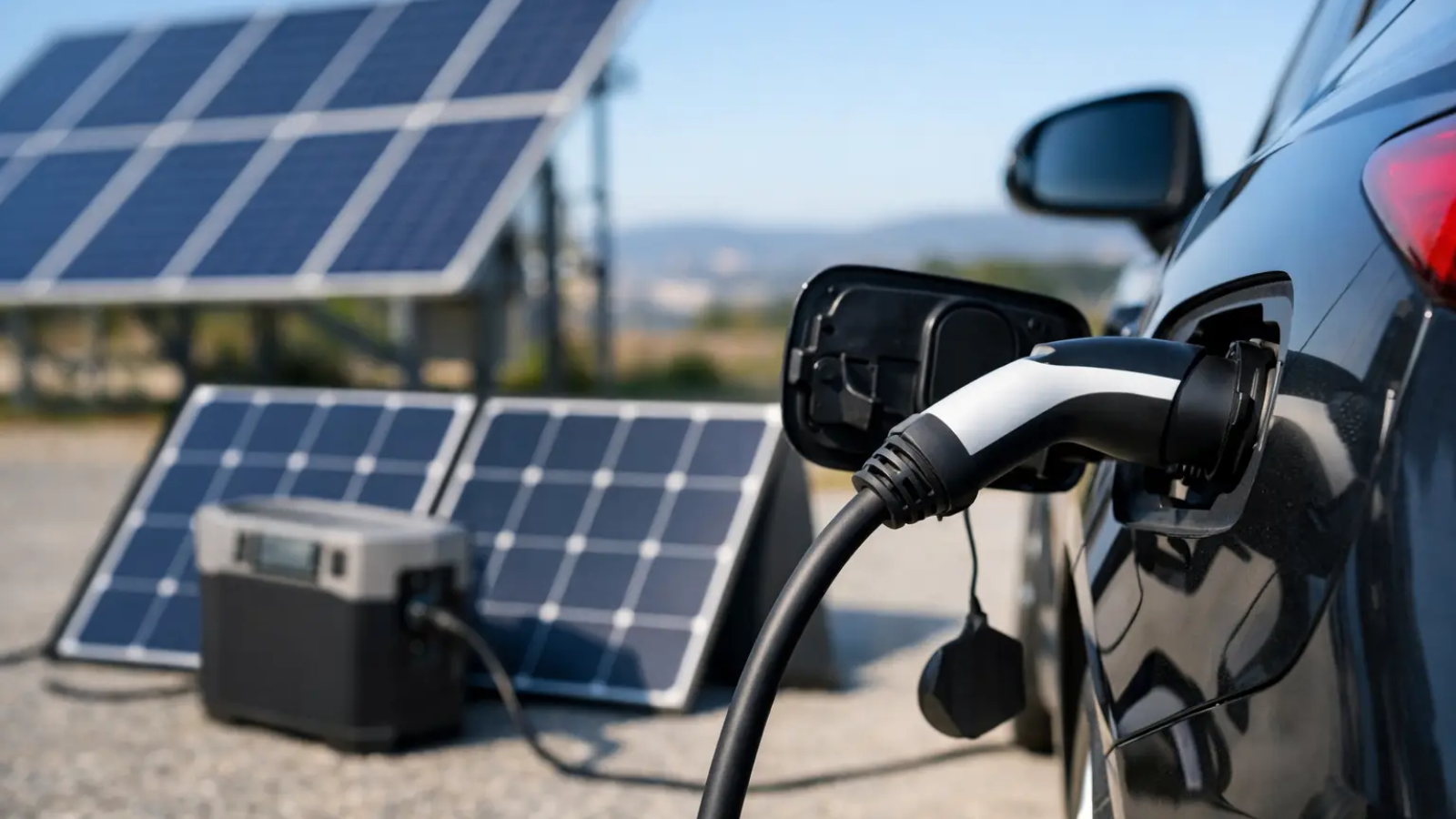
A power outage does not have to mean a stranded EV. But solar backup for chargers only delivers that peace of mind when the system is designed around real household energy use, driving habits, and the type of charger connected to it. Solar panels alone are not enough. A dependable setup needs the right battery capacity, inverter power, and load controls to keep charging practical when the grid is unavailable.
For homeowners, the goal is usually not to fill an EV battery from empty during a multi-day outage. It is to preserve essential home power and add enough driving range to handle school runs, work trips, medical appointments, or an evacuation. For businesses and property managers, the calculation is broader: which chargers need to remain available, who gets priority, and how can backup power support operations without overwhelming the site?
What Solar Backup for Chargers Needs to Do
Most rooftop solar systems are grid-tied. During an outage, they automatically shut down for safety, even if the sun is shining. This protects utility workers from unexpected electricity flowing back into the grid. To use solar power during an outage, a property needs an energy storage system and a backup-capable inverter that can safely create a local power supply.
That system typically separates critical loads from everything else. Refrigeration, selected lighting, internet equipment, medical devices, and a lower-powered EV charging circuit may remain on. Large, energy-hungry equipment such as central air conditioning, electric resistance heating, pool pumps, and high-power EV charging may be limited or switched off.
The key distinction is between power and energy. Power, measured in kilowatts, determines what can run at one time. Energy, measured in kilowatt-hours, determines how long it can run. An EV charger can require significant power, while a home battery needs enough stored energy to serve both the vehicle and essential household loads.
Why Level 2 Charging Changes the Equation
A typical Level 2 home charger may deliver 7.2 kW, 9.6 kW, or more. That is excellent for overnight charging from the grid, but it can consume backup battery capacity quickly. A 13.5 kWh battery, for example, could theoretically supply a 7.2 kW charger for less than two hours before accounting for home loads and system losses. In practice, the usable charging time may be much shorter.
Lowering the charging current makes solar backup far more realistic. At 16 amps on a 240-volt circuit, a charger draws roughly 3.8 kW. At 12 amps, it draws about 2.9 kW. These settings can add meaningful range over several hours while leaving more capacity for the home.
Level 1 charging is another useful outage strategy. Plugging into a standard 120-volt outlet typically adds only a few miles of range per hour, but its lower draw can be easier for a battery-backed system to support. It will not suit every driver, especially those with long daily commutes, yet it can be a sensible fallback when resilience matters more than speed.
The best approach depends on how far the vehicle needs to travel before the grid returns. Someone who drives 20 miles per day has a very different backup requirement than a household with a 70-mile round-trip commute. Designing for the likely use case prevents overspending on a system built around an unlikely scenario.
Start With Your Outage Driving Plan
Before sizing equipment, identify the driving range that matters during an outage. Rather than asking, “Can solar charge my EV?” ask, “How many miles do I need to cover over one, two, or three days without the grid?”
For many EVs, adding 10 kWh may provide roughly 25 to 40 miles of range, depending on vehicle efficiency, weather, terrain, and driving style. That same 10 kWh could also power critical home loads for a meaningful period. This is why backup planning requires priorities, not just larger hardware.
A practical plan might reserve battery energy for overnight home loads, then charge the EV slowly during sunny midday hours when solar production is strongest. If the battery is already well charged before an outage, it may make sense to delay EV charging until the home’s immediate needs are secure. Smart energy management can automate some of these decisions, but the priorities should be established before an emergency.
Size the System as One Energy Ecosystem
An EV charger should not be treated as an isolated appliance. It is part of a larger energy ecosystem that includes solar generation, battery storage, household loads, electrical panels, and utility rules.
Solar production varies by season, roof orientation, weather, shade, and location. A solar array that produces abundant electricity on a clear summer day may generate far less during a winter storm, when outage protection is most valuable. Battery storage helps bridge those gaps, but it cannot create energy that was never generated.
Inverter capacity matters as much as battery size. A property may have enough stored energy for several hours of charging, but if the backup inverter cannot provide the combined power needed by the charger and household loads, the system will limit or stop charging. Load management devices can help by temporarily reducing charger output or pausing charging when the home needs more power.
For a new solar installation, planning the charger and backup system together is usually simpler and more cost-effective than adding each component separately. Existing solar owners can still add storage and backup capability, but compatibility with the current inverter, electrical panel, and service capacity should be reviewed carefully.
Use Smart Charging to Protect Backup Power
Smart charging is particularly valuable when a battery is involved. Instead of treating the EV as a fixed load, the charging schedule can respond to solar output, battery state of charge, time-of-use utility pricing, and home demand.
During normal operation, the system can prioritize lower-cost or solar-rich charging periods. During an outage, it can shift to a backup mode that limits the charger to a selected current or allows charging only when solar production exceeds essential household demand. This turns charging from an all-or-nothing decision into a controlled use of available energy.
A useful rule is to avoid assuming every backup event requires active EV charging. If the vehicle already has enough range for several days, preserving the battery for the home may be the wiser choice. If driving is essential, a slower, solar-aligned charge is often more sustainable than running a high-power charger from storage alone.
Commercial Sites Need Clear Charging Priorities
For businesses, multifamily properties, and fleet operators, solar-backed charging can support resilience, but it requires disciplined planning. A backup system sized for a building’s emergency lighting and communications equipment is rarely large enough to keep multiple Level 2 chargers operating at full output.
Site operators should decide which charging activity matters most during an outage. A property may reserve charging for maintenance vehicles, essential staff, accessible transportation, or a small number of fleet vehicles. Dynamic load sharing can distribute limited power across chargers, although each vehicle will charge more slowly.
Commercial projects should also account for demand charges, electrical service limits, utility interconnection requirements, and operational policies. The strongest business case may be reduced peak demand and increased solar self-consumption during normal days, with limited emergency charging as an added resilience benefit. Backup power is valuable, but it should be designed around the site’s actual priorities rather than marketed as unlimited charging.
Safety, Permits, and Equipment Compatibility
Solar and battery backup systems involve high voltages, utility interconnection rules, and life-safety considerations. The installation should be designed and permitted by qualified professionals who understand EV charging loads, local electrical codes, and the requirements of the serving utility.
It is also essential to confirm that the charger can operate on a backed-up circuit and that the inverter supports the intended charging load. Some systems require a dedicated critical-load panel, while others use an energy management gateway to control larger portions of the home. The right configuration depends on the existing electrical service and the level of backup desired.
Bidirectional EV charging may eventually expand the options available to homeowners. Some compatible vehicles can potentially supply power back to a home through approved equipment, using the EV battery as an additional energy resource. Availability remains vehicle- and equipment-specific, so it should be evaluated as a separate capability rather than assumed with every EV.
A well-designed system gives you choices when the grid is unavailable: protect the home, preserve mobility, or balance both. Charge & Go approaches solar and EV infrastructure as a connected decision, because reliable clean energy works best when every component has a clear role. Start with the miles that matter, the loads you cannot lose, and the charging speed you can realistically support. That is where backup power becomes useful, not merely impressive on paper.
Add a Comment