
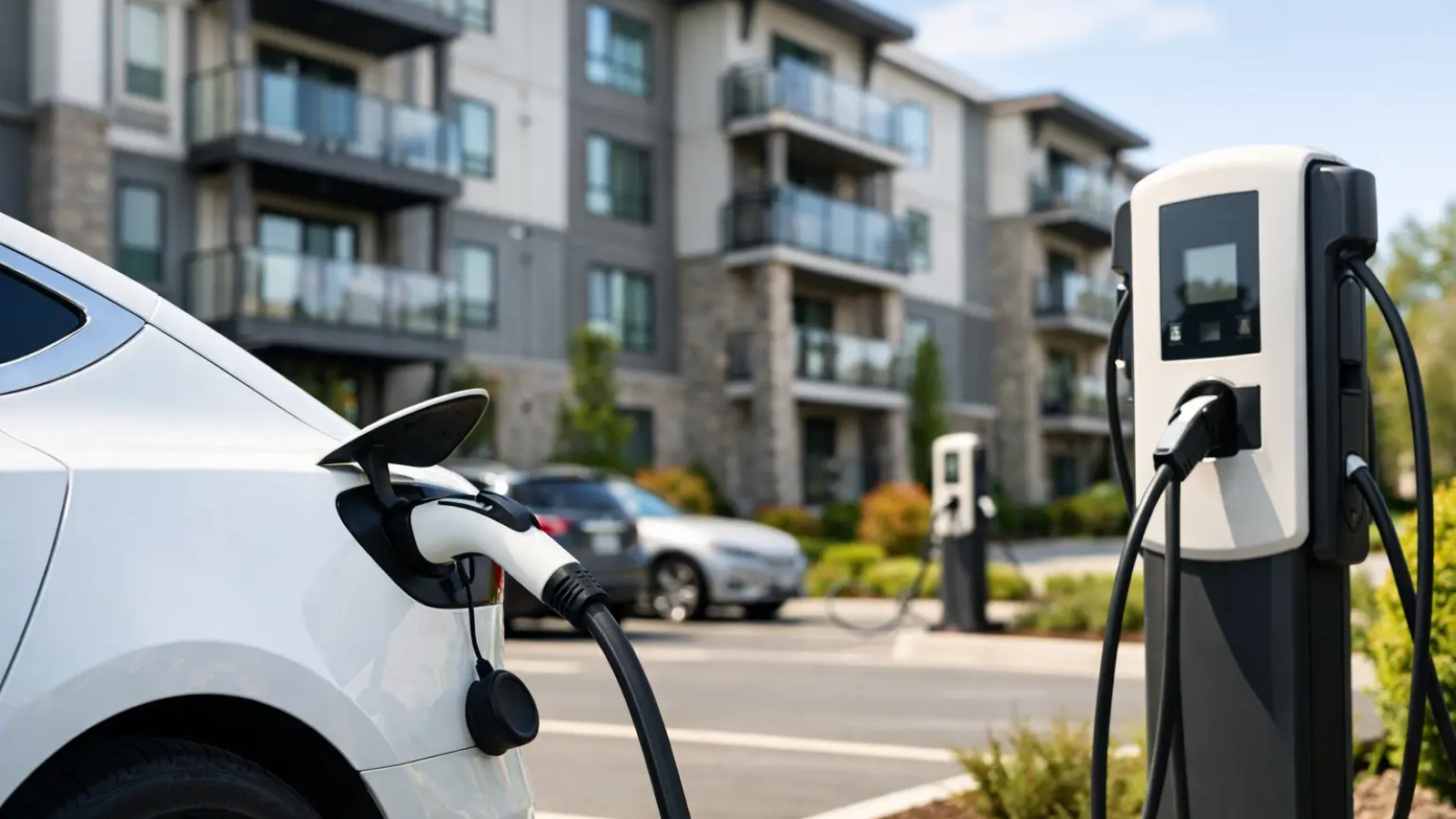
A resident signs a lease, asks about EV charging, and suddenly a routine property tour turns into an infrastructure conversation. For owners and managers, that is where ev charging for multifamily properties becomes real – not as a trend, but as an operating decision that affects leasing, parking, electrical capacity, and long-term asset value.
Apartment communities, condos, and mixed-use residential buildings are under growing pressure to support electric vehicles. Some residents already drive EVs. Others are planning to buy one and want confidence that charging will be available at home. Unlike single-family housing, multifamily properties have shared parking, shared power, and shared rules. That makes the decision more complex, but it also makes the opportunity bigger.
Why ev charging for multifamily properties matters now
Home charging is still the most convenient way to own an EV. When residents can charge where they live, they are less dependent on public stations and more likely to see EV ownership as practical. For multifamily properties, that convenience can translate into stronger resident satisfaction, better retention, and a more competitive amenity package.
There is also a market timing issue. Installing charging after demand becomes urgent is usually more expensive and more disruptive than planning ahead. Electrical upgrades, conduit runs, permitting, and parking policy changes all take time. Properties that wait until multiple residents are requesting chargers often end up reacting instead of building a scalable plan.
At the same time, not every property needs a large charging buildout on day one. The right approach depends on resident demand, the age of the building, available electrical capacity, parking layout, and ownership structure. A 40-unit garden-style community with open parking has different needs than a 300-unit high-rise with deeded spaces and a homeowners association board.
Start with the building, not the charger
One of the biggest mistakes in EV projects is focusing first on charger models instead of site conditions. The better starting point is a property assessment. That means understanding how much power the building can spare, where charging would be installed, how residents access parking, and whether future expansion is likely.
Electrical capacity is the first constraint to evaluate. Some multifamily properties have enough spare capacity to support a modest number of Level 2 chargers without major upgrades. Others may need panel changes, transformer coordination, or load management to avoid costly service expansions. This is where a well-designed system matters. Smart charging can distribute available power across multiple stations, helping properties serve more drivers without oversizing infrastructure.
Parking configuration matters just as much. Assigned parking makes it easier to connect chargers to specific residents or recover costs directly. Unassigned parking often calls for shared charging stations with reservation or access control features. In condo properties, deeded spaces can introduce another layer of complexity because installation responsibilities and cost ownership may need legal review.
Choosing the right charging model
Most multifamily properties do not need fast charging. They need dependable overnight or long-dwell charging. That usually points to Level 2 chargers, which can add meaningful range over several hours and fit the way residents actually use their vehicles at home.
The bigger decision is whether to install dedicated chargers, shared chargers, or a mix of both. Dedicated chargers are attractive for residents who want guaranteed access, especially in premium buildings or properties with assigned parking. Shared chargers can be more cost-effective in early deployment phases because they reduce the number of ports needed while still serving a growing EV population.
There is no universal ratio that works everywhere. Some communities start with a small number of shared stations in common parking areas and expand as adoption rises. Others pre-wire a larger portion of spaces, then activate chargers over time. Pre-wiring can be a smart middle ground because trenching and conduit work are often the most disruptive and expensive parts of the project. Installing that backbone early can reduce future costs even if charger demand is still modest.
Billing, access, and the resident experience
A charging station is only part of the solution. The operating model behind it matters just as much. Residents need a clear answer to simple questions: Who can use the chargers, how do they pay, what happens if all stations are occupied, and who handles maintenance?
For multifamily operators, billing structure is often the point where projects stall. If electricity is bundled into rent or HOA fees, unrestricted charging can create fairness issues. Usage-based billing is usually the cleaner option because it ties cost to consumption. Some properties also choose subscription models or fixed monthly fees for dedicated spaces. The right choice depends on local regulations, administrative capacity, and how the property wants to position charging as an amenity.
Access control is another operational priority. Networked chargers make it easier to manage user permissions, track usage, set pricing, and monitor uptime. That visibility is valuable for both property managers and residents. A charger that exists but frequently fails or causes parking conflicts will not improve the resident experience.
Clear signage and parking policies are often overlooked, but they make a real difference. Rules around idle fees, charging time limits, and EV-only spaces help prevent frustration. In shared environments, etiquette is part of infrastructure.
The economics are broader than charging revenue
Property owners sometimes ask whether EV charging will pay for itself through direct usage fees alone. Sometimes it will. Often, the return is broader than that.
EV charging can support leasing velocity, resident retention, and property positioning in a market where sustainability features are becoming more visible. It can also reduce the risk of falling behind competing properties that already offer charging or have public plans to add it. In newer developments, EV readiness may support stronger long-term value by aligning the asset with where transportation is heading.
That said, cost recovery should still be planned carefully. Hardware is only one part of the budget. Installation labor, electrical upgrades, permitting, software subscriptions, maintenance, and potential parking reconfiguration all affect project economics. This is why phased deployment often makes sense. A smaller initial rollout can meet current demand while preserving flexibility for future expansion.
Incentives can improve the equation, but they should not be the only reason to move forward. Rebate programs, tax credits, and utility incentives can reduce upfront costs, yet they often come with timing requirements, technical specifications, or funding limits. A property should pursue incentives strategically, not build a flawed charging plan just because funding is temporarily available.
Where solar and energy strategy fit in
For properties thinking beyond basic compliance, EV charging opens the door to a wider energy conversation. If a building is already evaluating solar, battery storage, or broader efficiency upgrades, charging infrastructure can become part of a more coordinated plan.
That does not mean every multifamily property should pair chargers with solar immediately. Roof space, load profile, ownership goals, and local utility economics all shape what makes sense. But the connection is worth considering. On-site renewable energy can support cleaner charging and improve the sustainability story residents increasingly care about.
This is where a solutions-oriented approach matters. Charge & Go works at the intersection of EV charging and solar because the long-term value is not just in adding equipment. It is in helping properties build energy systems that are practical today and stronger tomorrow.
Common friction points and how to think through them
Board approval, resident expectations, and upgrade costs are usually the hardest parts of ev charging for multifamily properties. Technology is rarely the main obstacle.
In condos and HOAs, governance can slow decisions. Some owners want charging immediately while others resist spending on infrastructure they may not use yet. In rentals, the challenge is often balancing current demand against budget discipline. In both cases, the most productive path is usually a phased, data-driven plan rather than an all-or-nothing debate.
Another common issue is overbuilding too early or underbuilding too long. If a property installs too few chargers without planning for expansion, future upgrades can become expensive and disruptive. If it installs too much capacity before demand exists, the capital may sit idle. The right answer is usually to build a scalable backbone, then add active chargers in stages.
A smarter path forward for multifamily charging
The best multifamily charging projects are not just technically correct. They are easy to use, fair to manage, and designed to grow with resident demand. That requires more than selecting a charger off a spec sheet. It takes a view of the whole property – power, parking, policies, costs, and sustainability goals.
For owners, operators, and boards, the real question is not whether EV adoption will affect residential parking. It already is. The better question is whether your property will respond with a short-term fix or a long-term strategy that supports residents and strengthens the asset over time.
A well-planned charging program sends a clear message: this property is ready for how people live next.
Add a Comment