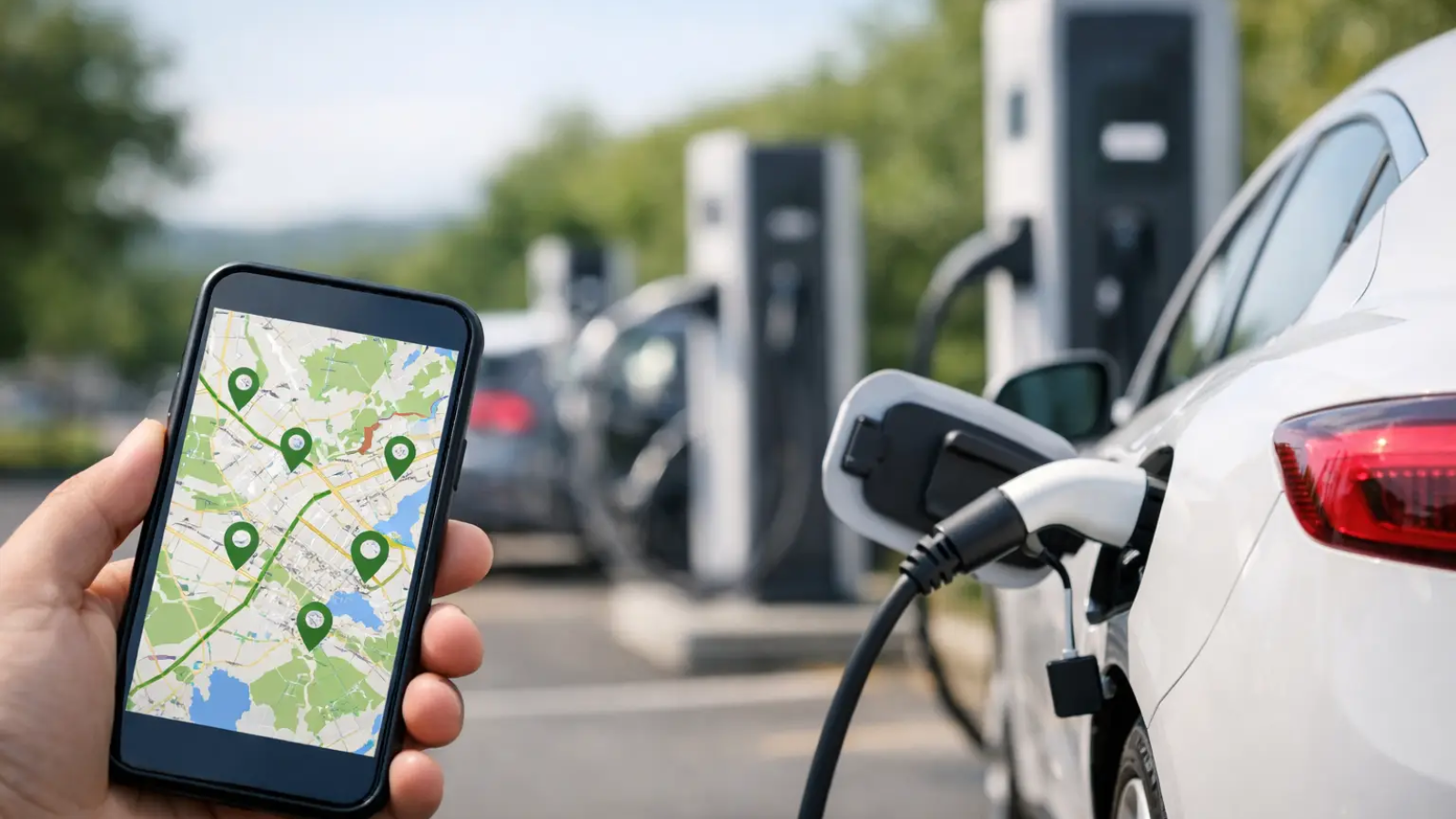
The moment most EV drivers stop worrying about range is not when they buy a bigger battery. It is when they learn how to find electric car charging stations quickly, accurately, and with enough context to avoid wasting time on a broken, busy, or incompatible charger.
That matters more than many first-time drivers expect. A charging station is not just a pin on a map. You also need to know whether it matches your connector, whether it is fast enough for your schedule, whether it is available when you arrive, and whether the location makes sense for the way you actually drive. Once you understand those variables, charging becomes far more predictable.
How to find electric car charging stations without guesswork
The easiest place to start is with your car itself. Many EVs now include built-in navigation that can show nearby chargers, estimate battery level on arrival, and sometimes even filter by charging speed or network. That integration is useful because the vehicle already knows your current range and can plan stops around real battery conditions rather than rough assumptions.
Dedicated charging apps are the next layer. They tend to offer the most complete view because they combine station locations with driver reports, photos, pricing, operating hours, and live availability in some areas. If your in-car navigation is basic, an app often gives you the extra detail that makes the difference between a smooth stop and a frustrating one.
Map platforms can help too, especially for a quick search while planning errands or comparing options in a new neighborhood. They are convenient, but they are not always the best source for charger reliability or compatibility details. For that reason, many experienced EV drivers use maps to identify general locations and a charging app to verify the station before heading there.
If you are planning a longer drive, route planners built for EVs are often worth using. They estimate where to stop based on range, charging speed, terrain, weather, and traffic patterns. That is particularly helpful if you are driving in a region with uneven charging coverage or if you want to minimize total travel time rather than simply find the nearest charger.
What to check before you drive to a charger
Finding a station is only the first step. The better question is whether it is the right station for your vehicle and your trip.
Start with connector type. Not every public charger works with every EV, and compatibility varies by vehicle and charging level. Most apps let you filter by connector, which is one of the most useful features to set up early. If you skip that step, a nearby charger can look perfect until you arrive and realize it cannot connect to your vehicle.
Charging speed matters just as much. A Level 2 charger may be ideal if your car will be parked for a few hours at work, a shopping center, or a hotel. It is less useful if you need a quick top-up between meetings. DC fast chargers are better for road trips and tighter schedules, but they are usually more expensive and not always necessary for everyday use.
You should also check station status. Some chargers show live availability, while others rely on recent user reports. Neither system is flawless, but both are better than assuming a charger will be open. In busy areas, a station with four ports and good reliability may be a smarter choice than a closer station with one port and mixed reviews.
Then there is the practical side of the location itself. Is the charger in a public garage with access restrictions? Does the site close at night? Do you need a specific network app or RFID card to activate it? A station can be technically available and still inconvenient if you cannot enter the lot or start a session easily.
The best places to search for EV charging in daily life
Most charging does not happen on dramatic cross-country drives. It happens in the ordinary spaces people already use every week.
Home is still the most dependable place to charge if you have access to a driveway, garage, or designated parking. It is the option with the least friction because you plug in when it suits your routine and wake up to a charged vehicle. For homeowners, this often becomes the foundation of EV ownership, reducing the need to search for public charging except on heavier driving days.
Workplaces are another strong option, especially as more employers and property managers invest in charging to support sustainability goals and employee convenience. If you can charge while your car is parked for several hours, that changes the whole equation. You spend less time detouring for power and more time using charging as part of your normal schedule.
Retail centers, hotels, supermarkets, and public parking facilities increasingly fill the gap between home and highway charging. These locations are useful because they align charging with activities you already need to do. A 30-minute grocery run or a two-hour meeting can add meaningful range without feeling like a separate task.
For businesses and multifamily properties, this is where infrastructure planning starts to matter. Reliable charging on-site can shape customer dwell time, tenant satisfaction, and long-term property value. It is one reason companies like Charge & Go focus not just on chargers themselves, but on how charging fits into broader clean energy use and everyday operations.
How to find electric car charging stations on road trips
Road trips require a different mindset. On local drives, the nearest working charger is often enough. On longer routes, you need backup options.
Begin by mapping your primary charging stops before you leave. Look for chargers positioned slightly before your battery gets low, not at the absolute edge of your estimated range. Weather, speed, elevation, and heavy use of climate controls can all affect efficiency, so building in margin is a smart move.
Then identify at least one alternate charger near each planned stop. This is not pessimism. It is simply practical. A station may be occupied, offline, or harder to access than expected. Knowing your backup reduces stress and helps you keep moving.
It also pays to think about stop quality, not just stop location. A charger near food, restrooms, and safe lighting is usually better than one in an isolated lot, especially if you are traveling with family or charging at night. The charging session may be only 20 to 40 minutes, but comfort and convenience still matter.
If your route includes rural stretches, start planning earlier than you think you need to. Charging deserts are becoming less common, but they still exist. In those areas, a little advance planning goes much further than trying to improvise on the road.
Common mistakes that make charging harder than it needs to be
One common mistake is relying on a single app or network. Public charging is still spread across multiple providers, and coverage can vary by city or region. Keeping more than one charging app ready on your phone gives you flexibility when your first option does not work out.
Another mistake is choosing based only on distance. The closest charger is not always the fastest or most reliable. A station five minutes farther away might save you 30 minutes if it offers higher charging speeds or better availability.
Some drivers also overlook pricing. Public charging costs can vary widely depending on network, charging speed, time-based fees, idle fees, and location. If cost is a priority, compare rates before plugging in. The cheapest option is not always the best, but it helps to know what you are trading for convenience.
Finally, many new EV owners underestimate the value of routine. Once you identify a few dependable chargers near home, work, and regular destinations, charging starts to feel less like searching and more like planning. That shift is what makes EV ownership easier over time.
A smarter way to think about charging
The best way to find charging stations is not to chase the nearest pin every time your battery drops. It is to build a charging ecosystem around the places you already live, work, shop, and travel.
For some drivers, that means home charging does most of the heavy lifting and public chargers fill occasional gaps. For others, especially apartment residents or frequent travelers, public charging plays a larger role and station quality becomes even more important. There is no single perfect strategy. The right setup depends on your driving habits, access to parking, local infrastructure, and how much flexibility you want in your routine.
As charging networks grow, the process will keep getting easier. Until then, the most confident EV drivers are not the ones with the biggest battery packs. They are the ones who know where to charge, what to check before they go, and how to make charging fit naturally into everyday life.
A little planning goes a long way. Once you stop searching at the last minute and start choosing charging locations with purpose, driving electric feels less like a compromise and more like progress.
Add a Comment