
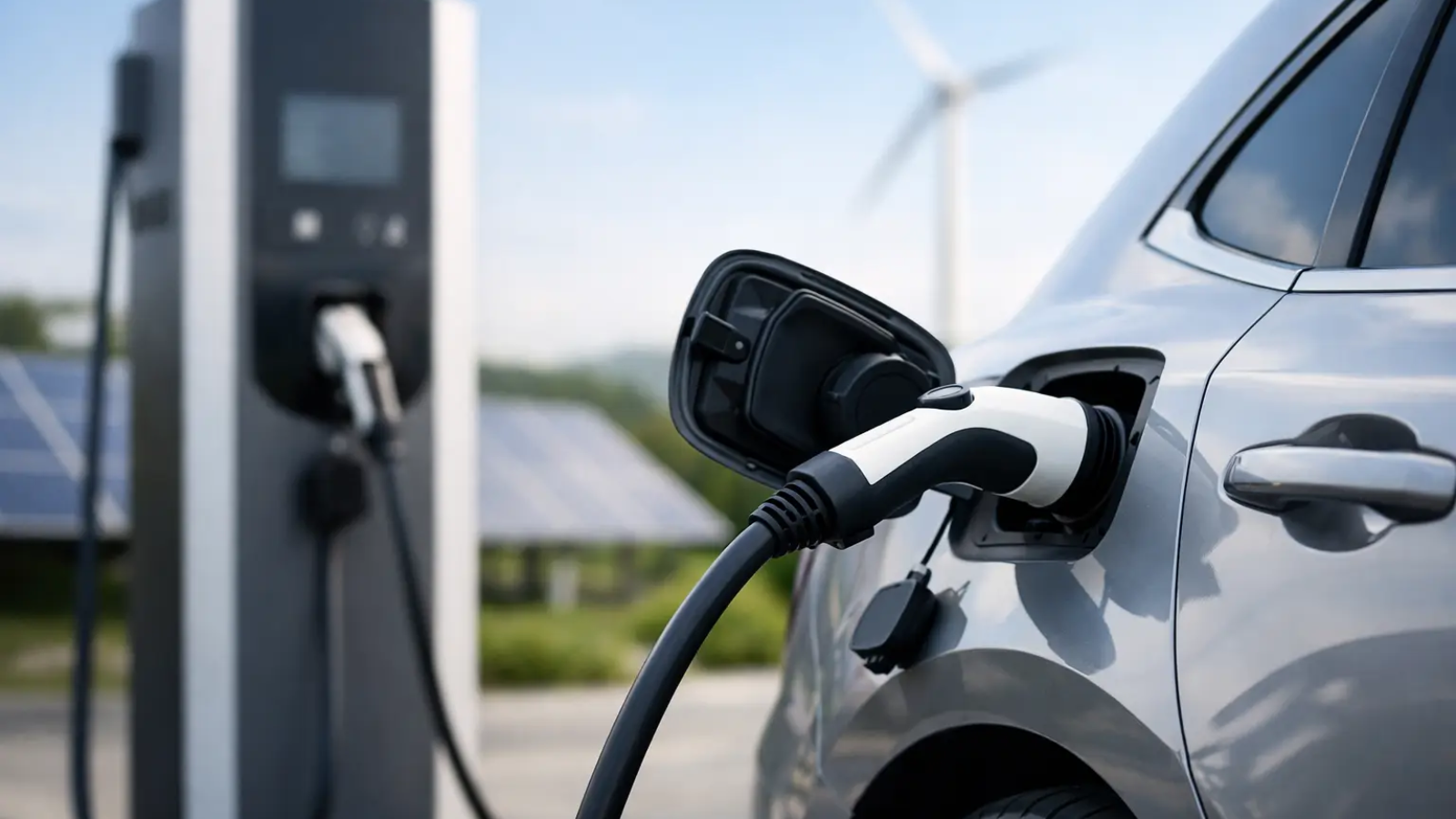
If you are comparing chargers for a home, condo, office, or retail site, the first question usually sounds simple: what is electric vehicle charging system? The short answer is that it is the full setup that moves electricity safely from a power source to an electric vehicle battery. The more useful answer is that it includes hardware, software, electrical protection, connector standards, and the energy management behind every charging session.
That distinction matters because an EV charger is not just a plug on a wall. A charging system has to communicate with the vehicle, manage power flow, protect users and equipment, and fit the building it serves. For homeowners, that affects convenience, installation cost, and energy use. For businesses and property managers, it affects uptime, user access, billing, and long-term scalability.
What is electric vehicle charging system in practical terms?
In practical terms, an electric vehicle charging system is the network of components that delivers electricity to an EV in a controlled way. It starts with the electrical supply from the grid, or in some cases from solar and battery storage, and ends with energy stored in the car battery.
Between those two points are several essential elements. There is the charger or charging station itself, the cable and connector, safety devices such as circuit breakers and grounding, and the communication layer that lets the charger and vehicle coordinate charging. In many commercial setups, the system also includes software for monitoring, access control, payment, and load management.
That is why people sometimes use terms like EV charger, charging station, EVSE, and charging system interchangeably, even though they are not always exactly the same. EVSE, or electric vehicle supply equipment, usually refers to the equipment that supplies power and manages safety. The charging system is the broader picture, including the installation environment and controls around it.
How an EV charging system works
At a basic level, the process is straightforward. Power comes from the utility service panel to the charging equipment. The charger checks that the connection is safe, confirms compatibility with the vehicle, and then allows electricity to flow.
What happens next depends on the charger type. With AC charging, the charger supplies alternating current to the vehicle, and the car’s onboard charger converts that AC power into DC power for the battery. With DC fast charging, the conversion happens in the charging equipment instead of the vehicle, which allows much faster charging speeds.
The system does more than transfer electricity. It also monitors temperature, current, voltage, and connection status. If there is a fault, such as overheating or improper grounding, the system can stop charging to protect the vehicle, the site, and the user.
For connected chargers, software adds another layer of control. A driver may use an app, RFID card, or display screen to begin a session. A site owner may track energy consumption, set user permissions, and balance charging power across multiple stations.
The main parts of an electric vehicle charging system
The power source is the foundation. Most sites draw power from the local grid, but an increasing number combine EV charging with solar panels and battery storage. That approach can reduce strain on the grid, support cleaner energy use, and improve resilience, though the economics depend on local rates, building load, and charging demand.
The charging unit is the most visible part. It may be a compact wall-mounted unit at home or a pedestal-style station in a parking lot. This equipment controls power delivery and user interaction.
The connector and cable matter because the vehicle and charger have to match. In the US, common connector standards include J1772 for most Level 1 and Level 2 AC charging, and CCS or NACS for faster charging depending on the vehicle and network. Standards continue to evolve, so future compatibility is an important buying factor.
The electrical protection system sits behind the scenes but is essential. Breakers, surge protection, proper grounding, and code-compliant wiring help prevent faults and keep the installation safe.
Then there is the intelligence layer. Smart charging software can schedule charging for off-peak hours, manage access, collect usage data, and distribute available power across multiple vehicles. For commercial properties, that software often determines whether the system is merely functional or truly efficient.
Charging levels and what they mean
Most EV charging systems fall into three categories: Level 1, Level 2, and DC fast charging. The right choice depends less on what is technically possible and more on how people actually use the site.
Level 1 uses a standard household outlet. It is the simplest option and usually the slowest. For drivers with short daily commutes and overnight parking, it can be enough. For high-mileage drivers or shared-use properties, it is often too slow to be practical.
Level 2 charging uses a 240-volt circuit and is the most common choice for homes, workplaces, multifamily buildings, and destination locations. It offers a strong balance between speed, cost, and installation complexity. For many properties, this is the sweet spot because vehicles can recharge during longer parking periods without the expense of DC infrastructure.
DC fast charging is built for speed. It is common along highways, fleet depots, and commercial sites where drivers need a quick turnaround. The trade-off is higher equipment cost, greater electrical demand, and more complex installation requirements. It can be the right answer for some businesses, but not every location needs it.
Why the charging system matters more than the charger alone
A charger can look impressive on a spec sheet and still be the wrong fit for a property. The full charging system determines whether EV charging is reliable, affordable, and easy to expand.
For a homeowner, system design affects charging speed, panel capacity, and whether charging can be paired with rooftop solar. A lower-cost unit may work well if the home has enough electrical capacity and predictable overnight charging habits. In a home with limited panel space or time-of-use utility rates, a smarter charger may create more long-term value.
For commercial sites, the stakes are higher. A property manager may need to support multiple users, avoid demand spikes, and plan for future EV growth. That is why load management is so important. Instead of oversizing electrical infrastructure from day one, a smart system can share available power across chargers and reduce upgrade costs.
This is also where sustainability goals become tangible. An EV charging system connected to solar can help a building use cleaner electricity for transportation, not just for lighting and appliances. That does not eliminate every challenge, since solar production and charging demand do not always align, but it can be a strong part of a broader clean energy strategy.
Home vs. business charging systems
Home charging systems are usually designed around one or two vehicles, predictable schedules, and convenience. The decision often comes down to charging speed, electrical capacity, and whether the owner wants smart features like scheduling or energy tracking.
Business charging systems have a wider set of priorities. They may need user authentication, billing, fleet prioritization, and remote diagnostics. A retail site may want charging to attract customers. An office may want it as an employee benefit. A fleet operator may care most about uptime and energy cost control.
Multifamily properties sit in the middle. They need more flexibility than a single-family home but often face tighter electrical constraints than a large commercial site. In these settings, scalable design matters. It is usually smarter to plan for phased growth than to treat the first installation as the final one.
Common questions people get wrong
One common misconception is that the charger itself always charges the battery. In AC charging, the vehicle’s onboard charger does the battery conversion work. The station supplies and manages the power safely.
Another misconception is that faster is always better. Fast charging is useful, but it comes with higher infrastructure cost and is not necessary for every use case. A workplace or apartment complex may get better results from well-managed Level 2 charging than from a small number of expensive fast chargers.
People also assume every EV can use every charger. Compatibility is improving, but connectors, charging speed limits, and software network access still vary. It is worth checking both current vehicle needs and future flexibility.
What to look for in an EV charging system
If you are evaluating options, focus on fit rather than hype. Start with the expected number of vehicles, how long they will be parked, how much electrical capacity the site has, and whether you want to integrate solar or battery storage later.
Then look at reliability, safety certifications, software quality, and service support. For commercial applications, reporting and load balancing can be just as important as charging speed. For homeowners, ease of use and installation may matter more than advanced network features.
At Charge & Go, this is the lens that matters most: charging should not be treated as a standalone device purchase. It should be approached as part of a cleaner, more efficient energy system that works for daily life and future growth.
The shift to electric mobility is not only about putting more chargers in more places. It is about building charging systems that are safe, practical, and ready to support the way people actually live, drive, and use energy.
Add a Comment